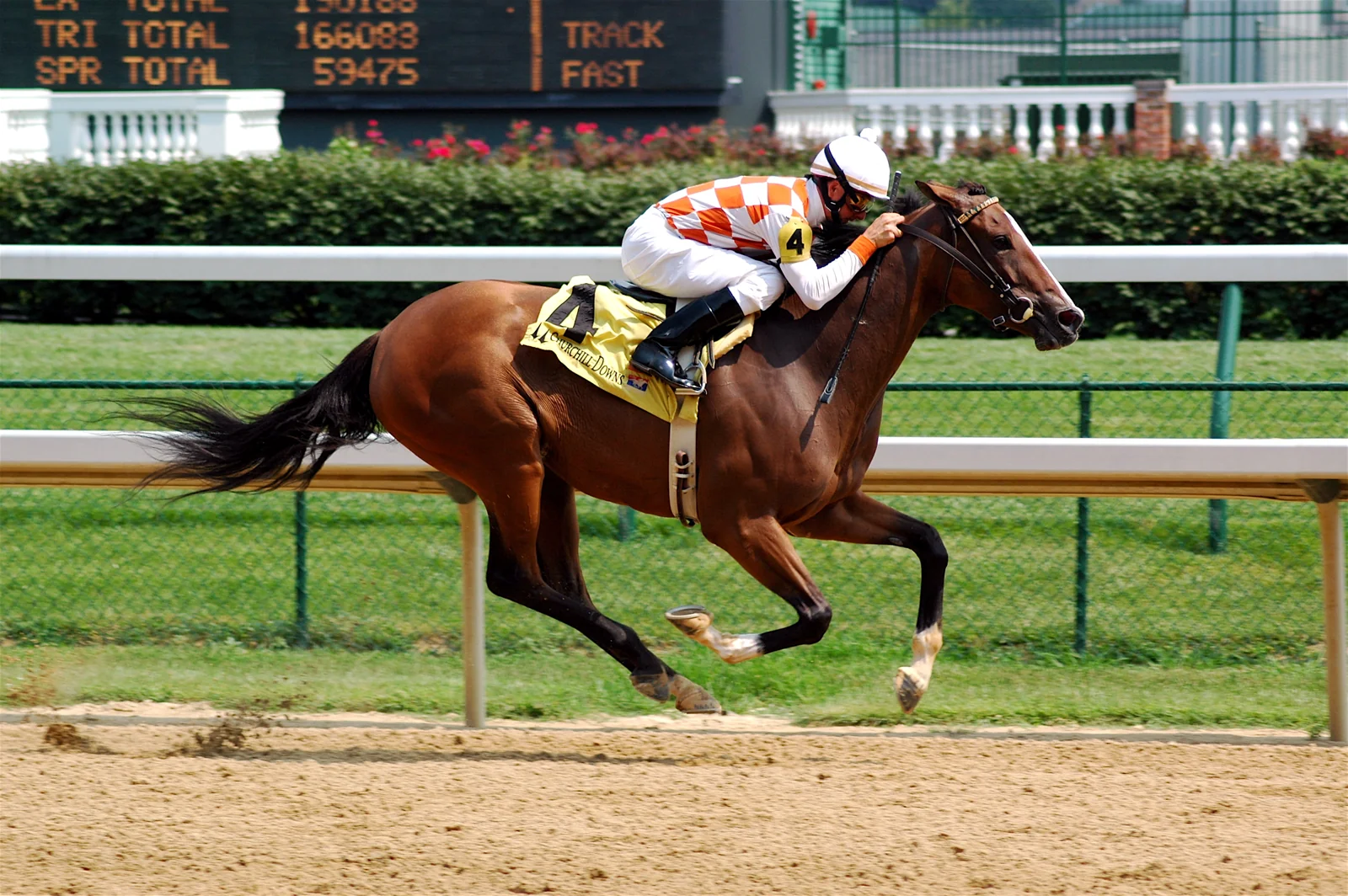
Horse racing has no single proven birthplace. Ancient Greek festivals provide clear evidence of both chariot and mounted racing, while Britain played a central role in developing the modern Thoroughbred sport. Understanding the difference explains why histories cite ancient Olympic dates, seventeenth-century Newmarket rules and eighteenth-century pedigree records without necessarily contradicting one another.

Horse racing has ancient roots, but no single proven birthplace
Horse racing was practiced in the ancient world, while Britain was central to the development of modern Thoroughbred racing. Those are compatible answers to different questions. The first concerns people competing with horses; the second concerns a recognizable system of breeding, recorded performances, organized meetings and administration. Neither identifies the first occasion on which two people decided to test their horses against each other.
Ancient Greek athletic festivals provide well-documented examples. The Metropolitan Museum of Art's account of Greek athletics includes both horse races and chariot races among the competitive events. That establishes the activity's considerable age. It does not establish that every other society learned to race from Greece, or that all later racing formats descend through one uninterrupted institution.
The modern question requires different evidence. At Newmarket, the National Horseracing Museum presents race records, a match book and a stud book as documents in the emergence of organized racing. Such records allow historians to follow named horses, particular contests and pedigrees. They tell a more specific story than a broad statement that people have always enjoyed fast horses.
It helps to keep three stages separate: using domesticated horses, arranging a race, and establishing a recurring sport with rules and records. Evidence for the first does not automatically date the second. A surviving record of a race proves that the contest existed by that point; it rarely proves that no earlier contest happened. This distinction is the reason a careful history can provide meaningful milestones without inventing one birthplace or one founding day for the whole sport.
What ancient Greek and Roman evidence actually shows
The ancient evidence becomes clearer when we look at particular events and objects. A racing scene on a vessel, a list of Olympic events and an inscription naming a successful driver each answer a different historical question. Together they reveal organized competition, prizes and celebrated participants long before the modern racecourse.
Chariot racing and mounted racing were different events
The traditional Olympic chronology places the introduction of the four-horse chariot race in 680 BCE and the mounted horse race in 648 BCE. The Foundation of the Hellenic World's event chronology records them separately. These are dates for inclusion in a particular festival's program, not certified dates for the invention of racing everywhere.
The difference is substantial. In the four-horse event, known as the tethrippon, a driver controlled a team pulling a vehicle. In mounted racing, a rider competed on the horse itself. The Foundation's account of the participants describes riders represented without saddles or stirrups. Calling both activities horse racing is reasonable, but treating them as identical to a present-day Thoroughbred Flat race obscures their equipment and competitive demands.
Athens also held equestrian competitions at the Panathenaic games. The Met's discussion of ancient athletic prizes includes a prize amphora dated around 510 BCE associated with a four-horse chariot race. Winners received valuable olive oil in such vessels. This is a concrete example of a racing prize, while also reminding us that the ancient sporting world extended beyond Olympia.
Owners, drivers and public spectacle
At Olympia, the horse's owner received recognition as the victor, even when someone else rode or drove. The distinction allowed women to become Olympic victors through ownership. It also explains why a historical winner's name does not automatically identify the person who physically steered the horse or chariot. Reading an ancient list of winners therefore requires a different assumption from reading a modern jockey championship.
Roman material evidence brings the individual competitors into sharper focus. A fourth-century CE glass beaker in the Met collection commemorates a charioteer whose name survives as Eutych[ides]. Three of his horses' names remain legible: Arethousios, Neilos and Pyripnous. Its decoration includes the racing team and elements of a circus setting.
That small object is more informative than an unsupported claim about the exact size of every Roman crowd. It shows that a particular driver and named horses could be worth commemorating. The emotional ingredients are recognizable to a modern fan: an identifiable competitor, a memorable victory and an object preserving the achievement. The administrative system, breed identity and rules, however, were products of their own period. Similar enthusiasm does not by itself demonstrate that modern racing institutions continued unchanged from antiquity.
Britain shaped the modern Thoroughbred racing system
Britain's importance lies in bringing several developments together: influential patrons, recurring contests, selective breeding, published records and institutions capable of administering the sport. None appeared in a single afternoon. Their combination made it increasingly possible to compare horses, preserve their identities and organize competition beyond an isolated challenge between owners.
Newmarket and royal patronage
Newmarket offers a particularly clear example through Charles II and the Town Plate. The racecourse's official history dates the race's first running to October 1666 and its written Articles to October 16, 1665. It explicitly acknowledges that earlier races had taken place at Newmarket. The significance is the documented organization of a recurring event, rather than the discovery of horse racing itself.
The reproduced Articles describe matters that a modern racing fan can recognize: a specified rider weight, a marked course, judges, heats and penalties for improper riding. They required riders to carry twelve stone and addressed behavior such as striking another rider. These are historical conditions, not a guide to the requirements of a race today.
The practical change was predictability. If the weight, route and method of deciding disputes were declared in advance, competitors had a common framework for the contest. Royal support gave that framework prominence. Newmarket's place in racing history therefore depends on more than a royal visitor enjoying a fast horse; it includes the organization that made the competition repeatable.
Imported horses and the development of the Thoroughbred
The Thoroughbred developed alongside this competitive culture. The three famous foundation stallions are the Darley Arabian, Godolphin Arabian and Byerley Turk, identified in the Jockey Club's breed introduction. Imports during the late seventeenth and early eighteenth centuries became important in the breeding of racehorses in Britain.
The familiar three-stallion story is only part of the ancestry. A horse's direct paternal line follows its sire, then that sire's sire, and so on. Its full pedigree also includes its dam and the many ancestors reached through female branches. Naming a handful of prominent male founders does not mean the entire breed descended from only three individual horses.
Research provides a useful correction to that oversimplification. A study by Bower and colleagues in Biology Letters, examining mitochondrial DNA from 1,929 horses, found evidence of a broad European maternal heritage and substantial contributions from British and Irish native mares. The development of the breed involved both imported bloodlines and existing horse populations.
This is why the origin of a racing breed and the origin of racing are different questions. Ancient horses could compete successfully without belonging to a registry established many centuries later. The Thoroughbred is a particular historical breeding development within the much older practice of racing horses.
Records, pedigrees and common administration
The British Jockey Club dates its foundation to 1750. Its institutional history describes rules established at Newmarket and their gradual adoption elsewhere. That was a process of expanding influence, rather than a single law instantly standardizing every race in the world.
Weatherbys' history supplies further milestones: James Weatherby's appointment as the Jockey Club's secretary in 1770, his first Racing Calendar in 1773 and the beginning of the General Stud Book in 1791. A surviving 1793 General Stud Book volume illustrates the early published pedigree record. The dates refer to stages in the work, rather than the first time anyone recorded a horse's ancestry.
Results and pedigrees perform complementary jobs. A result records what a horse achieved; a pedigree records the family to which it belongs. Put those records beside recurring races and common administration, and the outlines of a modern breeding and racing industry become visible. For someone reading a racecard today, the emphasis on identity, ancestry and previous performance has a history just as significant as the famous races themselves.
Jump and harness racing followed their own paths
The history of Thoroughbred Flat racing does not explain every race involving a horse. Other disciplines organized competition around different challenges. Jump racing made obstacles part of the route, while trotting and pacing developed performance standards based on a particular gait. Their histories help explain why modern racing has several distinct rulebooks and sporting traditions.
The Irish roots of steeplechasing
The traditional starting point for steeplechasing is a 1752 match in County Cork, Ireland, between the churches at Buttevant and Doneraile. The Irish Horseracing Regulatory Board's historical account describes it as the first recorded, now legendary match and explains the name through the two church steeples.
Here, the landmarks defined the challenge. The significance of the story is not that nobody had previously jumped a horse over an obstacle. It is that a race across country became associated with a named sporting tradition. The IHRB also describes hunts organizing meetings during the nineteenth century, followed by more formal administration.
That progression helps a modern spectator understand the term. A present-day steeplechase does not require a finish at a church. The name preserves the earlier landmark-based idea, while organized racing provides a defined course and conditions. It is an example of sporting language surviving after the setting and administration of the competition have changed.
Trotting became a sport with a different performance test
The USTA's account of American harness racing describes informal competition on roads and village streets developing into racing at purpose-built tracks. That is a different route into organized sport from royal patronage at Newmarket, even though both histories eventually involved formal records and breeding.
The name Standardbred reflects the importance of measurable performance. A Standardbred Canada guide hosted by Horse Racing Alberta explains that standards adopted in 1879 defined eligibility for the Trotting Register. One criterion required a stallion to trot a mile in two minutes and thirty seconds or better. These were historical registration conditions, rather than a modern qualifying rule for every race.
.jpg)
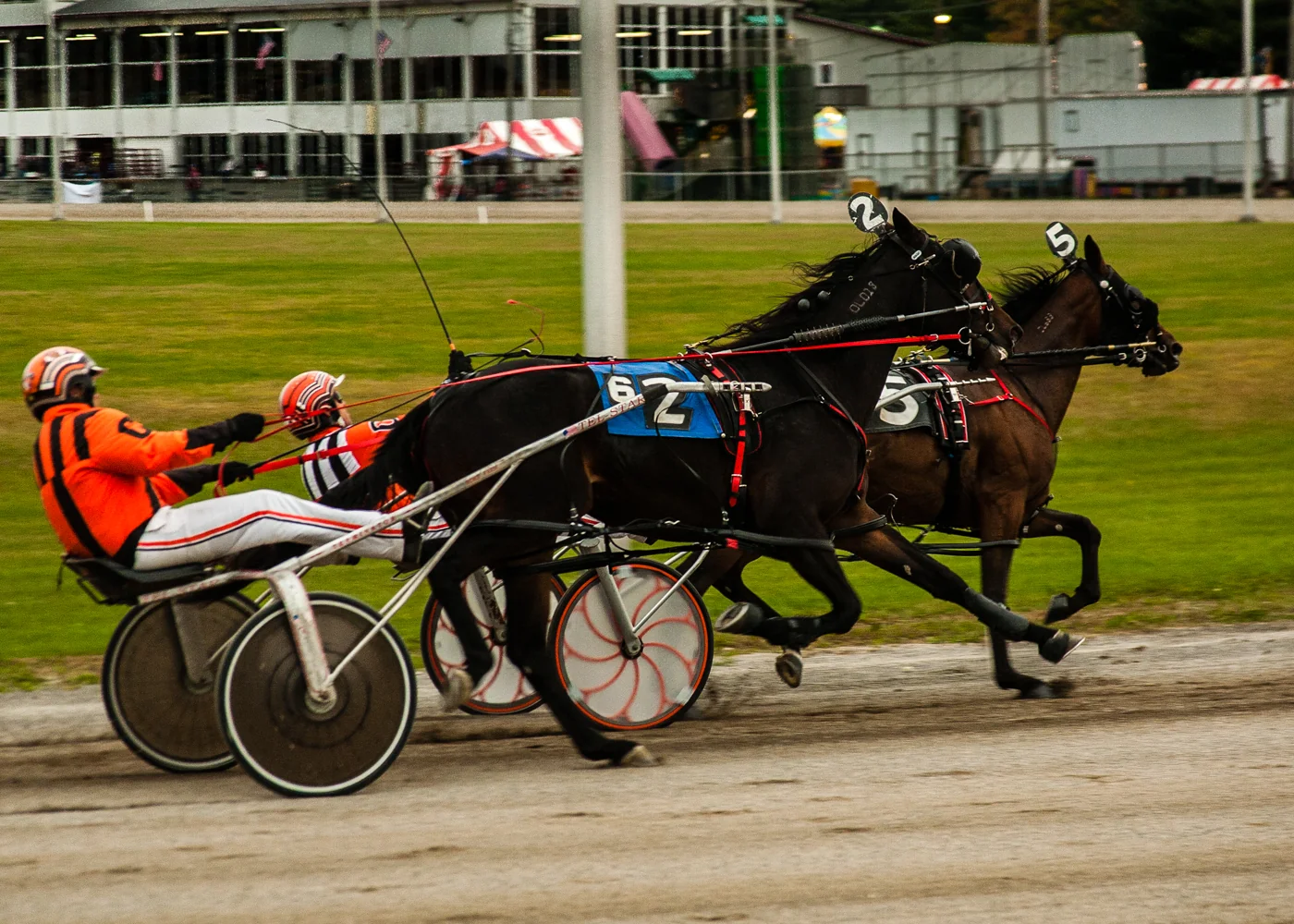
The gait remains central to understanding the contest. Trotters move diagonal pairs of legs together; pacers move the legs on the same side together. A driver sits behind the horse in a sulky. The presence of wheels may recall an ancient chariot, but visual resemblance is insufficient evidence of one continuous sporting institution. Harness racing's own records and standards explain its modern form more precisely.
How racing became an international sport
The expansion of organized racing was not a single procession in which every country adopted an identical sport on a known date. Local clubs, racecourses, breeding programs and existing equestrian traditions shaped what developed. A few documented examples show how this worked more clearly than a long list of countries described as having simply copied Britain.
In Australia, the Australian Turf Club's historical account places formal racing at Sydney's Hyde Park in October 1810. It also describes racing at Homebush in February 1841 and the Australian Jockey Club taking over the meetings in 1842. The sequence shows a local sporting infrastructure developing over decades: a meeting, a venue in regular use and an organizing body. It is more informative than treating one early race as the completed birth of the entire Australian industry.
France provides another sequence. According to France Galop's Chantilly history, an informal race took place there in 1833, the racecourse and its first meeting followed in 1834, and the Prix du Jockey Club was established in 1836. The railway reached Chantilly in 1859. These dates describe the growth of a particular racing center, including the transport that connected it with spectators. They should not be relabeled as the first occasion on which a horse raced anywhere in France.
Japan particularly demonstrates the difference between an imported format and earlier local traditions. The Equine Museum's historical account of Yokohama displays a surviving program for meetings on May 1 and 2, 1862, published in the Japan Herald. It places these events within the development of Western-style racing among foreign residents. Meanwhile, the official account of local racing's roots describes much older ceremonial racing associated with the imperial court, temples and shrines. The nineteenth-century meetings introduced a format into an existing equestrian culture.
The United States likewise developed its own venues, institutions and racing traditions. Our American racing history follows that regional story in detail. For a comparison of the sporting disciplines, the guide to racing types explains what the different races ask horses to do. The international overview connects those formats with today's major racing regions.
When a historical source calls something the first race, ask what the word means: the earliest surviving account, the first meeting at a venue, the first event under published conditions, or the start of a particular breed's competition. That small question preserves the useful dates without forcing them into an inaccurate universal origin story. Horse racing's history is both ancient and modern because the competition between horses is much older than the institutions that organize it today.
Join the conversation
Have a question or a race-day tip to share? Keep it friendly and on topic. Comments appear after review.
No comments yet. Start the conversation.
Sign in with Google to leave a comment.