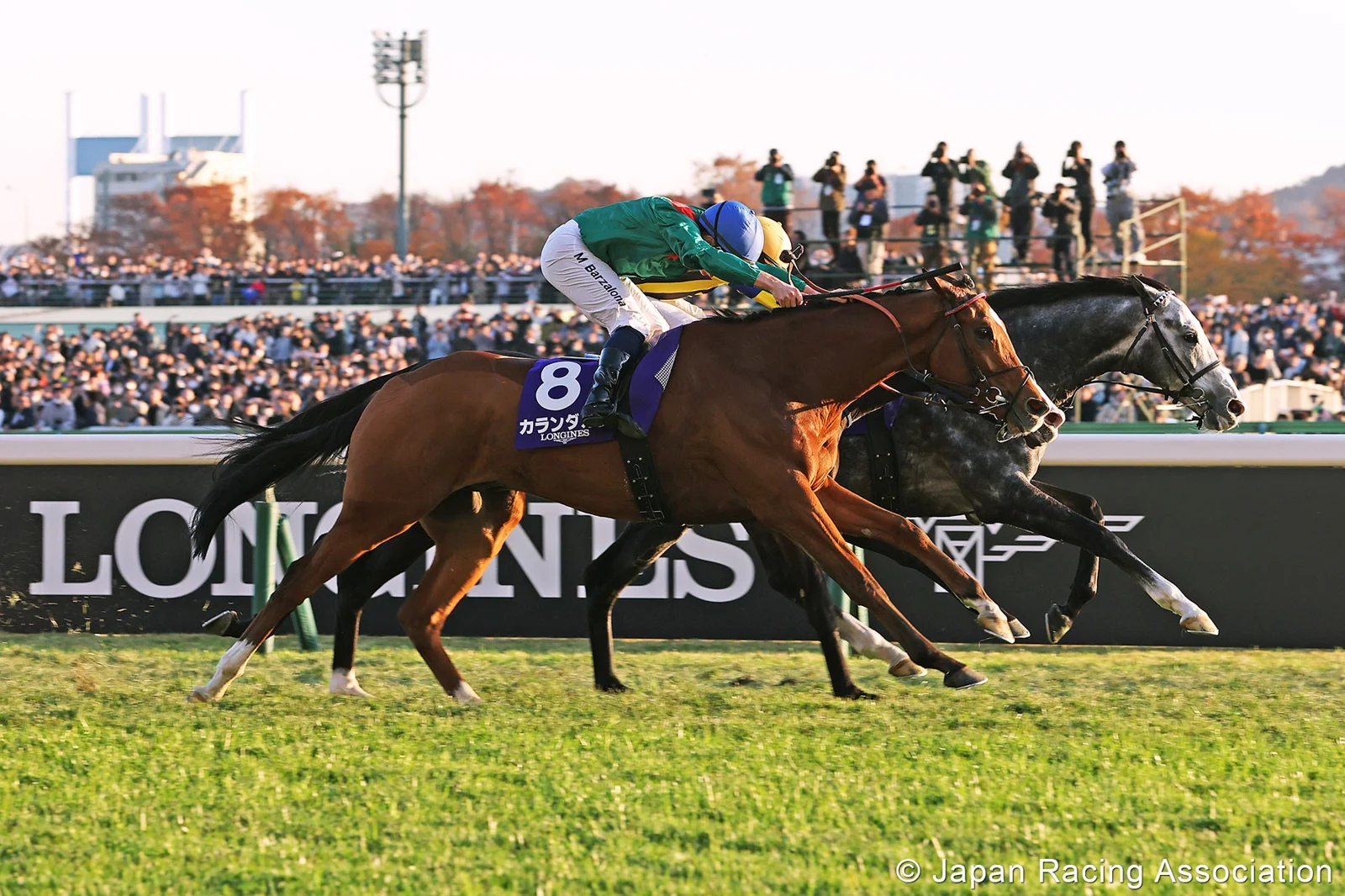
Following horse racing around the world starts with understanding what each contest asks of its horses. This guide connects race types, racecard clues and selected major meetings, then shows how to compare performances and plan your viewing. Event examples refer to their stated editions, with dates checked in October 2026.
Start with the kind of race you are watching
Horse racing around the world is easier to understand when you begin with the contest rather than the country's reputation. A fast finish can be thrilling in any discipline, but the route to it changes. Identify the race type before comparing horses, interpreting a result or deciding what to watch next.
Flat racing tests speed over different surfaces and distances
Flat racing has no obstacles to jump. That leaves speed, stamina and the jockey's positioning at the centre of the contest, as Great British Racing explains. Grass and synthetic tracks already present different settings within Britain alone. The label does not mean that every course has identical bends or that every race asks for the same burst of acceleration.
Watch where the runners settle and when the jockeys ask them to advance. A horse close to the lead may be using energy to maintain that position; one behind rivals needs room when the race quickens. The final placing matters, but the shape of the contest tells you how the horse arrived there.
Jump racing adds obstacles to the contest
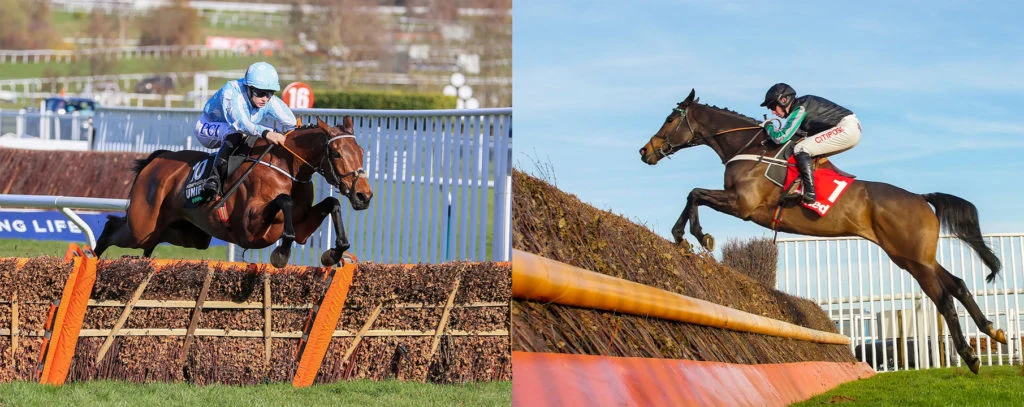
Hurdles and fences introduce another task: maintaining rhythm while negotiating obstacles. Races over fences are called chases in British racing. The industry's explanation of the two codes distinguishes these obstacles rather than treating every jumping contest as interchangeable.
Look beyond whether a horse clears the obstacle. Notice how quickly it returns to its rhythm and whether a mistake costs position or momentum. There is also an exception worth recognizing on a card: a National Hunt Flat race, often called a bumper, has no hurdles or fences. The BHA glossary describes it as a developmental opportunity before a jumping career.
Harness racing asks horses to maintain a particular gait
In harness racing the driver follows the horse in a lightweight cart called a sulky. The USTA fan guide separates pacers, whose same-side legs move together, from trotters, whose diagonal legs move together. The runners in a race compete at the same gait.
Maintaining that gait is part of the contest, not merely an aesthetic detail. A horse breaking into a gallop has gone off stride. Watch both its rhythm and its position relative to rivals. The driver has to find a route for horse and sulky, so being trapped behind another runner or racing outside without cover gives the finish a different tactical context.
Read an unfamiliar racecard before judging the field
The race heading deserves your attention before the list of famous runners. It tells you who is eligible, how far they will travel and under which conditions they compete. An impressive name does not answer those questions. Read the conditions first, then ask which performances in a horse's record are relevant to this particular task.
Distance, surface and weight tell you what the race asks
When the distance is expressed in miles and furlongs, eight furlongs make a mile. A British notation such as 1m2f therefore means ten furlongs, while 1m4f means twelve. The Jockey Club glossary also explains “going”: the condition of the racing surface. Distance and the condition of the ground help explain why a result in one race may not transfer easily to another.
The weight beside a runner is not its body weight. In this context it concerns the load carried, including the jockey and specified equipment. Read why that load has been assigned. The BHA distinguishes handicap allocations based on assessed ability from weights set by conditions such as age, sex and previous successes. A higher weight can carry a different meaning in those different races.
Keep these details together. If a horse moves to a longer trip, changes surface and faces different weight terms at once, you are asking it to answer several new questions. Its recent win remains evidence, but it is evidence from another setting.
Group and Grade labels describe a level of competition
Group 1 and Grade 1 identify the top tier within their respective racing structures, with the next numbered levels below. Britain uses Group terminology for elite Flat races and Grade terminology over jumps; elite US Flat races are also graded. So a Grade label does not by itself tell you that the runners will jump obstacles.
The IFHA history of the Pattern explains the effort to coordinate quality races internationally, while acknowledging that there is no single unified world Pattern. Treat the badge as useful context, then inspect the actual runners and conditions. It is not a promise that every race carrying the same number will be equally strong, produce the same time or suit the same horse.
Build a world racing calendar from selected major meetings
Build your calendar around editions, not familiar names alone. A festival can move on the calendar, change venue or publish next year's sales page while this year's result remains elsewhere. The following examples give you different ways into the sport. They are selected meetings rather than every important race worldwide, and their 2026 dates are shown as checked in October 2026.
North America combines classic races and championship weekends
The 2026 Churchill Downs calendar placed the Kentucky Oaks on May 1 and the Kentucky Derby on May 2. The Derby began that year's Triple Crown sequence. For a newcomer, this offers a storyline to follow across separate meetings: how a horse develops, how the opposition changes and whether an earlier performance holds up against a different field.
The championship model offers another perspective. Keeneland hosts the 2026 Breeders' Cup on October 30-31. Its race schedule separates different ages, distances and surfaces. The Classic is a dirt race over one and a quarter miles; the Turf is a turf race over one and a half miles. Watching both exposes why a championship weekend produces several answers to the question of excellence, rather than one interchangeable test for every horse.
Britain, Ireland and France offer different festival traditions
Britain's calendar offers contrasting entry points. Royal Ascot ran June 16-20 in 2026, a five-day meeting through which you can follow different races over successive afternoons. The Cheltenham Festival's 2026 edition ran March 10-13. Its jump-racing setting asks you to watch how a horse approaches and clears obstacles as well as what it has left for the finish.
Ireland's 2026 Punchestown Festival ran April 28-May 2, offering another jumps festival to put beside Cheltenham. France's 2026 Arc weekend at ParisLongchamp fell on October 3-4. These dates belong to completed 2026 editions. Use their races and replays to learn the contrasts, then check the organizer's next-edition announcement before booking travel or setting a viewing reminder.
Australia puts spring racing on a different seasonal clock
The 2026 Melbourne Cup is scheduled for November 3 at Flemington, with the Group 1 feature over 3,200 metres. November sits in Australian spring, so a northern-hemisphere fan should avoid treating the word spring as a universal month marker. Read the date and location together.
The distance gives you a useful first question: which performances show that a horse can sustain its effort for this particular trip? A compelling sprint replay cannot answer that on its own. When watching a longer race, look at how comfortably the horse travels before the finishing effort, and whether the jockey can preserve enough energy while staying in a useful position. That makes the Cup a different viewing exercise from simply looking for the fastest early runner.
Japan and Hong Kong bring distinct international tests
The 2026 Japan Cup is scheduled for November 29 at Tokyo, a left-handed turf race over 2,400 metres. The official conditions are a better starting point than a list of famous past winners. They tell you what the next field must actually do. A historical winner shown on an event page belongs to its stated year, not automatically to the current edition.
Hong Kong illustrates how one international meeting can cater to different specialists. The HKJC's 2025 international-races overview lists the Sprint, Mile, Cup and Vase at 1,200, 1,600, 2,000 and 2,400 metres respectively. This is an example from an earlier edition, not confirmation of a December 2026 date. It explains why following the whole card can be more rewarding than watching only its most familiar race name: different distances give different horses their opportunity.
The Middle East offers another route through the calendar
The 2026 Saudi Cup race archive records February 14 and 1,800 metres. The March 28, 2026 Dubai World Cup report describes the Meydan feature over 2,000 metres on dirt. These are two completed 2026 reference points, not interchangeable races or guaranteed dates for 2027. Their conditions let you compare the demands of separate events without assuming that a familiar international entrant will meet exactly the same test each time.
Compare travelling horses in the conditions they will face
A horse's reputation travels more easily than evidence that it suits the next race. Before comparing an overseas challenger with a local runner, write down what changes: the surface, distance, direction, carried weight and likely shape of the contest. You are looking for a relevant performance, rather than the most impressive headline beside its name.
The IFHA's explanation of its rankings is useful here. The annual assessment considers a horse's peak performance and the distance and surface at which it was achieved. Its factors include the opposition, margins, comparative weights and track conditions. That gives a fan a framework for asking better questions; the rating itself does not supply a probability that the horse will win a different race.
Consider a hypothetical horse with an outstanding 2,400-metre turf performance. That evidence appears much closer to the Japan Cup's stated test than to the Breeders' Cup Classic's shorter dirt assignment. It still cannot settle the Japan Cup result: the field, trip and conditions would need examining. For the Classic, you would also want evidence that the horse handles dirt and the different distance. Missing evidence is a reason to keep the question open, not a reason to fill it with the horse's fame.
Watch the replay with the result beside you. Did the horse obtain a clear passage? Was it already under pressure before the final turn, or did the jockey have to wait for room? Did the eventual winner control the pace, or make its effort from behind? These observations give the finishing position context. Record what you can actually see; a replay does not let you diagnose a horse's health or know its trainer's private intentions.
A small comparison sheet works better than an argument about which country has the best horses. Put the same questions beside each runner and mark uncertainties honestly. One horse may have stronger evidence at the trip, another a more relevant recent race. When the international contest is run, return to those questions. You can learn which observations mattered without treating either a national label or a ranking as an automatic result.
Plan the viewing time and the actual way to watch
A race announcement answers when the meeting happens. It does not necessarily answer where you can watch from home. Find the current viewing announcement for the specific event and check the provider's availability in your country. Confirm whether your plan includes the channel, whether the program includes the race you want and whether an account is required. A channel carrying one international meeting does not establish that it carries every overseas card.
Read the video label as carefully as the event date. The official Japan Cup video gallery distinguishes its 2026 promotion from a 2025 English race report and earlier race replays. Those are useful ways to learn the event, but a past replay or promotional film is not confirmation of a future live feed. Save the relevant result and full replay together so you can identify exactly which edition you are watching.
Official access can also have conditions. The HKJC webcast FAQ for its specified service describes customer login and notes restrictions on some overseas-race webcasts. Check the current service you intend to use rather than assuming that an official link plays everywhere. For events in our currently covered US schedules, the horse racing TV schedule helps you start that search. For an international meeting, go to its organizer and the broadcaster serving your location.
Keep the race's local date beside your own start time
Keep two entries in your reminder: the racecourse's date and time zone, and your own converted date and time. Daylight-saving changes can alter the difference. NIST's 2026 rules place the US autumn clock change on November 1, which matters when converting a late-November Japanese event for a New York viewer.
For a hypothetical example, 3:00 p.m. in Tokyo on November 29, 2026 is 1:00 a.m. in New York on November 29, using Japan Standard Time and Eastern Standard Time. This illustrates the conversion only; it is not an announced Japan Cup post time. Once the organizer publishes the actual start, convert that exact date again and distinguish television coverage starting from the race itself starting. Set your reminder early enough to see the field and race conditions, not just the finish.
Choose a manageable route into international racing
You do not need to follow every country immediately. Choose one kind of racing you already enjoy, then one meeting that gives you something new to observe. A flat-racing fan might compare a shorter race with a longer one on the same championship card. Someone interested in jumping might begin with one festival and learn how its different contests are described before adding another country's program.
For your first meeting, keep a short list: the edition and venue, the races you want to watch, their conditions, the confirmed viewing route and your local reminder. Use the organizer's page for the event itself. The major races calendar and today's horse racing schedule offer starting points within our covered US racing; the international organizer links above lead to the selected overseas examples.
Afterward, choose two or three replays to watch more slowly. Follow one runner through the race rather than tracking only the winner. Compare where it travelled, when its effort began and what the result says about the conditions. Write one observation and one unresolved question for each replay. That is more useful than collecting dozens of unfamiliar names without a reason to remember them.
Then choose your next meeting around the question you want answered. You might want to see a different distance, a switch of surface or another obstacle contest. If a horse you followed appears again, confirm the actual entry rather than assuming it will take part. International racing becomes easier to enjoy when the calendar supports a sporting story you understand. You can follow that story, learn the horses and appreciate the competition without placing a bet.
Join the conversation
Have a question or a race-day tip to share? Keep it friendly and on topic. Comments appear after review.
No comments yet. Start the conversation.
Sign in with Google to leave a comment.