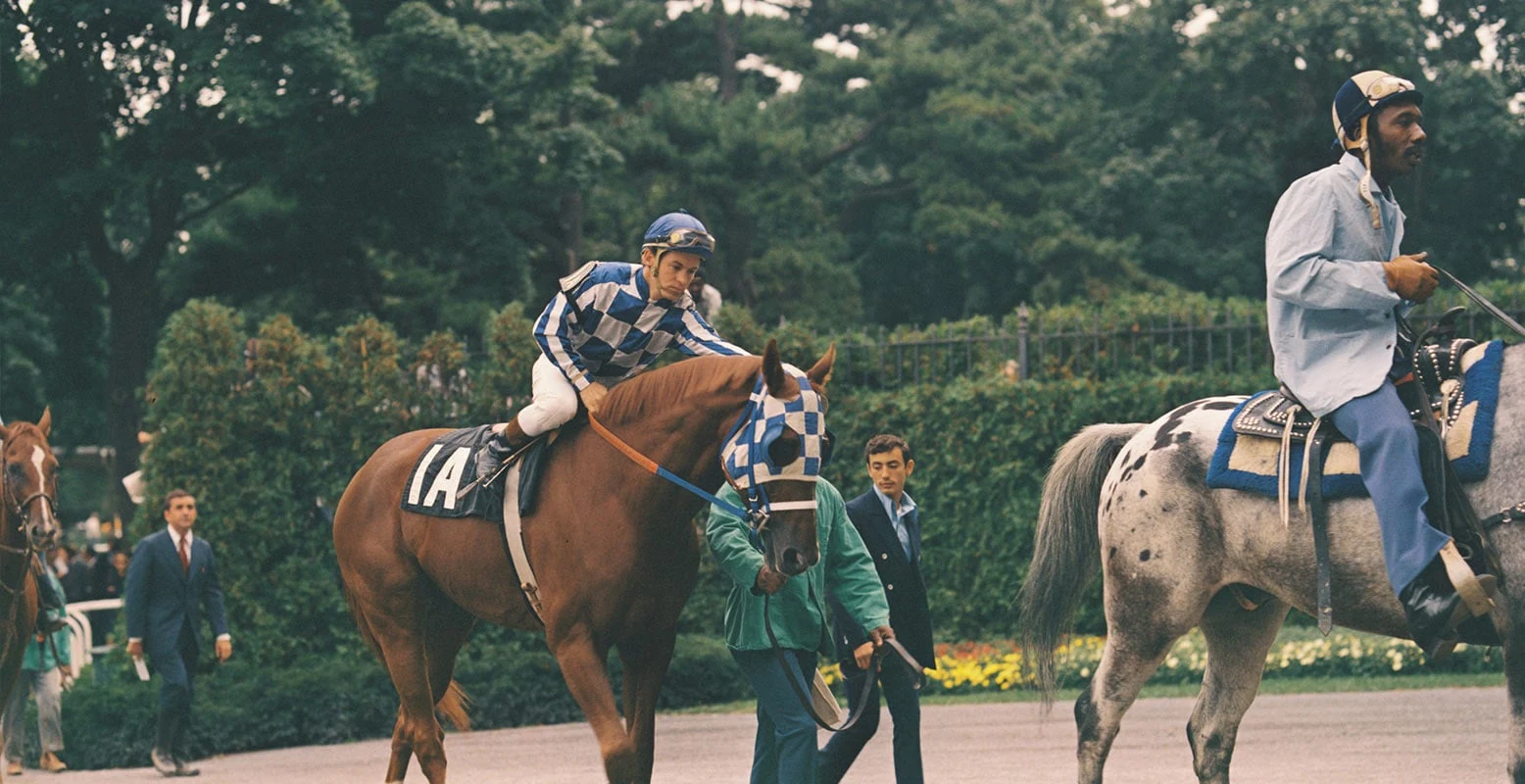
Organized horse racing in America is conventionally traced to a Long Island course established in 1665. Understanding what came afterward means following more than a list of champions: racecourses, riders, breeding traditions and audiences all helped shape the sport. This history connects those developments to the meetings and major races a fan encounters on the calendar today.
What 1665 tells us about the beginning of American racing
The usual starting point for organized horse racing in America is 1665, when Newmarket Course was established on Long Island's Hempstead Plains. That is the milestone used in the industry's 350th-anniversary account. It places the sport's institutional roots in colonial New York, well before the Kentucky Derby or the famous summer meetings that dominate a modern fan's mental map.
But an opening date is not the same thing as a fully documented first race. The historical appendix to a 1973 congressional report describes Governor Richard Nicolls calling a public meeting in 1665 and having a course mapped near Hempstead. It also cautions that particular races in 1665, 1666 and 1667 are assumed rather than individually proved. The sensible answer is therefore a founding milestone, with a limit on how precisely we can reconstruct those first afternoons.
The same account connects Nicolls's initiative with improving the horses available in the colony. Racing supplied a public comparison of animals, alongside the pleasure of watching them compete. That combination is revealing: the horse was both a sporting performer and an animal whose qualities mattered beyond the finish line. A history built only around famous winners misses why people wanted organized contests in the first place.
Newmarket's name pointed toward the English racing tradition, but the American course should not be confused with the English Town Plate. The English racecourse's history dates that race's rules to 1665 and its first running to 1666. Similar names and neighboring dates make a tidy internet summary surprisingly easy to get wrong.
For a racing fan, the useful distinction is between a contest and an institution. Two owners can settle an argument with a race; a recurring course gives spectators somewhere to return and later generations something to inherit. Think of 1665 as a signpost for that organized tradition, rather than a claim that every element of today's racecard arrived together. The starting stalls, televised build-up and printed form that a modern viewer associates with the sport belong to a much longer story.
How Saratoga and the classics built a lasting racing map
The three races now associated with the Triple Crown were established in a different order from the order in which fans follow them each spring. The Belmont Stakes began in 1867 at Jerome Park. The Preakness followed in 1873 and the Kentucky Derby in 1875, as the Racing Museum's account of the first Preakness explains. These were separate institutions before they became the familiar collective challenge.
That order matters because it changes the story from a neatly designed series into a sport assembling its landmarks over time. A modern viewer moves from Derby to Preakness to Belmont; the historian sees race promoters, venues and traditions taking shape independently. Even the Preakness name recalls a horse: the winner of the Dinner Party Stakes at Pimlico's opening in 1870. A race name can preserve an earlier chapter that is no longer obvious from the current broadcast.
A summer destination becomes a sporting institution
Saratoga adds another kind of landmark. According to NYRA's track history, John Morrissey staged a four-day Thoroughbred meeting in 1863, drawing locals and tourists to a town already known for its mineral baths. Its success led to the Saratoga Association and a permanent grandstand on the present racecourse site. Racing became part of a destination, rather than simply an afternoon's result.
A meeting gives the spectator a different relationship with the sport from an isolated marquee race. Return across several days and you can follow a rider's decisions, a stable's runners and horses whose next appearance gives a previous performance new meaning. The calendar becomes a continuing conversation. That is why a track's identity can matter even when the particular race you remember is not on today's card.
It is equally important to separate the age of a race from the age of its present home. The Belmont's official history lists multiple venues and notes that it was not run in 1911 or 1912. Its early distance also differed from its later familiar test. A famous name represents continuity of an event, but does not promise an unchanged course, uninterrupted sequence or identical conditions.
Use that distinction when turning history into a visit. Our Saratoga guide and Churchill Downs guide help you locate the relevant meeting. Then check the date and venue for the particular event. Knowing where a race began enriches the experience; knowing where the advertised edition is being held gets you to the right grandstand.
Black jockeys were central to the early Kentucky Derby
A history of American racing that lists horses and founders but leaves out Black horsemen omits people who made the early sport possible. The National Archives' historical introduction places their work in a tradition extending back to enslaved people caring for and riding their owners' horses. Expertise developed within an unequal system; later sporting success did not erase that history.
Oliver Lewis and the first Derby
On May 17, 1875, Oliver Lewis rode Aristides to victory in the first Kentucky Derby. The horse was trained by Ansel Williamson, another Black horseman. Kentucky's Commission on Human Rights records the winning partnership and the fifteen-horse field. Its broader account notes that Black riders won fifteen of the first twenty-eight Derbies. Their importance was sustained across the race's early development, rather than confined to an exceptional opening day.
Read an old result with that partnership in mind. The horse's name identifies the athlete; the jockey's name identifies someone making choices under pressure; the trainer's name points toward the preparation that brought the runner to the start. Remembering all three changes the way a race is discussed. It restores professional skill to a story that can otherwise shrink into an owner, a trophy and a date.
Isaac Murphy and the limits of a winners-only history
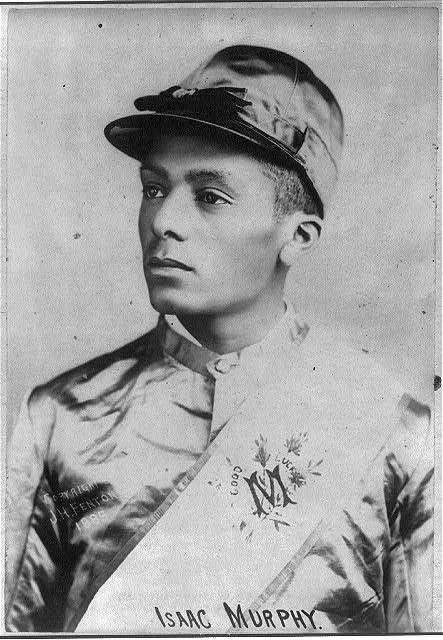
Isaac Murphy became the first jockey to win three Kentucky Derbies: Buchanan in 1884, Riley in 1890 and Kingman in 1891. The Racing Museum's biography describes his judgment of pace and ability to bring a horse through late. These are recognizably racing skills, giving a present-day fan something more substantial to admire than an unexamined claim that he was simply the greatest.
Murphy's record also illustrates how historical numbers need care. The museum discusses different surviving career totals and win percentages. Repeating the most spectacular percentage as though every mount had been conclusively counted makes the story less reliable. His three Derby victories do not require an inflated or falsely settled statistic to establish their significance.
Triumph is only part of this chapter. Kentucky's official account describes Black horsemen being pushed out of the business in the early twentieth century. A winners list cannot explain that loss of opportunity by itself. Nor should it be turned into a claim that one uniform rule barred every Black rider at every American track. The history concerns access to work and recognition, as well as results.
For a fan looking back, the question is therefore wider than who won. Whose riding was remembered? Whose stable work was credited? Who could keep finding mounts? Those questions belong alongside the finish order. They make the story of American racing more complete without taking anything away from the horses that made it famous.
Harness racing developed a different American tradition
American racing history is not exclusively the history of Thoroughbreds galloping under jockeys. Harness racing has its own performers, breeding story and major races. The U.S. Trotting Association's historical fan guide traces its development from informal contests on roads and village streets to organized racing, including county-fair events as early as 1825. That background offers another route into the sport, alongside the classic-race institutions.
The Standardbred name itself reflects performance: early trotters had to meet a specified mile-time standard to qualify for registration. The definition tied a breeding identity to an observable sporting test. For a fan accustomed to thinking only in terms of ancestry, that is a useful reminder that the history of a breed can also involve how people chose to measure its ability.
Hambletonian, foaled in 1849, became a foundational sire in this tradition. The Harness Racing Museum's account emphasizes his offspring and breeding influence after a brief period of trials. His historical importance should not be mistaken for a long career of victories in the race now bearing his name. A foundation sire and the winner of a modern championship occupy different places in a sport's memory.
The Hambletonian race came much later. The Hambletonian Society records Guy McKinney winning the inaugural edition in 1926 at Syracuse. The gap between the stallion's birth and the race's establishment helps explain the name: it honors a breeding legacy rather than describing an event the original horse competed in.
Watching harness racing also calls for a different eye. The USTA's race-day guide distinguishes trotters, whose diagonal legs move together, from pacers, whose same-side legs move together. Drivers sit behind the horses in racebikes, and races are usually a mile. Maintaining the prescribed gait is part of the contest; galloping is not simply a desirable burst of extra speed.
That changes the questions a spectator asks. Instead of assuming every American horse race can be understood through a Derby replay, first identify the discipline. Then follow the driver's position, the horse's rhythm and the route around the course. The common pleasure is competition between horses; the specific test is different. A history that allows both traditions to stand on their own gives the fan more races to understand, rather than forcing them into one familiar mold.
Seabiscuit and Secretariat made races national stories
Some races enter sporting memory because the finish is close. Others survive because a horse makes the competition look startlingly unequal. Seabiscuit's meeting with War Admiral and Secretariat's Belmont illustrate those different attractions. They also show why the history of racing cannot be told entirely from the perspective of the people standing at the rail.
A match race that reached beyond the grandstand
Seabiscuit defeated War Admiral at Pimlico on November 1, 1938, with George Woolf riding. The Racing Museum's biography records a four-length victory and estimates that roughly 40,000 people watched at the track while more than 40 million listened by radio. The precise audience estimate deserves its historical qualification; the contrast between a grandstand and a nationwide audience is unmistakable.
The meeting had a question even a newcomer could grasp: which of these celebrated horses would beat the other? A two-horse match strips away much of the complexity of a full field. It makes a rivalry easy to follow without requiring the audience to learn fifteen names first. That simplicity can make the event compelling, but it also limits what it proves. Winning that particular contest does not supply an automatic ranking of every horse in every possible set of conditions.
PBS's American Experience timeline places the race within Seabiscuit's larger public story. Radio gave people far from Maryland access to the same unfolding result. The call had to communicate position, pressure and a changing lead through sound. To appreciate the race today, try following the commentary while watching the horses: the narrative and the performance work together, rather than the announcer merely reading out a final time.
Secretariat supplied a different unforgettable image on June 9, 1973. With Ron Turcotte aboard, he won the Belmont Stakes by 31 lengths in 2:24 for the mile and a half, completing the Triple Crown. NYRA's account also recalls his appearance on national magazine covers. The sporting achievement and the public recognition reinforced each other.
The large margin is easy to remember, but the replay rewards more than a glance at the finish. Watch the developing separation and keep the distance of the race in mind. A viewer need not declare a definitive greatest horse of all time to recognize an extraordinary performance. Nor should one breathtaking afternoon become the whole history of a career or of the sport.
These examples offer a useful way into racing's past: choose a documented race, learn who rode it and what was being tested, then watch or listen before reading the verdict. That approach preserves the contest underneath the legend. It lets a new fan encounter the decision-making and movement that made earlier audiences care, instead of simply memorizing another champion's name.
Why the modern calendar reaches beyond the Triple Crown
The Derby, Preakness and Belmont provide an especially clear sporting challenge: the same horse must win all three. Sir Barton accomplished that sweep in 1919. NYRA's biography notes that his achievement preceded the familiar Triple Crown phrase. The feat came first; the language through which later generations recognize it developed afterward.
For a fan, the series creates continuity between otherwise separate afternoons. After the first victory, the next race carries an additional question. After a second, the final leg becomes a test with history attached. That makes the Triple Crown a powerful introduction to racing, but a narrow introduction if it becomes the only part of the year you follow.
The Breeders' Cup creates a different championship test
The Breeders' Cup offered another organizing idea. Its official timeline records the inaugural meeting at Hollywood Park on November 10, 1984, following the development of a seven-race program. Here the spectacle was a collection of championship races, rather than one horse trying to complete a three-race sequence.
The difference remains useful when reading a modern card. The 2026 championship schedule includes separate races for juveniles, older runners and fillies and mares, across dirt and turf and different distances. For example, the Sprint is a six-furlong dirt test while the Turf is a mile and a half on grass. The names describe different jobs. A victory in one does not mean a horse has defeated the specialists entered in every other division.
This broader program gives a spectator several stories to choose from. You might be most interested in a young horse encountering stronger opposition, a sprinter whose break matters immediately, or a turf runner negotiating a longer tactical contest. Follow the conditions before comparing the reputations. A championship weekend is easier to enjoy when each race is allowed to answer its own question.
Nor should a championship race result be confused with a complete evaluation of an entire season. One afternoon supplies a direct contest under specified conditions. A season contains the performances leading into it and the runners who were absent. You can admire the winner while still examining how the race fits the larger campaign. That is the same habit that keeps historical discussion from turning one brilliant replay into an all-purpose verdict.
Use the major-races calendar to see those landmarks together, then today's schedule to locate the individual races within a meeting. The history supplies the names and the reasons fans care about them; the current card supplies the runners and conditions that make this edition its own sporting event.
Join the conversation
Have a question or a race-day tip to share? Keep it friendly and on topic. Comments appear after review.
No comments yet. Start the conversation.
Sign in with Google to leave a comment.