Famous American racehorses are best understood through the contests that made them memorable. Follow Man o' War, Seabiscuit, Secretariat, Citation, Kelso, Zenyatta and American Pharoah through verified historical races, then learn what to look for when you watch their performances.
Fame and greatness are different questions
A famous American racehorse might be remembered for one extraordinary afternoon, a long championship career or a rivalry that reached people who rarely watched racing. Those are different achievements. This guide follows seven Thoroughbreds whose races offer an accessible route into American flat-racing history; it does not pretend that placing their names in numbered order settles who was best.
Start with the evidence behind the reputation. A career record tells you how often a horse won, but it cannot explain every opponent, trip or racing condition. A spectacular margin gives a memorable image, while repeated success asks a different question: could the horse keep meeting new challenges? Neither achievement needs to erase the other.
Compare the race before comparing the horse
A useful comparison begins with distance, surface, age and the type of contest. Then consider the campaign around it. A demanding race against older opponents is a different assignment from a restricted race against horses of the same age. A match race also creates a different tactical problem from a crowded field. Treat these as questions to investigate rather than excuses to award your favorite horse extra points.
Institutional recognition provides another perspective. The National Museum of Racing's Hall of Fame selection explanation describes a nomination and voting process, with eligibility rules for retired horses and a separate route for older historical candidates. That is a considered judgment about achievement, not a popularity poll or a stopwatch sorting every horse into one universal order.
For a new fan, the most rewarding question is therefore specific: what made this performance difficult, and how did the horse answer? The stories below give you a race or campaign to examine. Keep that question beside the replay and you will learn more than you would from memorizing a list of famous names.
Man o' War and Seabiscuit: dominance and the match-race era
Match races offer an unusually clear dramatic setup: two horses, one opponent to beat and little room to hide behind a complicated field. They also need their own context. Winning a celebrated head-to-head contest is a real achievement, but it does not automatically answer how the same horses would have handled every other distance, season or field.
Man o' War's short, overwhelming career
Man o' War raced in 1919 and 1920, winning 20 of 21 starts. His only defeat came against Upset in the Sanford at Saratoga; his second season was perfect in 11 races. He did not run in the Kentucky Derby, although he won the Preakness and Belmont. His final appearance was a match against Sir Barton at Canada's Kenilworth Park in October 1920, which he won by seven lengths. Those are the essentials established by the Racing Museum's biography.
The Derby omission is useful protection against a common shortcut: a horse can belong in a discussion of American greatness without winning the Triple Crown. Judge the races he actually ran. Equally, a near-perfect win percentage does not require you to turn the one defeat into a mystery that invalidates the result. The recorded loss and the dominant overall career can both remain part of the story.
With a career this brief, the analytical question is concentration of achievement. You are evaluating the authority of two seasons, rather than pretending there was a long older-horse campaign to measure. Read the opponents and conditions alongside the wins; simply adding imagined victories in races he never contested makes the comparison less informative.
Seabiscuit and the race against War Admiral
Seabiscuit's signature confrontation came at Pimlico on November 1, 1938. With George Woolf aboard, he defeated War Admiral, ridden by Charles Kurtsinger, by four lengths. The Keeneland Library's contemporary photograph record fixes the identity, date and result. It is a much firmer starting point than treating a dramatic film scene as a race chart.
The appeal extended beyond the finishing margin. PBS's account of the rivalry explains the tension between an established Eastern racing world and a Western challenger. That gave the contest meaning to people who were choosing a side, rather than calculating which horse had the tidiest career statistics.
When studying the match, separate those two layers. One is the competition on the track: two runners responding to each other. The other is the story audiences brought to it. Seabiscuit's fame is easier to understand when you keep both in view, without requiring one afternoon to prove a universal ranking over every champion before or since.
Secretariat and the 1973 Triple Crown
Secretariat is the natural starting name for many fans because his defining race makes greatness unusually visible. On June 9, 1973, he won the Belmont Stakes by 31 lengths over Twice a Prince, covering the mile and a half on dirt in 2:24 with Ron Turcotte riding. That completed the first Triple Crown sweep since Citation in 1948. NYRA's official historical profile supplies the race details.
Two measurements matter, and they answer different questions. The margin describes how far clear he finished of that field. The time describes how quickly he completed that course and distance. Combining them explains why the afternoon is so arresting, but neither gives permission to compare unrelated races by one number without examining conditions.
What to watch in the Belmont Stakes
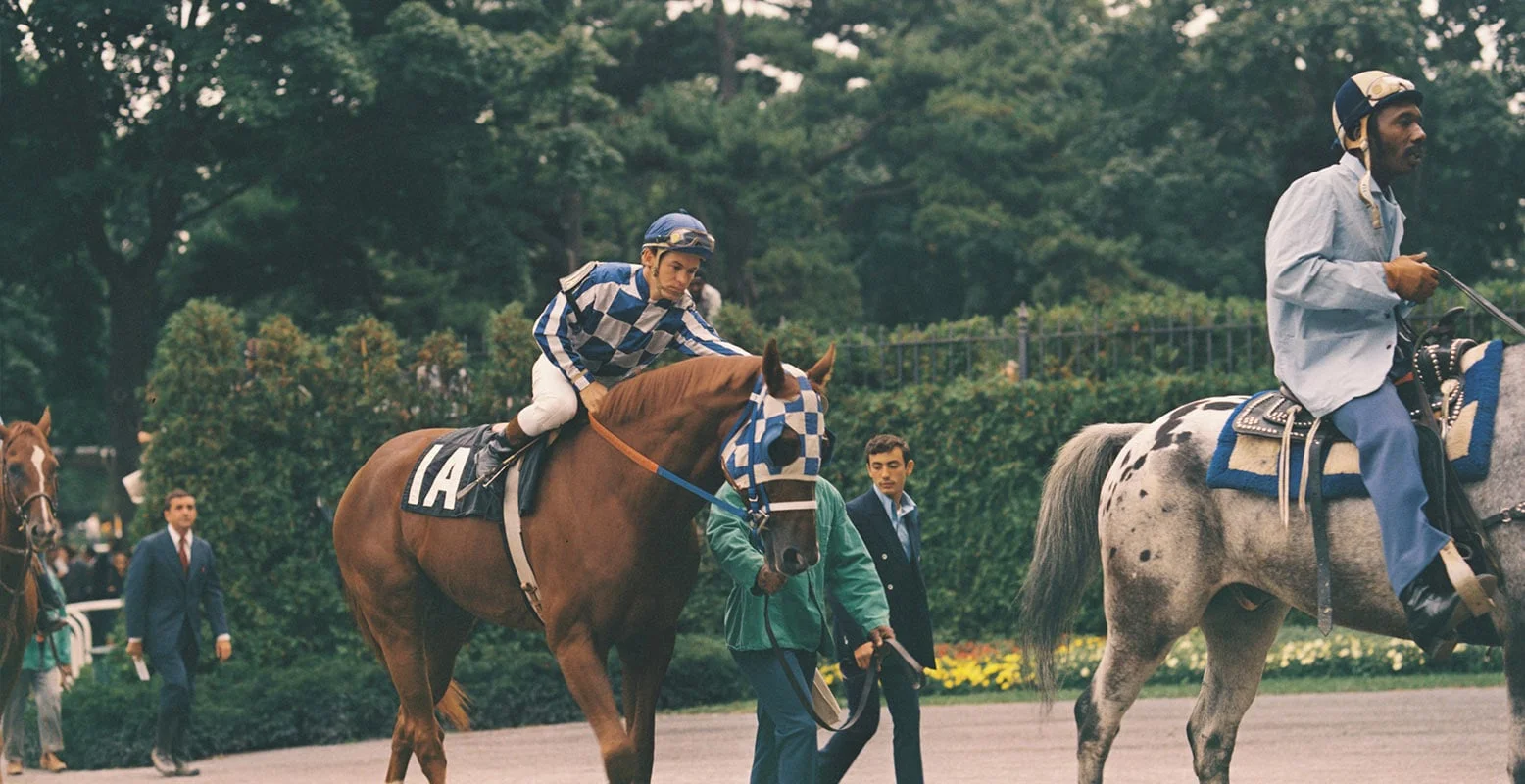
Watch the beginning as carefully as the famous stretch. NYRA recounts Secretariat and Sham going through the opening half-mile together in 46 1/5 seconds. The field did not simply concede the race at the gate. The important visual story is the separation that followed, and the way the winner continued beyond the point at which the challenge had faded.
On a second viewing, resist following only the gap. Use the turns and distance markers to orient yourself, then look at how the rider and horse move through the final stages. A finishing photograph preserves the result; a complete replay lets you see the work required to create it. This is a more useful viewing exercise than trying to translate a horse-length margin into a supposedly exact speed advantage across generations.
Secretariat's reputation also does not depend on calling him undefeated. NYRA's biography includes setbacks as well as championship achievement. Remembering the defeats makes the response at the classics more interesting, not less. A horse's most famous performance can represent an extraordinary peak without being the description of every start.
For the race's place in the wider calendar, use the Belmont Stakes guide. Keep the historical edition separate from current arrangements: this section describes the 1973 contest at Belmont Park. A familiar race name is not a guarantee that every year's setting and conditions are identical.
Citation and Kelso: greatness across a campaign
Some champions are easiest to appreciate by putting several pages of results beside each other. One brilliant race can announce a talent. A whole season, or a series of seasons, shows how much that talent accomplished when the sport kept asking for another performance.
Citation's three-year-old season
Citation's 1948 campaign contained 19 wins from 20 starts, including the Kentucky Derby, Preakness and Belmont. The Museum's biography and annual results describe wins at distances from six to 16 furlongs that year. They also identify the Pimlico Special as a walkover. That detail matters: a season's win count should not be read as though every entry represented the same competitive situation.
The attraction here is the range around the three classics. A fan who stops at the Triple Crown has found the headline, but not the entire argument for Citation. Look down the rest of the campaign and ask how assignments differed in distance and company. That is how a collection of victories becomes a meaningful sporting record.
It also helps to read the career year by year. The museum separates the seasons instead of squeezing the entire story into an unbeaten streak. A winning run, a heavy campaign and later career results are different pieces of evidence. Keep them separate before deciding how much weight each deserves in your own assessment.
Kelso's repeated success against older horses
Kelso offers a longer horizon. The gelding was named Horse of the Year for five consecutive seasons, 1960 through 1964, and won the Jockey Club Gold Cup in each of those years. His career finished with 39 wins from 63 starts. The official Kelso profile records the championship run and the campaigns under trainer Carl Hanford.
Those five awards are not the same claim as five unbeaten seasons. The annual tables include losses. The point is sustained achievement despite the repeated demands of competition, rather than a career protected from every setback. For a fan used to following only spring classics, Kelso is an invitation to take the older-horse divisions seriously.
The race conditions belong to their time, too. His 1964 Gold Cup was a two-mile contest. Do not picture the current event's distance merely because the name survives. When reading old results, let the actual edition tell you the assignment.
Citation and Kelso therefore make different cases. One directs attention toward the extraordinary breadth of a particular season; the other toward repeatedly returning at championship level. Comparing them becomes more interesting when you describe those demands clearly, rather than converting all their achievements into one win-percentage contest.
Zenyatta and the power of a late finish
Zenyatta's fame comes with a particular kind of suspense: the horse you are following is behind, and the finish line is getting closer. Her 2009 Breeders' Cup Classic victory at Santa Anita made her the first female winner of that race. Her own dated career record places the breakthrough on November 7, 2009.
The following Classic supplies the other half of the story. At Churchill Downs on November 6, 2010, Blame held off her rally by a head. It was her only defeat in 20 career starts. The organizer's race account describes her early position at the rear and the ground she made up before the wire. The defeat should remain a defeat, however dramatic the finish.
Put the two editions next to each other when learning to watch a closer. Look first for the horse's position when the serious moves begin. Then ask where a clear path becomes available, which opponents have already advanced and how much distance remains. Those are practical questions about the race in front of you. They are more revealing than assuming that a fast-looking final charge must have deserved first place.
The 2009 and 2010 races also took place at different tracks. Keep the edition attached to the replay you choose instead of merging both Classics into one remembered stretch run. For a late-running horse, the challenge is always to finish the required job within the actual race. The result is determined at the wire, not by how the horse appears to be traveling after it.
Zenyatta makes a valuable companion to the earlier profiles because she broadens what a memorable champion can look like. Fame need not belong only to a colt who leads a classic field throughout, nor does one final loss erase a remarkable career. You can admire the mare's achievement, credit Blame's winning performance and still discuss the tactics of that narrow finish without turning admiration into an alternative official result.
American Pharoah's Triple Crown and Classic
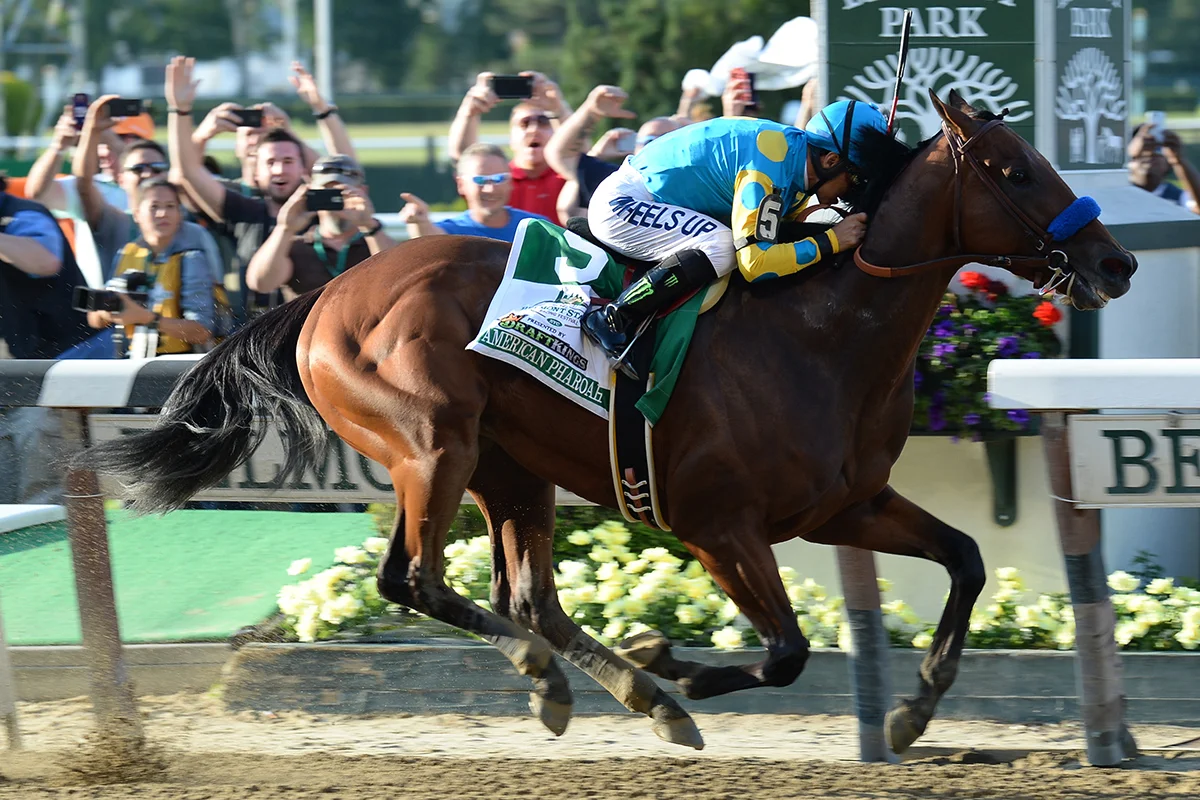
American Pharoah connects the spring classics to the autumn championship. In 2015 he swept the Kentucky Derby, Preakness and Belmont, ending the wait for another Triple Crown winner after Affirmed in 1978. He then won the Breeders' Cup Classic at Keeneland. The Breeders' Cup's historical account identifies that combination as racing's first Grand Slam.
That label needs its ingredients explained. It refers here to those three American classics plus the Breeders' Cup Classic in the same season. It is not the name of a fourth spring Triple Crown race. A new fan can follow the distinction without needing to know every slogan used around the campaign.
Why the autumn finale matters
At Keeneland on October 31, 2015, American Pharoah won the mile-and-a-quarter Classic by 6 1/2 lengths under Victor Espinoza for trainer Bob Baffert. Keeneland's historical stakes table records the winning time of 2:00.07. The table is tied to that edition; it is not a promise about the speed or outcome of any future championship.
The importance for a viewer is the change in assignment. The spring series had established achievement against his own age group. The autumn Classic asked the champion to finish a different part of the racing year. You can therefore admire the Triple Crown on its own and still see why the later victory added something distinct to the story.
His season was not a flawless procession. The museum's historical account includes the Travers defeat to Keen Ice before the Classic. Keeping that setback in the narrative makes the finale a response to a real competitive result, rather than the ending of an invented unbeaten campaign. A famous horse remains a participant in races whose opponents get a chance to win.
Use the Kentucky Derby guide and Breeders' Cup guide to understand the two parts of the calendar. When searching archives, attach 2015 and the specific race name to American Pharoah. That avoids confusing footage from different stages of the campaign and gives you a clear route from the spring achievement to its autumn conclusion.
Watch the famous races with a better question
Choose one race before opening a dozen biographies. Search with the horse's registered name, the event and its year, then confirm the venue. The NYRA Triple Crown history gives a useful starting point for classic winners; the Breeders' Cup's dated race archive serves the later championship stories. Official historical pages may include footage as well as the written record.
Check what the video actually contains. A complete race, a short highlight, a newsreel and a movie reconstruction serve different purposes. Do not infer the early pace from a clip that begins in the stretch. If only a finishing scene survives in the item you have found, acknowledge that limit and use the written record for the missing context.
Try a simple two-viewing routine. First follow your chosen horse without attempting to rank it against every legend. Next watch the opponents and the distance remaining when the decisive move happens. Record one specific observation and one question you still need to answer. The exercise makes your appreciation more precise, especially when a popular memory has compressed a long contest into one famous image.
Historical races are also an enjoyable introduction to the calendar you can follow now. The major-race calendar helps you locate the events, while recent results let you practice distinguishing a result from an interpretation. The famous names become more useful when they teach you how to recognize an achievement in a race you are watching for yourself.
Join the conversation
Have a question or a race-day tip to share? Keep it friendly and on topic. Comments appear after review.
No comments yet. Start the conversation.
Sign in with Google to leave a comment.