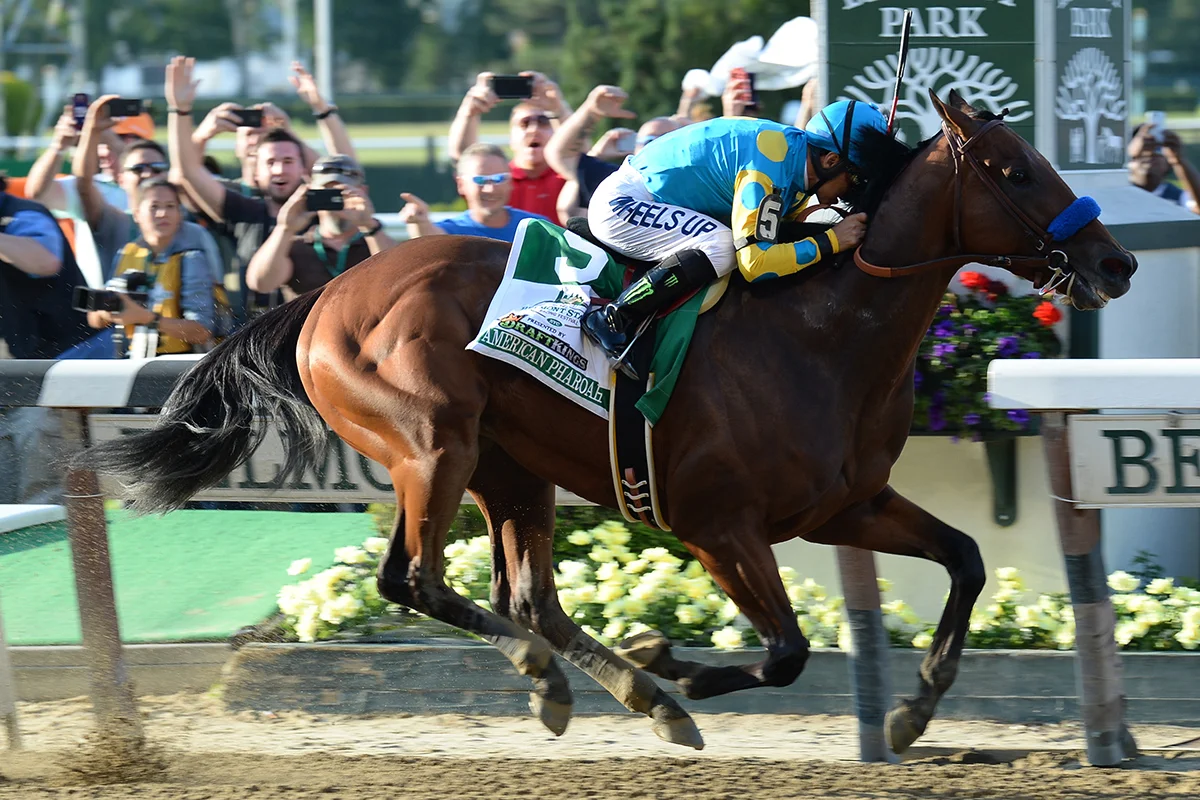
To find a racehorse's record, start with a racing database such as Equibase, then match the horse's foaling year and pedigree before reading its results. Use a pedigree service for ancestry and a registry's naming service for potential name availability. This guide explains which route answers each question, what you can check for free, and how to avoid attaching the wrong history to the right-looking name.
Choose the database that answers your question
A racehorse names database can mean three different things: a search for a horse that already exists, a pedigree library, or a check on a name you want to register. Start by deciding which answer you need. A successful search in one service does not establish everything the other two services are designed to tell you.
For a horse you saw in a North American race, begin with Equibase Horse Search. For British form, use the BHA horse search. For ancestry, use a pedigree service. For a proposed name, use the relevant naming authority's availability route. These choices save you from interpreting an empty result in the wrong place as proof that a horse never existed.
| Your question | Useful starting point | What still needs checking |
|---|---|---|
| Which horse ran in that race? | Equibase horse profiles and the race chart | Foaling year, breeding and the particular race |
| What has this horse done in Britain? | BHA Horses | Search filters and the geographical scope of the record |
| Who are its ancestors? | Equineline or Pedigree Query | Identity, report depth and source of pedigree information |
| Can I register this name? | Racehorse Naming and the appropriate registry | Potential availability versus final approval |
| Is this the horse described in its papers? | Registry identification services | Identifiers and documentation, not just a matching name |
The Jockey Club describes Equineline's services as covering pedigrees, race records, mare produce records and sire reports. That breadth is useful when a simple name query becomes a breeding question. It does not mean that every report is free or that every product contains the same detail. Read the description of the particular report before buying it.
Community pedigree websites provide another route into a family tree. Their ability to accept additions and corrections is useful for discovery, but it also gives you a reason to compare a surprising entry with a registry or an established bloodstock report. Treat a family-tree page as evidence to evaluate, especially when a single changed parent would alter the whole interpretation.
For ordinary race watching, you rarely need the most elaborate product first. Identify the horse, inspect its recent races, and follow up the specific uncertainty. A fan checking a runner's previous distance needs a race record; someone investigating a broodmare family needs a pedigree or produce report. Buying the second product will not automatically answer the first question.
Match the name to the correct horse
The most costly search mistake is finding a plausible horse and stopping too early. A name can appear in an old race report, a modern pedigree and a discussion about an entirely different animal. Before transferring any statistics into your notes, match the identity fields that remain meaningful beyond one afternoon at the track.
Use foaling year, pedigree and country together
Write down the spelling shown on the racecard, the year of birth if available, the sire and dam, and any country designation. Keep the country designation attached while comparing records across providers. The horse's name alone is a starting point; the combination is a much stronger match. If two pages disagree on the dam, do not blend their race histories while hoping the discrepancy will disappear.
Trainer and owner information can help establish context, but a different trainer does not necessarily indicate a different horse. Compare the dates attached to those details. Conversely, matching stable colours or a familiar rider is not enough to establish identity. A programme number belongs to the race you are watching, so searching for a memorable number without the track and date is a poor route to a lifetime record.
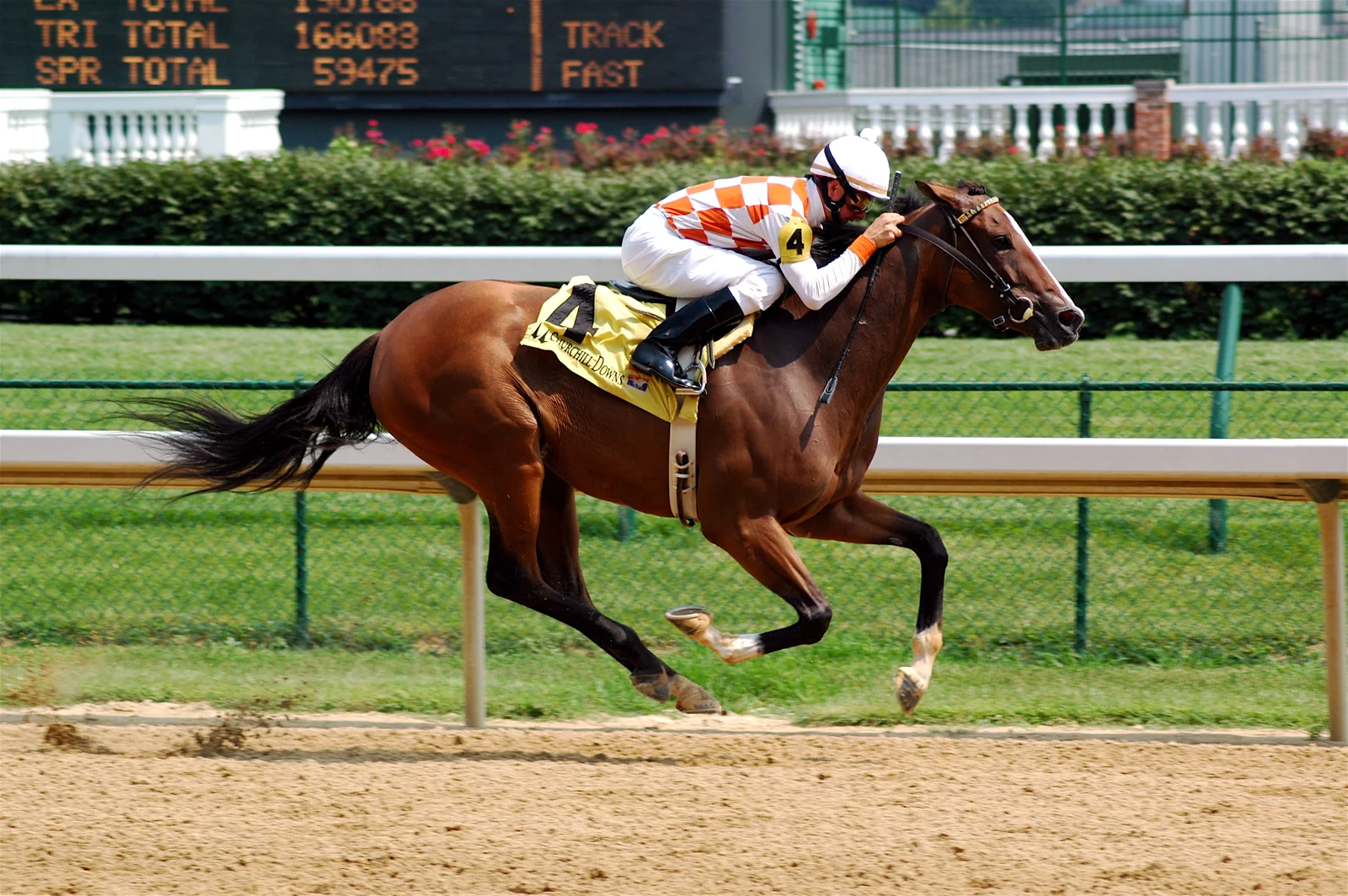

For a practical example, imagine that you have a photograph of a runner and an approximate meeting date. Find that day's card first, narrow the possibilities using the race number, and then compare the listed horse's breeding with its profile. This sequence uses the photograph to locate an event, rather than treating visual resemblance as identification. It also leaves you with a race that you can revisit if a later source raises a question.
When the horse has no racing record
An unraced horse presents a different task. The Jockey Club's Thoroughbred identification guidance expressly accommodates registered but unnamed horses using their year of birth and dam's name for T.I.P. eligibility. Registration and racing history are therefore different questions. Failure to find a race result cannot, by itself, settle whether the animal is registered.
If you own a horse whose papers or identity are uncertain, follow the registry's identification route. Its guidance describes tattoo and microchip lookup through an Interactive Registration account, along with assistance when ordinary research is unsuccessful. That is a more appropriate next step than choosing the closest-looking public profile. Preserve the identifiers you actually possess and ask the registry how to proceed.
For a spectator researching a first-time starter, the useful endpoint is more modest: confirm the identity shown on the official entry and recognise the absence of prior race evidence. A well-known sire, attractive photograph or active online profile does not create a racing record that the horse has yet to earn.
Follow a racing record back to the actual race
Once the identity matches, move from the profile to a specific performance. Record the track, date and race number before opening a chart or replay. Those details turn a broad statement such as “the horse ran well last time” into a claim you can examine. They also make it easier to locate the same race if another website lists it under an abbreviated course name.
A career summary is only the first layer
A row of starts, wins and earnings is useful for orientation. It tells you whether you are studying an experienced runner or a horse with little public form. It does not show the quality of every opponent, the circumstances of each defeat, or whether the horse's preferred conditions resemble its next assignment. Resist the temptation to read a large earnings total as a complete description of ability.
Open one relevant race and work through it in a consistent order: conditions, distance, surface, finishing order, then the chart's account of how the race unfolded. Equibase's chart glossary announcement explains that its terminology is intended to help readers understand the chartcaller's description. Use that vocabulary before turning a short comment into a sweeping explanation for a defeat.
For example, a sixth-place finish can be the start of an investigation rather than its conclusion. Was the horse trying a different distance? Was the field stronger? Does the chart describe interference or a particular position in running? These are questions to answer from the record, not excuses to supply automatically. If the evidence does not establish why the horse weakened, leave that point open.
Keep race time and performance figures in separate columns if you make notes. A clock time describes a timed effort in particular conditions; a figure is a provider's way of interpreting performance. Equibase's past-performance guide explains its own fields and comments. It is better to understand one system than to combine numbers from different providers as if they were interchangeable measurements.
International form needs an extra check. The Japan Racing Association's Equibase profile tutorial flags limitations in how some non-North-American race numbers appear. When an overseas run matters, consult the organising jurisdiction's result as well. A convenient profile can be a bridge to the evidence without being the only place where that evidence belongs.
Use our results page to locate the event you want to investigate, then keep the source chart with your notes. If your goal is to follow the horse into another race, the next task is checking its entry and eventual participation. A past-performance page describes what has happened; it does not confirm that a proposed future start will take place.
Read a pedigree without mistaking it for a performance forecast
A pedigree answers a different question from a form line. It shows family relationships. That can help you understand why a breeder, owner or commentator finds a horse interesting, but it does not tell you how the individual will perform in a particular race. Read ancestry as part of the horse's background, then return to actual evidence when assessing its racing.
What the family tree tells you
Start with the first generation. The sire is the father and the dam is the mother. The broodmare sire is the dam's father. Trace one branch at a time rather than jumping immediately to the most famous name several generations back. Doing so helps you avoid attributing a close relationship to a horse that is actually a more distant ancestor.
Suppose you are interested in two runners described as being by the same stallion. That is a useful connection to explore, but it leaves the maternal side and each individual's racing history unresolved. Compare both dams and then look at what the runners themselves have done. The shared sire gives you a reason to investigate a relationship; it is not a substitute for evaluating either horse.
The same distinction applies when a catalogue draws attention to a successful relative. Ask how the horses are related and what achievement is actually being credited to that relative. A famous name in the tree can make a pedigree memorable without establishing that the present horse has inherited the same distance preference, ability or racing temperament. Keep the family fact and your expectation in separate sentences.
Free access and paid reports
For a first look, The Jockey Club's T.I.P. resource page links to Equineline's free five-cross pedigree service for registered Thoroughbreds. Pedigree Query also distinguishes basic five-generation access from its subscribed features. Check the current product description before assuming that an image, extended report or specialised analysis is included.
A sensible progression is to begin with the basic tree, identify the question it leaves unanswered, and only then consider a fuller report. If you want to know what a mare has produced, a produce record addresses a different need from simply extending the displayed ancestry. If your question concerns how an ancestor raced, follow that horse's own performance record. More generations on the screen do not automatically provide more useful evidence.
When a community page and a formal report conflict, preserve both references and investigate the specific difference. Check that you selected the same horse before deciding which parent or year is wrong. Avoid “correcting” your entire notebook from a search snippet: the error may be a mistaken identity in your search, rather than an error in the underlying record.
Check name availability separately from horse identity
If your real question is “Can I name a horse this?”, change tools. A racing profile is designed to describe an existing runner. A naming service addresses whether a proposed name may be available under the relevant authority's system. A blank racing search is therefore not a reliable way to clear a name for registration.
The Jockey Club and Weatherbys launched Racehorse Naming in November 2025. Their official announcement specifies Great Britain, Ireland, the United States, Canada and Puerto Rico. The service is free and reports potential availability across the participating jurisdictions. Names remain subject to further checks and final approval by the respective authority.
That final step matters. Write “potentially available” in your notes if that is the result you receive, rather than “approved.” Keep the proposed spelling exact, identify where the horse will be registered, and follow the authority's application process. If the horse is moving between countries, the announcement notes that naming approval may involve both the exporting and importing authorities. A result for one jurisdiction should not be stretched into a worldwide clearance.
There is a useful reverse lesson for fans: a name-search result is not a biography. It does not tell you where a retired horse lives, whether it is currently racing, or what it achieved. Likewise, the presence of a name in an ancestry table does not tell you that you can use that name for another horse. These are separate questions with separate evidence.
For the rules and stories behind memorable names, use our racehorse naming guide. For an existing horse, return to the identity-and-record workflow. Keeping those tasks separate makes both searches shorter: you can stop looking for race results when you need approval, and stop reading naming rules when you only want to find a runner's previous start.
Save a record you can check again
A useful horse note should survive your next search. Save the registered name as displayed, the identifying pedigree details, the source link and the date you checked it. Add the race reference that prompted your interest. This small amount of structure is more valuable than copying a long biography without retaining a way to verify it.
For example, your note might read: “Identity matched by year and parents; interested after the third race at this track on this date; next question is whether the horse has raced over a longer distance.” That is a clear research task. “Looks like a future champion” records enthusiasm but gives you no way to assess whether your original reasoning was sound when the horse races again.
When a search produces nothing, troubleshoot before drawing a conclusion. Check the exact spelling, then the provider's filters and scope. The BHA search, for example, requires at least three characters and offers a filter for horses with a current official rating. A restricted search can miss a horse that a broader search would include. A different breed or racing jurisdiction may require a different source altogether.
If two credible records still disagree, write down the disagreement rather than quietly picking the more appealing answer. A name, date or geographic distinction may resolve it; if it does not, keep the conclusion narrow. You can understand a particular race while remaining unsure about some part of the horse's wider background.
Finally, connect the research to the racing you intend to watch. Check today's schedule for the meeting, and use our racehorse watchlist guide to organise follow-up. A well-matched profile, a relevant chart and a precise unanswered question give you a stronger starting point than collecting names alone.
Join the conversation
Have a question or a race-day tip to share? Keep it friendly and on topic. Comments appear after review.
No comments yet. Start the conversation.
Sign in with Google to leave a comment.