Racehorses to follow are most useful as a personal list of questions, rather than a permanent ranking of famous names. Start with a performance that interests you, record the conditions behind it and confirm the next actual entry. This guide uses dated October 2026 examples to show how to build and review that list.
Give each horse a reason to be on your list
A good list of racehorses to follow tells you why the next start matters. Perhaps an established performer faces a new rival, a lightly raced runner moves up in class, or a familiar local horse returns under conditions that previously suited it. The name is the starting point; the question attached to it is what makes following the campaign rewarding.
Keep three different purposes separate. A stars list helps you appreciate major races. A development list follows horses still building a record. A circuit list keeps you connected to the meets you regularly watch. They can overlap, but they do not need identical selection rules. A horse can be fascinating to follow without being the world's highest rated or a sensible wager at every appearance.
There is a practical model in Timeform's seasonal horses-to-follow product: it describes entry flags, personal notes and reports that develop through the campaign. Its current advertised list concerns jumps racing, so it is not a substitute for choosing US Flat horses. The transferable idea is that following continues after the original selection; a static list should become an ongoing record.
Begin with fewer horses than you can comfortably review. For each, write its exact identity, the last performance that caught your attention and the conditions you want to see next. “Finished strongly and might appreciate more distance” is a testable thought. “Looks like a future champion” is enthusiasm, but it gives you little to check when the horse reappears.
Include a reason to remove or downgrade the horse. If the appeal was a return to turf, another dirt entry does not answer that original question. If the appeal was progress with experience, repeated similar performances may weaken it. This is not disloyalty to a favorite; it is the difference between supporting a horse and maintaining an analytical list.
You can also follow without trying to predict a winner. Watching how a prominent dirt runner travels abroad, how a sprinter handles a different course, or how a young horse settles behind rivals can deepen your understanding of racing. Those questions remain worthwhile even when the result challenges the expectation you started with.
Use elite performances as starting points, not permanent labels
The IFHA rankings covering January 1 to October 4, 2026 provide a dated starting point. Three examples show why the accompanying context matters: Forever Young appears on dirt at 123, Ombudsman on turf at 131, and Ka Ying Rising in the turf sprint category at 135. They are not interchangeable candidates for the same race. Nor does appearing in the table confirm a future entry.
A dirt horse with international form
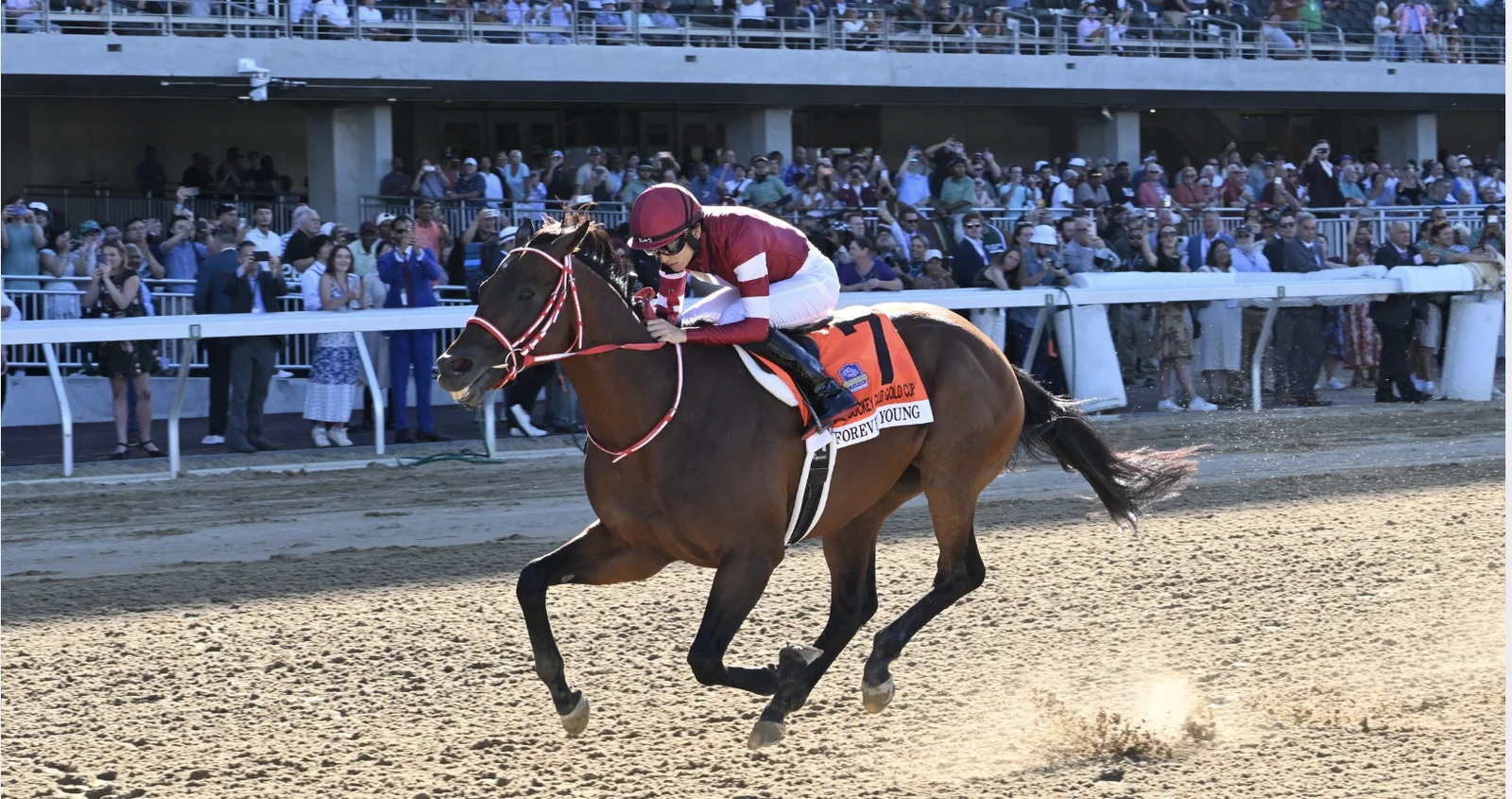
Forever Young gives US fans a direct connection to an international campaign. In its September 18, 2026 recap, NYRA reported his three-and-a-quarter-length Jockey Club Gold Cup victory over ten furlongs at Belmont Park. Four horses ultimately started after scratches. The report also described Yoshito Yahagi's preparation plans toward the Breeders' Cup, rather than presenting a finalized championship field.
That gives a useful viewing question: how would a different field and pace test the performance? A convincing win against the runners who actually started is an achievement, but it does not settle how a larger or differently composed race will unfold. Follow the subsequent preparation and entry announcements instead of treating a qualification berth as proof that the horse will reach the gate.
A turf horse whose rating belongs to a particular performance
Ombudsman illustrates why a watchlist should contain more than a peak number. Godolphin's owner profile, checked in October, lists victories in the March 28 Dubai Turf and June 17 Prince Of Wales's Stakes, followed by fourth in the August 19 Juddmonte International. The profile's most recent displayed result is a dated record, not a promise about his next start.
His Royal Ascot performance is a reason to study the horse; the later defeat is a reason to keep studying. An observer can compare the race conditions, position and finishing effort instead of assuming that the most flattering performance defines every future one. Before adding an upcoming date beside the name, find a current announcement or official entry. The ranking itself supplies neither.
A sprint specialist with a different job
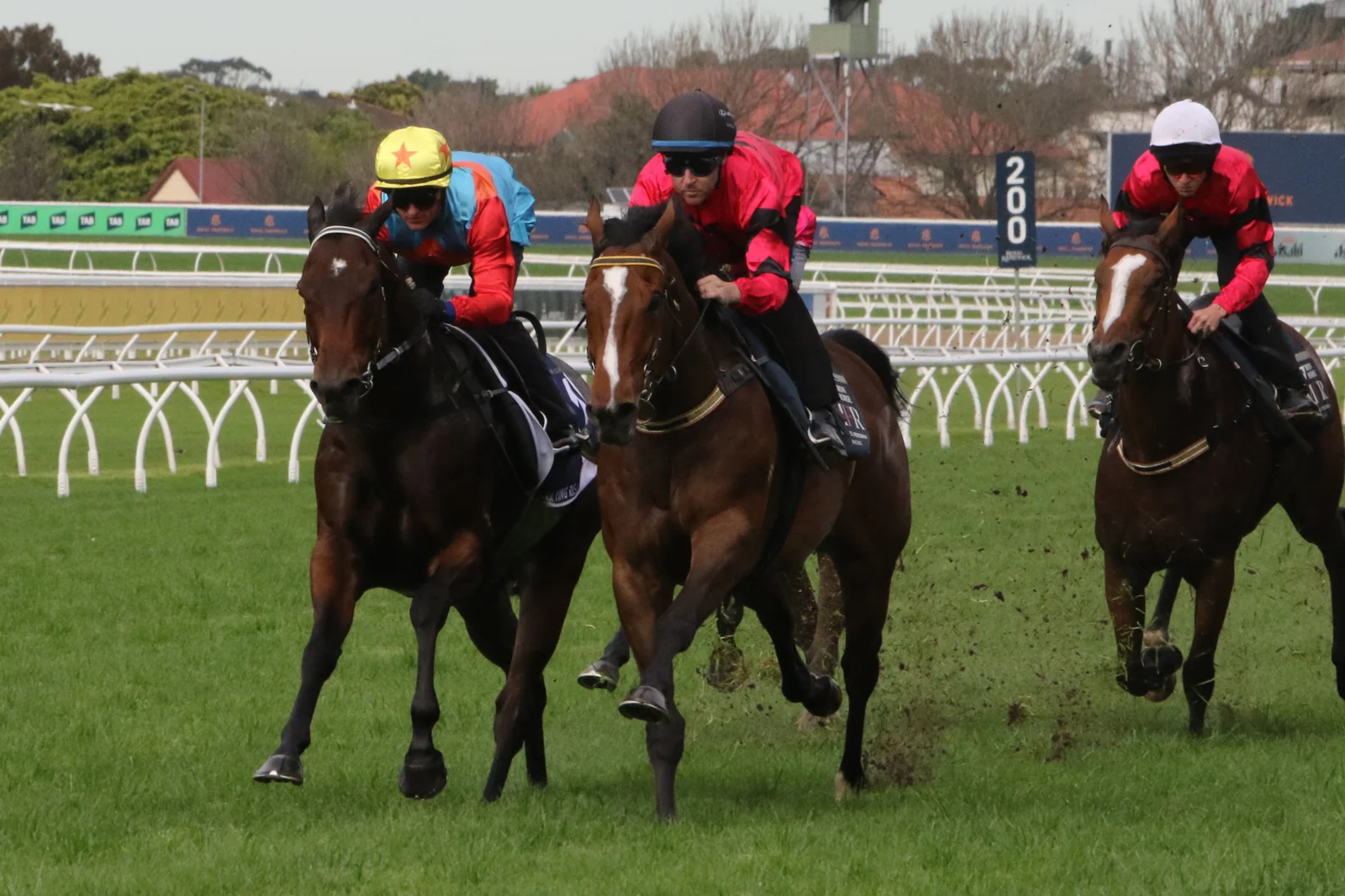
Ka Ying Rising connects a Hong Kong sprint campaign to Australia. The Hong Kong Jockey Club's October 6 report described a 1,000-metre Randwick barrier trial ahead of the planned October 17 Everest over 1,200 metres. He finished a neck behind Ninja while restrained on ground rated Soft 7. The report included the trainer's and jockey's assessment of the preparation and surface.
A trial is preparation, so its placing should not automatically be treated as a championship-race defeat or deducted from a race-winning streak. Equally, a favorable assessment does not guarantee the next result. The watchlist question is whether the horse's preparation and the eventual conditions support a repeat of his sprint form. It is a different question from asking a dirt-route horse to reproduce an American ten-furlong performance.
Read the form in the conditions that produced it
A form line becomes useful when you can reconstruct the contest behind it. Note the distance, surface, going or track condition, class of opposition, field size and position through the race. Then compare those circumstances with the question on your watchlist. The point is not to explain away every defeat; it is to identify what the performance actually tested.
Separate a finishing position from the race the horse ran
Fourth place can mean very different things. In one hypothetical race, a runner might lose ground at the start and wait for room before finishing well. In another, it might enjoy a clear passage and weaken when challenged. The placing is identical, but the observations support different next-start questions. Neither automatically establishes that the horse was unlucky or will improve.
Watch the whole race rather than only the last furlong. How did the horse leave the gate? Where did it settle? When did the rider ask for effort, and was there room to respond? Read the official comments alongside the replay. In the earlier Belmont example, NYRA's report described Baeza's slow start and the race's moderate early tempo; simply recording the finishing order would leave out that context.
Be precise about what you saw. “Waited behind rivals entering the stretch” is an observation. “Would certainly have won with a clear run” is a counterfactual that a replay cannot prove. A useful note preserves the first and treats the second, at most, as a tentative interpretation. The next race might present different opposition or no favorable setup.
Compare figures without mixing their scales
The IFHA explains that its ratings consider elite-race performances, opposition and achievements within the designated period. Its categories retain distance and surface distinctions. That is not a raw stopwatch reading, a current entry list or a probability that a horse will win its next race.
Speed-figure providers also use different calculations. America's Best Racing's explanation, linked by Equibase, distinguishes the systems rather than treating their numbers as interchangeable. Some scales reward a higher number; others use a lower number for a better performance. Record the provider with the figure before comparing it.
Even two visible ratings for one horse need their labels. Godolphin's Ombudsman profile displayed an official rating of 132 when checked, while the cited IFHA period listed 131. That is a reason to retain source and date, not to silently replace one number or average them. For your own list, consistent comparisons within the same series are more informative than a column assembled from whichever number looks most impressive.
Follow a horse from a proposed target to the starting gate
A trainer naming a target is the beginning of a story, not the final racecard. Between that interview and the starting gate, fitness, transport, conditions and the opposition can change the decision. Put the proposed race in your notes, but keep its status visible: a target, a pre-entry or an entry. Those words answer different questions.
The 2026 Breeders' Cup provides a useful concrete example. Its October 7 announcement sets the pre-entry deadline at noon Eastern on October 19, with the fields announced at noon Eastern on October 21. Entry and the post-position draw follow on October 26, ahead of the October 30–31 championships at Keeneland. Pre-entry is explicitly the first of two steps. A horse appearing in that first announcement therefore still needs to be followed through the later stage.
Confirm the identity, entry and latest changes
Start by making sure you are following the right horse. A familiar name is not always a unique identity. Equibase's Virtual Stable FAQ points to foaling date, sex, breed and country when similarly named horses appear. This matters particularly when an international name reaches your feed without a country suffix. A result attached to the wrong horse can corrupt every conclusion after it.
The same official service describes free notifications for entries, workouts, race-day reminders and results. Those are useful prompts to inspect the race, rather than reasons to stop checking it. An entry alert tells you where to look; it does not remove the possibility of a later scratch. Keep the race date and track next to the horse's name so that an older alert does not become your supposed next start.
On race day, read the declared field and subsequent changes. Confirm the surface, distance, jockey and the number identifying the runner in that particular race. If your interest depended on a turf contest and the race has moved to dirt, the original question has changed. If the horse is scratched, mark that plainly and wait for another confirmed opportunity. A watchlist should make uncertainty easier to see, not conceal it behind an exciting headline.
Change your opinion when the evidence changes
Being a fan does not require you to defend every result. A watchlist works best when you can distinguish affection for a horse from your explanation of its form. You may still enjoy following a favourite after concluding that a particular distance is a poor fit. Changing that assessment is progress: you have learned something specific rather than simply collecting another finishing position.
Retirement is the clearest reason to change the kind of attention you give a name. Flightline's extraordinary racing career remains worth studying, but a highlight reel does not make him a runner to expect on the next racecard. His Lane's End profile recounts his six unbeaten starts and now discusses his first crop's racing and sales activity in 2026. That is a breeding story. Keep him in an archive of favourite performers, or follow his offspring separately, rather than leaving a historical champion in your list of prospective starters.
Less dramatic changes require more thought. Suppose you added a developing horse because it finished strongly after meeting traffic. In the next race it gets a clear passage under comparable conditions and still cannot close the gap. You now have evidence against the original explanation. One result need not settle the question, but it should alter the note. Writing “unlucky again” without identifying what actually went wrong protects your first impression from being tested.
The reverse also matters. A defeat in a race that asks a different question may reveal little about your original interest. A horse you follow for longer turf races can disappoint in a shorter contest without disproving its stamina. Record the mismatch instead of erasing the defeat or treating every loss as identical. Keep the evidence and its limits together.
Give each review a decision: retain the reason, revise it, or remove it. A smaller list containing a few clear questions is easier to use than a crowded collection of names with no conditions attached. You can always return to a horse when new evidence warrants it. The discipline is in explaining that return, rather than assuming that a famous name must remain relevant indefinitely.
Turn the watchlist into your next racing session
A useful watchlist should eventually lead you to a particular race you want to understand. Once an entry is confirmed, find its track, date and race number in the today's racing schedule. Read the whole field, not just the highlighted name. Your horse's task depends on the runners beside it, and your original interest may look different when the race is finally assembled.
Then gather the day's relevant information from the track. Keeneland's official tools page, for example, offers a complimentary digital program during its spring and fall meets and points fans towards meet information and workout comments. These resources put a horse's past performances back into the context of the upcoming card. Decide how you will follow the race through the television schedule, allowing time to see the runners and the final changes rather than arriving only for the result.
Keep notes that you can test after the race
Write your question before the start. “Interesting horse” is difficult to review; “I want to see whether a longer turf trip and a clear passage produce a stronger finish” gives you something observable. Add the track, date, race number and conditions. You are making a record of the opportunity, not declaring that the horse must win it.
Afterwards, locate the race in race results and consult the corresponding official result or chart and replay. Revisit the question while the race is fresh. Did the horse get the conditions you expected? Was the passage actually clear? Did it finish strongly against this opposition, or did your eye follow only the familiar silks while another runner produced the more interesting performance?
Finish the note with what you learned and what would make the next appearance worth watching. You do not need a wager to make that exercise rewarding. Over a season, it turns a collection of names into a record of how you read races, where your first impressions held up and where the horses taught you to look again.
Join the conversation
Have a question or a race-day tip to share? Keep it friendly and on topic. Comments appear after review.
No comments yet. Start the conversation.
Sign in with Google to leave a comment.