Funny racehorse names are most interesting when the joke belongs to a real horse and the story can be checked. This guide looks at memorable examples, explains the character count and protected-name rules for The Jockey Club's Thoroughbred registry, and shows why a potential-availability search is different from approval. It also helps you follow the horse after the name has caught your attention.
Why racehorse names sound different from pet names
A racehorse’s name has a public job. It appears on the card, is spoken in the race call and follows the horse into the result. A phrase that sounds elaborate beside a pet’s short household name can be useful in that setting: it gives spectators something distinctive to recognize. The name may be playful, solemn, personal or simply unusual.
That does not mean every strange name is an attempt to trick an announcer. Some work as puns when spoken aloud; others become funny because the phrase sounds unexpected in a sporting contest. Still others only seem odd until you learn the naming story. Enjoying the sound and establishing the reason behind it are separate tasks.
For Thoroughbreds, start with the relevant naming authority. The Jockey Club oversees naming in the United States, Canada and Puerto Rico, while Weatherbys covers Great Britain and Ireland. A US naming guide should identify that scope rather than presenting its rules as instructions for every breed and every racing country.
There are two useful ways to read a funny-name list. As entertainment, ask what makes the wording memorable. As racing history, ask which real horse carried it, when it raced and what supports the claimed origin. A list that supplies only the joke may be enjoyable, but it cannot establish a pedigree, a career or an owner’s intention.
The best examples lead back to the sport. You can remember a horse because its name made you smile and then discover a distinctive performance, a partnership’s story or a connection to its parents. That is more rewarding than assuming the funniest name belongs to the best runner. The name helps you find the horse; the record tells you what it did.
Enjoy the joke without inventing the horse’s story
The strongest funny racehorse names are attached to identifiable horses. You can hear the joke, check the spelling and find a record beyond a social-media caption. Three examples show why that matters: Funny Cide, Notacatbutallama and Zenyatta each invite a different kind of reading. The first sounds like a familiar phrase, the second has a reported family story, and the third comes from music.
A name can be funny and belong to a serious runner
Funny Cide sounds like “funny side,” but the sporting record is substantial: he won the 2003 Kentucky Derby and Preakness Stakes. The Kentucky Horse Park’s tribute identifies those victories. Noticing the sound of the name does not require us to invent a quotation about why its owner selected it.
Notacatbutallama is a more complete naming anecdote. In a 2016 NYRA feature, the origin is a game of Taboo: Mike Repole was prompting his wife Maria toward the word “dog,” but her response supplied “llama.” Written as one word, the name preserves that unexpected exchange. Here the story is reported by an identifiable racing organization, rather than inferred from the letters.
Unusual words are not always a hidden joke
Zenyatta illustrates a different possibility. The National Museum of Racing and Hall of Fame explains that Jerry Moss named her after The Police album Zenyatta Mondatta. The unfamiliar word has a documented musical connection. Treating it as a mysterious pun would miss the relevant part of the owner’s story.
For any example, separate what the wording suggests to you from what its connections actually said. “I hear a joke in this” is an interpretation. “The owner chose it because…” is a historical claim that needs evidence. That small distinction makes a funny-name conversation better: the humour remains, while the horse’s identity and the people behind the name retain their own story.
Count characters before you count clever ideas
Under The Jockey Club’s published naming rules, a name cannot exceed 18 characters when spaces and punctuation are counted. The August 2025 rule book supplies the wording. “Eighteen letters” is misleading if you use it to ignore the gaps between words. A phrase can have fewer than 18 alphabetic letters and still be too long.
Consider the invented example “Blue Sky Breakfast.” Blue has four letters, Sky three and Breakfast nine: 16 letters in all. The two spaces bring the total to 18. Add an exclamation mark and you have 19. This is a counting demonstration, not an available or approved horse name. It shows why the complete written version must be checked rather than an approximate length in your head.
Spaces and sound both matter
Removing spaces can reduce the character count, but it does not make a phrase automatically acceptable. Ask someone to read your proposed version without a pronunciation prompt. If the intended words disappear inside a long string, the joke may become harder to recognize. The editor’s question is whether the result still communicates; the registry’s approval is a separate decision.
Changing a letter is not a dependable way around a name conflict either. Rule 6 also addresses names similar in spelling or pronunciation to specified ineligible classes. A different-looking version can still sound confusingly close. Evaluate the spoken phrase as well as the typed one, and do not advertise a clever spelling as a guaranteed exception.
Meaning matters too: the rules give the registrar discretion concerning profanity, obscene suggestions and other unacceptable wording. A name being funny in a private conversation does not establish that it is suitable for registration. For a fan creating imaginary names, this is part of the puzzle: find wording that survives being counted, read aloud and understood. For an owner, those checks are preparation for the authority’s decision, not a replacement for it.
Famous names are not a free naming library
A favourite champion may inspire your imaginary horse, but its registered name is not necessarily available for another one. The Jockey Club’s Rule 6 naming requirements distinguish permanent names from names that may eventually become eligible for reuse. Permanent criteria include Hall of Fame membership, an Eclipse Award and victories in specified races such as the Kentucky Derby.
Funny Cide is useful here too. His name may sound playful, yet his Kentucky Derby victory connects it with a permanent-name criterion. The humour does not make it less important as a racing identity. Borrowing a familiar champion’s exact name is a different act from finding inspiration in a theme, phrase or memory.
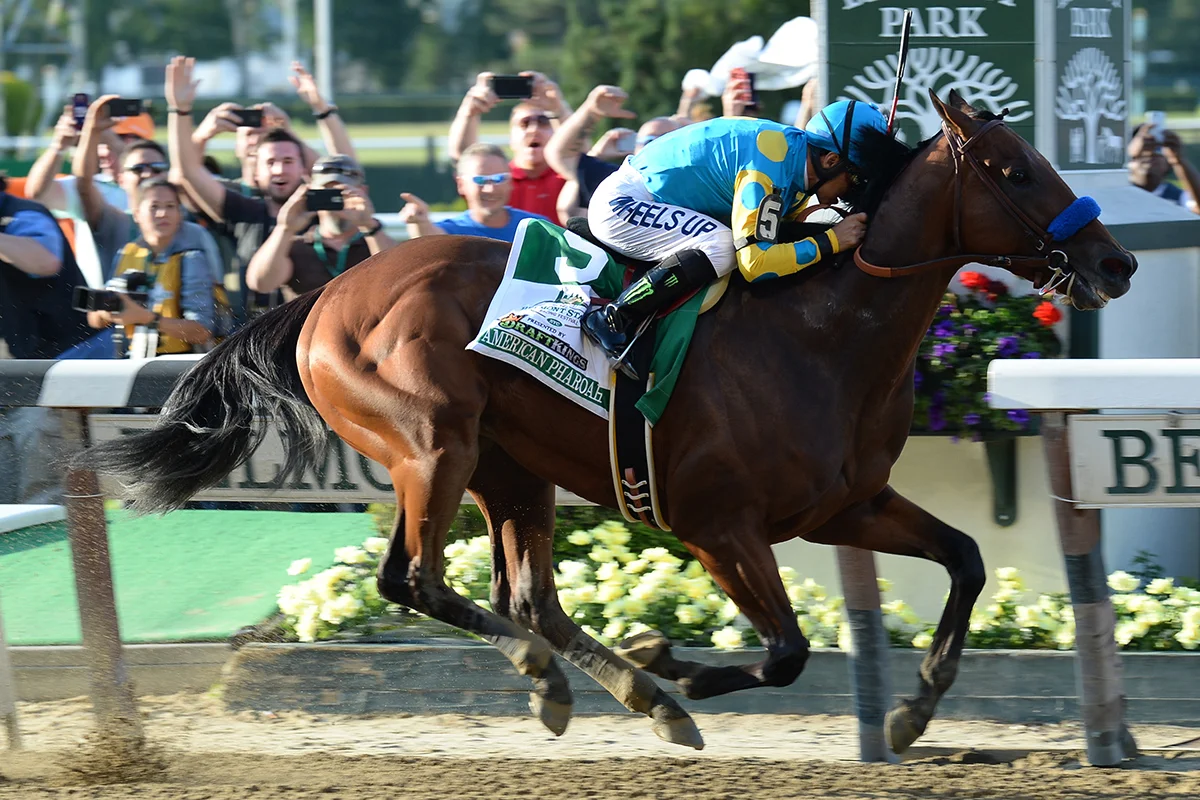
The cover photograph shows another identifiable champion, American Pharoah. NYRA's historical profile records his 2015 Triple Crown achievement. A celebrated name points back to a particular horse and its record; it is more than wording to borrow for a new joke.
The reuse provisions are more specific than “wait five years after retirement.” Rule 6 describes possible eligibility for horses over ten years old whose names are not otherwise excluded and have not been used in racing or breeding during the preceding five years. Read all the conditions together. An old race result is not proof that the name is now free, and age alone does not remove permanent protection.
People’s names require care as well. For a living person, the published rules require written permission on file and approval supported by a satisfactory explanation. Neither “all human names are banned” nor “permission guarantees approval” accurately describes that process. A fan’s proposed tribute and a registry’s accepted naming request are different stages.
An inventive exercise is to begin with what you admire rather than the protected wording. Is it a horse’s tenacity, a favourite place or the rhythm of a phrase? Build an independent idea around that interest, then check it normally. This does not guarantee acceptance, but it produces a more personal concept than adding a suffix to a famous name and assuming the change solves every conflict.
Look for the story behind a name
The best explanation usually comes from the people who chose the name. A neat interpretation from a spectator can be enjoyable without being the actual origin. When a story is attributed to an owner, breeder or naming partnership, keep that attribution attached: it tells readers why this explanation carries more weight than a clever guess.
Pedigree can supply the ingredients
Little Red Feather gives a concrete example from its own naming practice: Ice Cream Truck was by Pleasantly Perfect out of Coconut Popsicle. In its naming guide, the partnership describes using parents' names as a creative approach, rather than a registration requirement. The dam's dessert reference makes the choice easy to appreciate; you do not need a secret code to enjoy it.
That is a useful starting point for a naming project. Write the sire and dam on a page, then list the images, places or sounds their names suggest. A family connection can be subtle: the new name need not paste both parents together. Read the candidate aloud and see whether the connection survives without a paragraph of explanation. A name that works independently will be easier for a spectator to remember.
Do not turn this creative connection into a performance claim. A dessert theme says something about the naming idea; it does not tell you whether the horse handles turf, stays a longer distance or breaks quickly. Those questions belong to its racing evidence.
A stable nickname is a different question
In NYRA's 2016 account of Notacatbutallama, the horse is also called “Llama.” That shorter form is convenient in conversation. It does not mean a second horse has appeared, or that the registered name on the race record should be replaced.
When you meet a horse, ask its handler what people call it and what name identifies its public record. Keep both answers if you are writing a caption or keeping a personal notebook. For searching entries and results, start with the full published name. For an interview, explain the nickname once. That small distinction lets readers enjoy the personality without losing the horse they came to find.
Check availability before treating an idea as approved
There are three separate milestones in a naming project: finding an idea you like, checking whether it might be available, and obtaining approval. A favourite name can pass the first milestone beautifully and still fail later. Keep a shortlist rather than becoming attached to one candidate before its status has been established.
The Jockey Club and Weatherbys announced Racehorse Naming in November 2025. Their launch announcement describes results indicating potential availability in both participating naming jurisdictions, one, or neither. It expressly says further checks and final approval remain necessary. Read a promising result as permission to continue the process, rather than permission to announce a registered name.
International searches have a defined scope
The service described in that announcement covers the United States, Canada and Puerto Rico through The Jockey Club, and Great Britain and Ireland through Weatherbys. That is a useful cross-border resource for Thoroughbred naming. It does not make every registry, horse breed and racing country part of the same search.
Before submitting an idea, identify the authority responsible for your horse. Save the exact candidate spelling and the jurisdiction you checked, together with the date. This is especially helpful when several people are suggesting alternatives: “we checked it” is ambiguous if each person searched a different spelling. Contact the relevant authority about the actual application instead of assuming that a remembered result completes it.
A suggestion generator answers another question. The Jockey Club's February 2025 Naming AI announcement describes ideas based on supplied words or pedigree, with generated names still subject to registry approval. A computer's clever phrase is a candidate, just as your own clever phrase is.
For a fan making a fictional stable or a friendly naming contest, label suggestions as invented. For someone naming an actual horse, carry the shortlist through the real approval process. Both activities can be fun, but they finish at different points. A printable list of jokes is not evidence that those names can be registered today.
Follow the horse beyond its memorable name
.jpg)
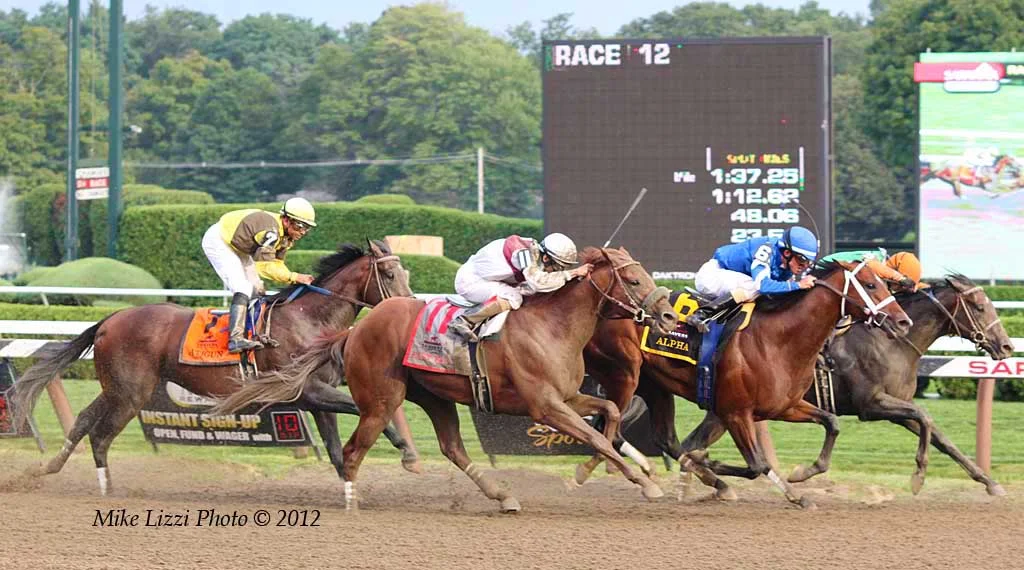
A funny name can be the beginning of a proper racing interest. The next step is to establish which horse you have found. Copy the spelling from the published entry or profile, including spaces and punctuation, rather than relying on what you thought you heard over the public address system.
Equibase's Virtual Stable FAQ warns that horses can share a name while differing in birth year, birth country or breed. It recommends checking identifying information when choosing the horse to follow. A familiar name in a search result therefore deserves an identity check before you assume it is the runner you remember.
A useful personal note has two parts. First record the horse: full name, birth year and any other identifying details supplied by the profile. Then record the appearance you watched: racecourse, date and race number. The first part keeps your subject clear; the second lets you return to that performance. “The horse with the joke name last Saturday” becomes harder to trace as weeks pass.
If you want to watch another start, use the today schedule to locate the meeting and specific race. After it has finished, the results page helps you find the corresponding race. Match the venue and date before comparing an entry list with a result; the same race number at another meeting describes a different contest.
Let the evidence describe the runner. Watch how it settles, where it travels and what happens in the closing stages. A name suggesting speed does not establish that it leads; a comic phrase does not make it a novelty performer. The pleasure is finding a personality you remember, then learning what the horse actually does.
If you share the story, give the full name and the source of its reported origin. Keep your own wordplay clearly your own. That makes a good caption more than a recycled joke: another fan can find the horse, understand the reference and carry the conversation back to the racing.
Cover: American Pharoah in NYRA's historical 2015 Belmont archive photograph. Image: New York Racing Association; individual photographer and exact capture moment not separately identified. WebP conversion. The cover illustrates a famous racing identity, rather than the other named horses discussed here.
Join the conversation
Have a question or a race-day tip to share? Keep it friendly and on topic. Comments appear after review.
No comments yet. Start the conversation.
Sign in with Google to leave a comment.