What breeders are trying to produce
Racehorse breeding is the selection and mating of horses with the aim of producing the next generation of racing athletes. In Thoroughbred racing, that involves much more than putting two famous names together. Breeders consider the mare, the stallion, their physical characteristics, their families and the kind of racehorse they hope to produce. Registration then documents the resulting foal's identity and ancestry; racing later tests its ability.
This guide focuses on Thoroughbreds and the American Stud Book. “Racehorse” is broader: Standardbreds and Quarter Horses also race, under their own breed and registration arrangements. Nor does Thoroughbred simply mean any horse considered exceptionally well bred. It is a defined breed with recorded ancestry and eligibility rules. Keeping those meanings separate prevents assumptions from one racing discipline being applied to another.
A breeding goal might emphasize a particular distance range, surface or stage of maturity. It must also concern the individual horse's capacity to train and develop. A celebrated sprinting parent offers an interesting clue, but a young horse still needs appropriate physical development, sound management and an opportunity to show what it can do. A pedigree is part of the evidence about that athlete, not a substitute for meeting the athlete.
Kentucky's Mill Ridge Farm's breeding explanation connects mating choices with conformation, temperament, performance and eventual sales. Conformation means physical structure and how the horse is put together. Temperament concerns behavioral characteristics and responses to handling. Neither can be assessed properly from an attractive ancestor's name alone, which is why experienced breeders examine both records and horses.
The people involved also have different roles. A breeder plans or carries out the breeding enterprise; a later owner may purchase the foal or yearling; a trainer prepares the horse for racing. A stallion farm, a boarding farm and a sales consignor may each enter the story at different points. One person or operation can perform several roles, but the breeder credited on a race record is not automatically the current owner or trainer.
Commercial intention influences the plan too. Breeding to sell a yearling means presenting a young horse to buyers before its racing ability has been demonstrated. Retaining a horse to race means accepting a different timetable and further responsibility. Understanding that distinction helps a fan read sales headlines with perspective: an impressive price records a transaction and expectations at that moment, while race performance remains a separate outcome.
Read a pedigree without treating it as a prediction
A pedigree is a documented family tree. Read it by relationships before reacting to famous names. The first useful questions are who the parents are, what those parents and close relatives actually achieved, and whether that evidence relates to the horse or race you are considering. A distant champion can make a page interesting without explaining a particular youngster's likely ability.
Sire, dam, damsire and the female family
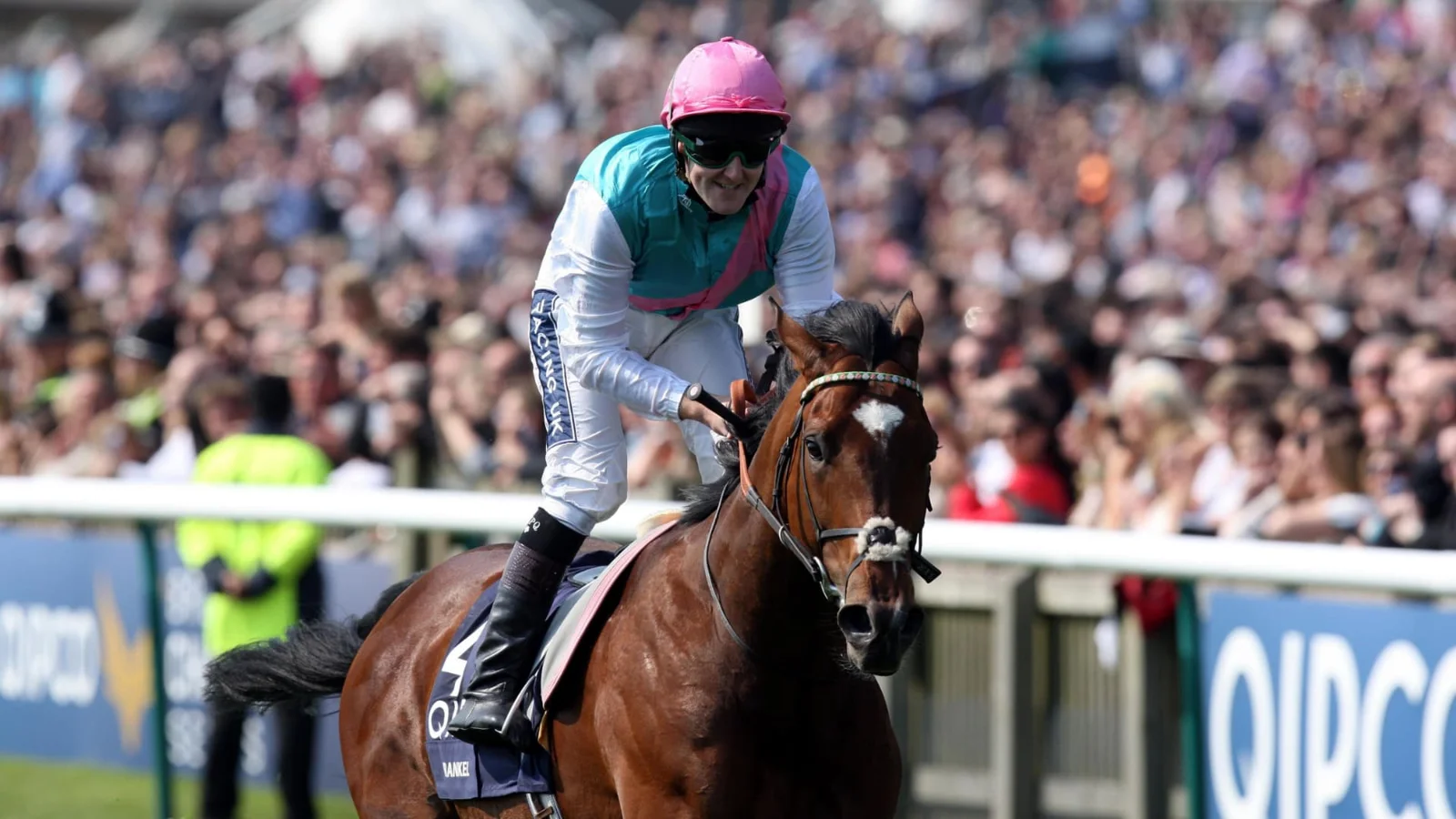
The sire is the father; the dam is the mother; the damsire is the dam's father. Racing shorthand describes a horse as “by” its sire and “out of” its dam. Juddmonte lists Frankel as Galileo–Kind (Danehill): Galileo is his sire, Kind his dam and Danehill his damsire. The parentheses identify the next relationship rather than another parent of Frankel.
The female family follows the dam and successive dams behind her. Examine the dam's own record and the records of her offspring, then move outward. A close relative's demonstrated ability is a more specific piece of information than the simple presence of a remote celebrity. Our racehorse record and pedigree lookup guide explains how to establish that you are reading the correct horse's record before comparing families.
Full siblings, half siblings and repeated ancestors
Full siblings share both parents. In Thoroughbred catalogue discussion, a half brother or half sister commonly shares the dam while having a different sire; identify the connection rather than assuming it. Horses sharing only a fashionable stallion also have a relationship, but that does not tell you that their maternal families or upbringing match. Always ask which parent is shared.
Even full siblings are individual animals. A successful earlier foal makes the mating interesting, but repeating it does not reproduce the same athlete. Similarly, seeing an ancestor more than once in a pedigree describes repeated ancestry; it does not prove that a desired trait will appear in a particular form. Treat claims about a successful “cross” as something to investigate, with attention to the number and quality of actual runners behind them.
What black type can tell you
Sales catalogues use black type to identify qualifying stakes performers. Read the accompanying race names, grades, placings and relationships rather than treating bold print as a general seal of approval. The achievement may belong to the dam, a sibling or a more distant relative, and those positions are not interchangeable. Consult the catalogue's notation rules when comparing publications.
A useful pedigree note therefore states both the connection and the limitation: a close relative performed well under certain conditions, so those conditions may be worth investigating for this horse. It should stop short of declaring that the unraced youngster has already demonstrated the same talent. Once the youngster begins racing, its own performances increasingly provide the direct evidence.
From a mating plan to a foal on the ground
Choosing a mating begins a long process rather than completing it. A breeder must arrange access to the stallion, coordinate the mare's care, maintain accurate breeding records and plan for the resulting foal. The timetable depends on biological events and the individual horses. A booking, a pregnancy and a healthy newborn are different milestones; reaching one does not make the next automatic.
Why Thoroughbred registration requires live cover
For American Stud Book eligibility, The Jockey Club requires natural mating, commonly called live cover. Its official registration rules also require natural gestation and delivery from the same mare in which conception occurred. Foals produced by artificial insemination, embryo transfer or cloning are not eligible under those provisions. These are Thoroughbred registration requirements, not a description of every breeding method used across all equine sports.
That rule has practical consequences. The breeding operation has to coordinate the physical horses and the covering record rather than simply order a genetic match on paper. Specialist staff manage the process and document what happened. The important distinction for a racing reader is eligibility: an interesting ancestry does not override the stud book's conception and registration requirements. For a proposed mating, the registry and farm should resolve the exact conditions before arrangements are made.
The farm year and the people behind it
A mare described as “in foal” is pregnant. Pregnancy is commonly described as lasting approximately eleven months, although that is an overview rather than a fixed due date for an individual mare. Mill Ridge's broodmare and foal account stresses both the long timetable and the uncertainty before a healthy foal arrives. The team responsible for that period has work quite different from preparing a runner for a race.
A foal becomes a weanling after it is weaned from the mare. A yearling describes the following age category, not a horse that has already proved itself on the track. Farm staff, veterinarians and farriers support development; handlers introduce appropriate experiences; a consignor may later prepare the youngster for sale. The particular plan should follow the horse, rather than an assumption that every member of a crop develops at the same pace.
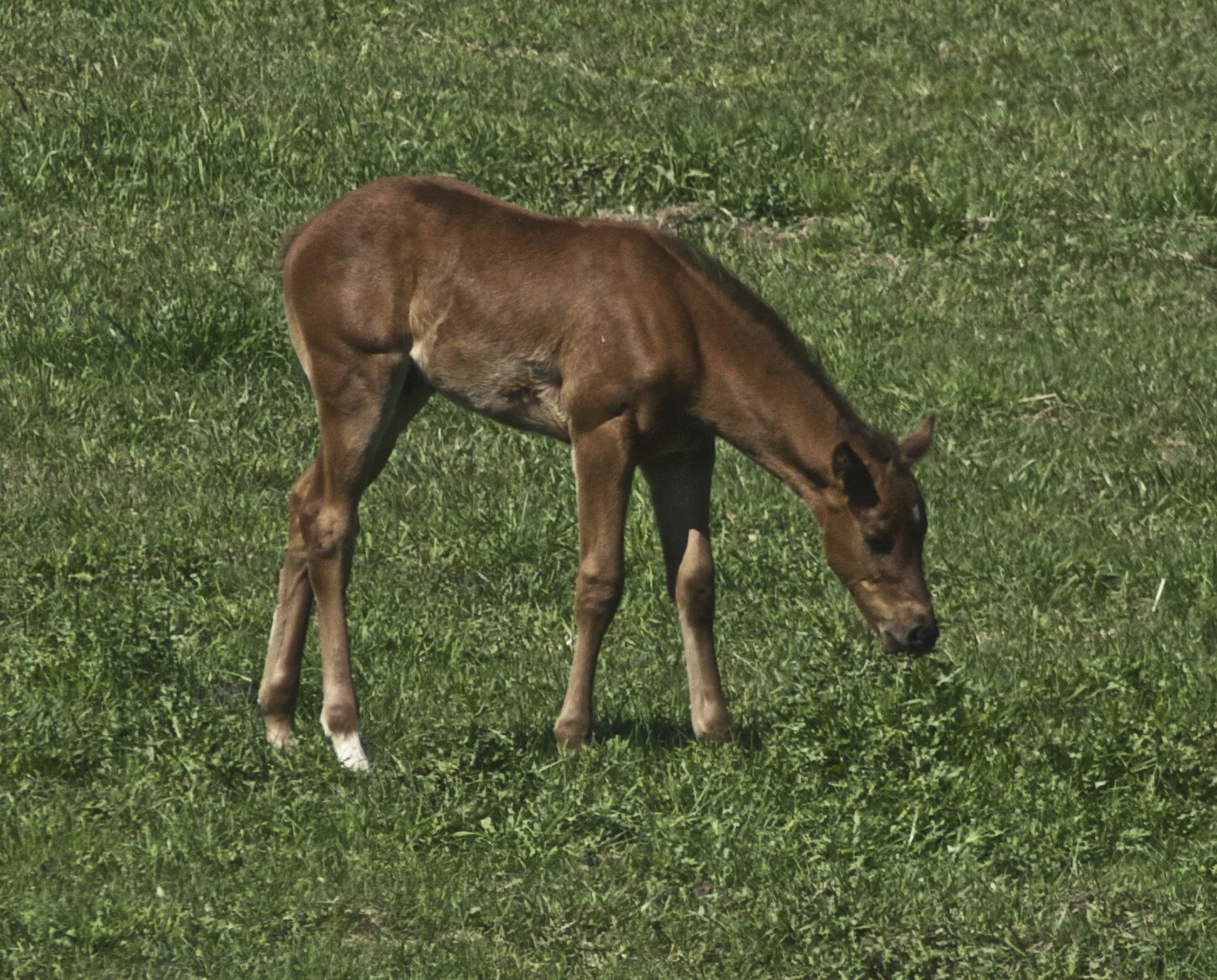

The visible racehorse is therefore the result of many stages of care. When a newcomer hears that a mating was selected years before a debut, that is not merely a dramatic sales story: conception, birth, growth, education and race preparation are separate stages. For fans, appreciating those stages adds meaning to a first start without pretending that a promising foal photograph can establish future racing class.
Registration proves identity, not racing ability
Registration answers a different question from a race result. It establishes the recorded identity and ancestry of an eligible horse. It does not certify that the horse will be fast, physically suited to a particular campaign or successful at stud. Keeping those purposes separate is essential when reading an advertisement that combines registration language with ambitious sporting expectations.
DNA parentage verification helps check that the reported parents are the correct parents. Identification information connects the record with the individual animal. The value of those checks is traceability and confidence in the pedigree; they are not a race-performance score. A horse's name, physical description and recorded parents need to agree before its racing record can be interpreted meaningfully.
Breeder credit is also a defined record, rather than a casual description of everyone involved. Under The Jockey Club's definition, the breeder is generally the owner of the dam when the foal is born, subject to applicable lease or foal-sharing agreements. That may differ from the person who owns the horse later, the farm where it was raised or the trainer named on its first racecard.
Follow the correct stud book and paperwork
For an American Stud Book foal, use The Jockey Club's official registry resources and current rules. Reporting a birth and completing registration are different stages. The rule book reviewed for this guide requires the initial Live Foal Report within 30 days of birth. Subsequent requirements concern parentage verification, the application, identity information and supporting records; the registry should resolve any missing information or exceptional case.
Do not assume that a submitted form means the application is complete. Check the registry's actual response and keep the relevant documents together. A breeding record concerns the mating, a birth report concerns the foal's arrival, and the registration application brings the required evidence together. Understanding the purpose of each record is more useful than memorizing an old fee table that may no longer apply.
Imported horses and other jurisdictions require their own official stud-book and movement procedures. A familiar breed name does not mean every country uses the same administrative steps. Likewise, an American registration certificate does not settle every separate requirement for entering a particular race. Owners and their professional representatives need to confirm the conditions that apply to the horse and the intended competition.
For spectators, the practical habit is to distinguish three statements: this is the identified horse; this is its documented family; this is what it has achieved. Good records connect those statements without merging them. If a young runner is still unraced, a completed registration gives you a reliable starting point for following its career, while leaving the sporting questions open.
Why a stud fee and a sales price answer different questions
A stud fee concerns a stallion's breeding service under the agreed terms. A sales price concerns a particular horse changing hands. Neither figure, on its own, states the complete cost of producing or racing that horse. This distinction is easy to lose when an auction headline places a youngster's price beside its sire's advertised fee.
Between the mating and a sale stand the mare, the foal and the work of raising the youngster. Care, professional services, transport and preparation do not disappear because a stallion fee is the most visible number. Conversely, a horse selling below a fashionable sire's fee does not establish a general rule about that sire's offspring. It describes a particular transaction under particular circumstances.
Buyers assess an individual, its family and the opportunity it represents. Different buyers can value the same page differently: one may aim to race, another may consider future breeding, and another may intend to resell after further development. The hammer price records the successful bidding outcome. It is not an official rating of how fast the horse will run or how much money its eventual racing career will produce.
Read sale statistics with the same attention to definitions. An average and a median describe different aspects of a specified set of transactions. Exceptionally expensive horses can pull an average upward, while the median identifies the middle price in the ordered sample. Keeneland's own sale reporting discusses median prices and reserve outcomes alongside headline totals. Check which horses and sessions a comparison includes.
Also distinguish a completed sale from a horse that did not attain its reserve, often marked RNA. A later private transaction may be reported separately. Comparing one sale's through-the-ring figures with another's totals including later transactions can therefore mislead. Even an accurate statistic needs its scope, date and category; it cannot establish the market value of an unrelated horse standing at a different stage of development.
For a fan following bloodlines, the most rewarding next step is sporting rather than commercial. Keep a short note of a youngster's parents and the conditions its family suggests might suit. When it appears in entries, use our guide to reading Equibase entries to compare that expectation with the actual distance, surface and opposition. Then watch how the horse travels and finishes.
Update your view as real evidence arrives. A debut, a surface change or a longer race can tell you something that an auction catalogue could only suggest. Breeding gives racing its connected families and long stories, but each horse still has its own career to make. Following that development is a better use of pedigree than treating either a famous parent or a large price as a result already achieved.
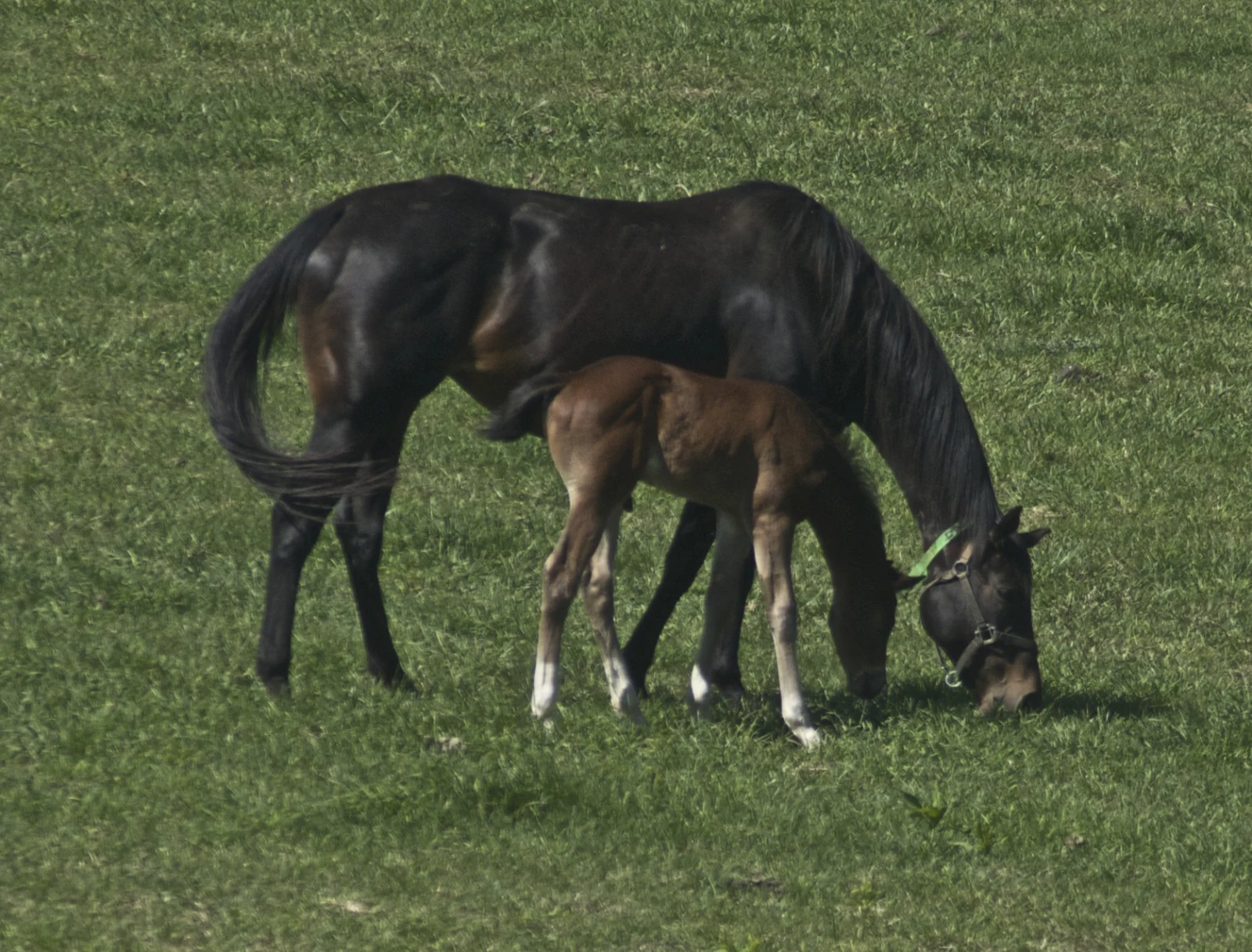
Cover photograph: Thoroughbred mare and foal in Kentucky, May 19, 2009, by Just chaos, CC BY 2.0; resized and converted to WebP.

Join the conversation
Have a question or a race-day tip to share? Keep it friendly and on topic. Comments appear after review.
No comments yet. Start the conversation.
Sign in with Google to leave a comment.