Equibase entries tell you which horses are entered for a particular track, date and race. Start there, read the race conditions, distinguish programme numbers from gate positions, and check late changes before following the action. Past performances add the horse's history; an official chart explains what happened after the race. Knowing which document answers which question makes a crowded racecard much easier to use.
This guide follows a practical reading order for US Thoroughbred cards. The aim is to understand the sporting contest and identify the horse you want to watch, without mistaking a printed estimate, an entered horse or a historical running line for a confirmed outcome.
Find the right track, date and race before reading the horses
Before studying a jockey or a price, confirm three things at the top of the card: racecourse, full date and race number. A horse's name can send you to an old start, and “Race 5” means little without the meeting and date. Those checks are the foundation of useful racecard reading. They also make it easier to return to the right result after the horses have run.
Equibase's entries index separates dates into Today, Tomorrow, Future and Past columns. Choose the track and then confirm the full date on the opened card. Do not assume a number shown in a calendar is a race number; in that context it can be a day of the month. Equally, an entry in the Past column is not itself a final result.
A helpful personal label is “track — date — race.” Write that beside any observation you intend to keep. If you are following two meetings during one afternoon, keep separate labels even when their races start close together. This simple habit prevents notes about one surface or jockey change from migrating into a different event. Use our today's racing schedule to choose a meeting, then open the card for the race you want to study.
Read the time label as carefully as the date. A published post time is a planning aid, not a guarantee that the horses will leave the stalls at that exact minute. Before arranging viewing or a visit, check which time zone the listing uses and keep an eye on the course's current announcements. A racecard and a television programme can describe the same afternoon while starting their clocks at different points.
Entries, past performances and charts answer different questions
Think of an entry list as the proposed field and race conditions; a past-performance document adds a horse's previous racing record; a chart describes the completed race. Equibase's own app description distinguishes entry information, expanded past-performance information and official result charts. Understanding which document you have is more valuable than expecting every screen to contain every column.
If your entry view has no detailed running lines, that is not proof the horse has never raced. Look for the history or past-performance option and check its access terms. Conversely, seeing a previous finishing position does not tell you what happened in today's race. Keep the upcoming race and historical starts separate as you read.
Equibase also offers selected free past-performance material, including a Race of the Day sample on its free-information page. A free example is a useful learning opportunity, but it does not mean every premium card is free. Start with the document needed for your question; learning to identify an entrant should not require buying information whose purpose you have not yet understood.
Read the race conditions before choosing a horse to follow
The paragraph above the horses explains the contest they have been entered to run. Read it before giving the shortest-priced horse your attention. Distance, surface, age restrictions and previous-win conditions tell you what sort of field you are looking at. Without that context, a runner's record can look impressive for reasons that have little relevance to this race.
Distance and surface change the question
A furlong is one eighth of a mile, or 220 yards, as defined in NYRA Bets' glossary. Six furlongs therefore equals three quarters of a mile; eight equals a mile. Convert unfamiliar distances once, then ask whether the horse's relevant experience resembles today's assignment. Do not let a finishing position from a very different trip settle the question by itself.
Surface deserves its own check. Dirt, turf and an all-weather track are separate assignments; the condition of that surface adds another detail. A horse's result on grass should not be silently filed as a result on dirt because both races were at the same racecourse. When reading a historical line, match its surface to the current conditions before deciding what it tells you.
Check both fields again when a change is announced. As a hypothetical example, imagine that a race you marked as a grass sprint is now listed as a longer contest on the main track. Your original note no longer describes the assignment. Read the revised distance alongside the revised surface before deciding which earlier performances are relevant. Use the race's actual changes notice; this example does not describe a particular completed race.
Race class and eligibility explain who can enter
A maiden is a horse that has not won, not necessarily a horse making its debut. That distinction changes how you read a field containing both first-time starters and horses with several previous attempts. An allowance race has eligibility conditions without requiring every entrant to be offered for a claiming price; a claiming race involves a stated purchase price under the applicable rules. Read the full conditions rather than treating the abbreviated race type as the whole story.
Keep the purse and claiming price separate. The purse concerns the money available in the race; a claiming price concerns a horse entered under those sale conditions. They can appear beside one another and answer different questions. Neither is the price of a viewing ticket, nor an amount a spectator automatically wins. Confusing the two makes a race appear richer or cheaper for the wrong reason.
For a hypothetical card, imagine a race limited to three-year-olds that have not won twice. The age restriction and the win restriction both matter; reading only “allowance” misses how the field was assembled. You do not need to memorise every abbreviation immediately. Expand unfamiliar terms with the document's own legend, and preserve the full wording of exclusions when they affect eligibility. The aim is understanding the contest, not building a universal ladder from purse amounts.
Identify the horse by programme number, not just gate position
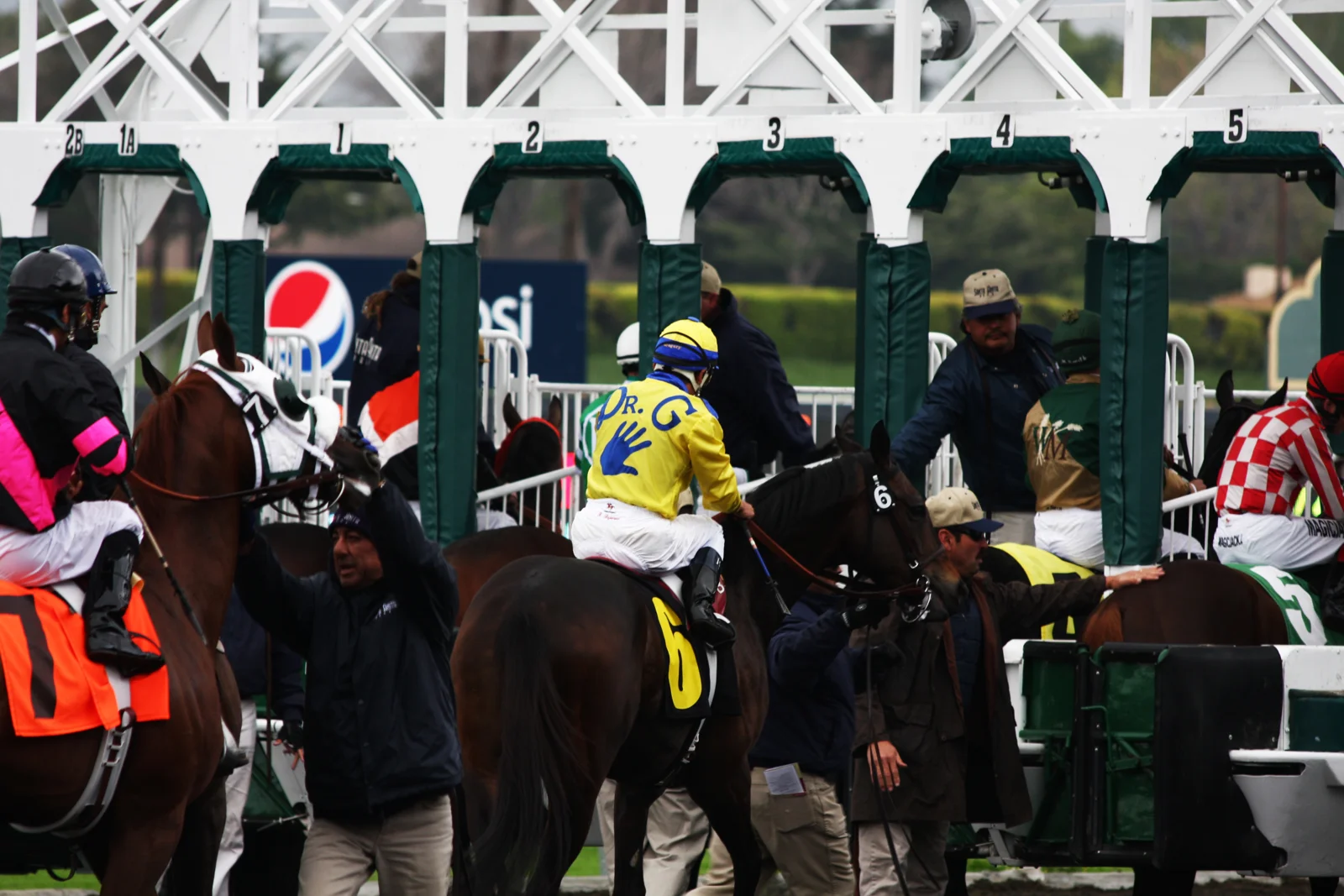
The programme number identifies the runner for the card and wagering purposes; the post position identifies its starting-gate slot. They may match, but they answer different questions. Equibase's mobile help legend labels them separately. When looking between the card, television and a betting interface, keep the horse's name alongside the number so you do not lose its identity.
For a hypothetical example, suppose a runner is programme number 7 but its listed post is 6. “Watch the seven horse” and “the horse in gate six” can describe the same entrant. Writing only “six” in your notes invites confusion later. A useful note reads “No. 7, horse name, post 6,” with the track and race label above it. Check the actual card for the current assignment rather than inferring it from a neighbouring row.
The NYRA programme-reading guide also separates the jockey, trainer, owner and silks. These details help you identify what you are seeing. The rider is not the trainer, and the colours belong to the owner rather than serving as a permanent description of the jockey's wardrobe. When following a favourite rider across the card, expect the relevant horse and colours to change.
Assigned weight is another labelled field, not the horse's body weight. Read its meaning in the programme legend before comparing the numbers. If medication or equipment letters appear, use that specific document's key and the latest changes notice. A familiar-looking letter is not a substitute for the current legend, and a first-time change should not be treated as a guarantee of better performance.
.jpg)
Morning-line odds are a forecast, not a promised price
The morning line is an estimate prepared before betting, intended to anticipate the market's eventual assessment. It is not calculated from the money already in the pool. The AmWager programme guide explains that distinction. Treat the printed line as a useful early orientation to the field, while keeping it separate from actual betting odds and any eventual official payout.
Imagine a card prints 6/1 beside the horse you plan to follow. That does not promise you a 6/1 return, nor prove the horse has precisely that chance of winning. The market can develop differently as money arrives and information changes. A shorter price near the start tells you something about betting opinion; it does not turn an opinion into a result.
For spectators, the line can help frame the sporting question: is this runner expected to be prominent, or is it less fancied? Then watch how it actually races. Keep your own observations about the break, position and finish rather than allowing the printed price to dictate the story. A well-supported favourite can run poorly, and an outsider can produce an effort worth studying without winning.
Use past performances as context rather than a shortcut
When a fuller past-performance view is available, read one previous start as a complete event. Begin with its date and track, then distance, surface, race conditions and finishing position. Only afterwards consider the figure and comments. This order stops a large number or a bold finish from overwhelming the context that gave it meaning.
Equibase's past-performance explanation describes speed figures as measures incorporating race time and other factors, with adjustments intended to support comparisons across tracks, distances and conditions. A figure is useful evidence of a past effort. It is not a promise about the next start, and its scale should not be casually mixed with another publisher's rating.
Suppose two runners both finished fourth. In a hypothetical comparison, one raced at today's distance on turf while the other ran much shorter on dirt. The identical finishing places do not make the performances interchangeable. Ask what each line actually answers: evidence over this surface, evidence at this distance, or a different assignment that leaves an open question. A cautious conclusion can be more useful than a confident ranking.
Running positions and margins add detail that a finish alone cannot supply. Equibase's explanation identifies points of call as a horse's positions during the race, while fractional times describe the pace-setting horse's intermediate race times. Do not read a race-wide fraction as though every runner reached that point together. Check which column belongs to the overall contest and which belongs to the horse you are following.
Comments can suggest what to inspect in a replay. If a line mentions trouble, look for the moment rather than assuming the horse would otherwise have won. If it describes a wide path, ask when and where the runner travelled wide. A comment is an observation about a particular start; turning it into a sweeping judgement about ability goes beyond the evidence.
Workouts are recorded exercise, not another set of competitive victories. Use the workout line's date, venue, distance and notation to understand what has been reported. One quick drill cannot settle fitness, intention or today's result. With a lightly raced horse, recognise how little competitive evidence exists rather than treating the absence of running lines as either a positive or a negative verdict.
Statistics also need a denominator. A high win percentage from a small number of starts and a long record across different conditions do not support exactly the same conclusion. When a trainer or jockey summary looks attractive, check what period and group of races it covers. Finish your first reading with one clear question for the race, such as whether a runner can reproduce its relevant turf effort over today's trip. That is a more disciplined starting point than collecting impressive numbers without a shared context.
Recheck scratches and changes before the race
A racecard is a starting point, not a reason to ignore later announcements. A scratch means a horse has been withdrawn before the race. If the runner you intended to watch is no longer taking part, an old downloaded programme will not tell you the whole current story. Check the official changes notice again before the race rather than assuming the field remained exactly as published.
Equibase's race-day changes index is a useful starting point. The course's own announcements provide another route. Always read the date and last-update label: a page headed “today” can still be a cached notice from a different racing day. A timestamp only becomes useful when it belongs to the meeting you are following.
Changes cover more than missing horses. For example, NYRA's dated Saratoga changes notice separates withdrawals, jockey changes, miscellaneous changes, post-time changes and distance changes. Use those categories as a reading guide, while checking the notice's actual date. An empty category on an old day is not confirmation that nothing has changed in your race.
For your own notes, record what changed and why it matters to the question you were asking. If a horse you expected to lead comes out, the pace you imagined may develop differently. If the course switches a race away from turf, revisit the surface comparison. These are reasons to reconsider an expectation, not grounds for inventing a certain new winner.
An also-eligible horse is not automatically a starter
An also-eligible listing is conditional. The horse may get into the field if the relevant withdrawal and entry rules permit it; its name on a programme is not proof it will start. Fair Grounds' March 19, 2026 programme illustrates that distinction by explaining that its also-eligible entrant may run if late scratches occur. Do not apply one meeting's deadlines or priority rules universally.
Main Track Only is a different condition. It identifies a runner whose participation depends on a race being moved to the main track, rather than simply waiting for a place in an unchanged turf field. If the race stays on grass, counting every MTO listing among the expected starters will distort your picture of the contest. Read the final field announcement before counting who actually runs.
Keep conditional entrants separate in your first-pass notes, then update those notes once participation is settled. This is particularly useful for a spectator following one horse: your viewing plan can remain organised even while the field evolves. If a runner does not start, carry forward the unanswered question about its next outing; do not record a withdrawal as a competitive defeat.
Compare the official result with what you expected
After the race, return to the same track, date and race number you saved at the beginning. Open the result rather than leaving the entry list on screen. Our racing results provide a route to completed contests. The official Equibase chart records much more than a winner: the conditions, runners' progress, times and comments help explain the performance.
Wait for the official result if a placing is still under review. An inquiry, objection or close finish can require an official decision; the television picture alone does not settle it. Keep any initial observation separate from the published placing. This is especially useful when the horse you followed appears to have crossed the line in one position but the final record says something different.
Separate the finish from the story of the trip
Begin with what the chart confirms, then use the replay to investigate how the race developed. Look at the start, the horse's position around the field and the opportunity it had in the stretch. The finish answers who was placed where; the trip can explain why your pre-race question remains interesting even after a defeat.
Do not turn an obstructed view into certainty. If another runner blocks the camera at a key moment, say the incident is unclear and use the chart's comments for context. A horse finishing strongly after being held up may deserve another look, but “would have won” is a much stronger conclusion than the footage usually supports. Keep your language proportionate to what can actually be seen.
Read margins with their legend. A winner's advantage and a beaten runner's distance behind the winner are different references; a bare small number beside a placing needs the column label to make sense. Similarly, the race's final time is not automatically an individually measured time for every horse. Care with those details gives you a better account than simply calling a runner fast or slow.
Keep a short note for the horse's next start
A useful note is brief enough to revisit. In a hypothetical example: “One-mile turf race; settled behind leaders; looked short of room entering the stretch; check the next turf start at a similar trip.” That records an observation and a future question without manufacturing a betting instruction. Add the official chart link and distinguish anything you could not verify.
If you want reminders, Equibase's Virtual Stable FAQ describes horse notifications for entries, workouts and results. It also warns that similarly named horses can be distinguished by birth year, country or breed. Confirm the identity you select. A reminder can prompt a fresh card check; it does not guarantee the horse will run, the message will arrive at a precise minute, or your earlier expectation will remain relevant.
Repeat the process on the new card rather than carrying a conclusion forward unchanged. The next race may offer a different surface, distance, field or rider. Your previous note supplies a question to investigate, while the new conditions supply the current assignment. This is how reading entries becomes following the sport: each card provides context for the next race, and each result improves the questions you bring to the following one.
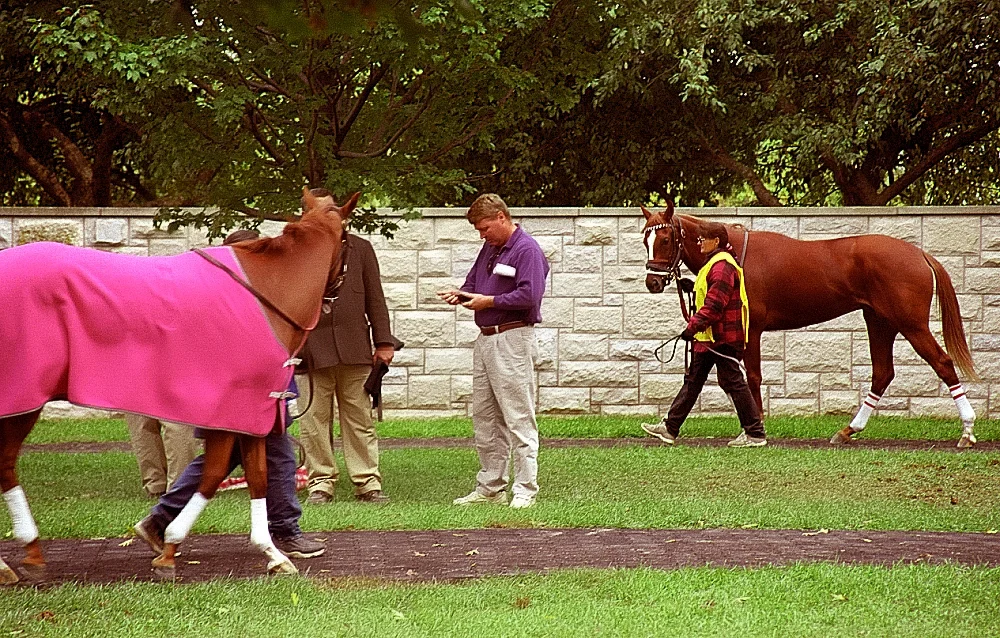
Cover: historical Keeneland paddock photograph by David Ohmer, CC BY 2.0; converted to WebP. The original capture date is unconfirmed.
_(2).jpg)
Join the conversation
Have a question or a race-day tip to share? Keep it friendly and on topic. Comments appear after review.
No comments yet. Start the conversation.
Sign in with Google to leave a comment.