
Horse racing rules decide who can compete, how the race starts, what riders may do and when a finish becomes an official result. The first horse across the line is usually the winner, but photo finishes and stewards' decisions can require a closer look. Here is how to follow those decisions during a US Thoroughbred flat race.
Which horse racing rules apply to the race you are watching?
A horse race is a contest to complete the prescribed course ahead of the other eligible runners while complying with the rules of that contest. Finishing first on the track and being declared the winner usually go together, but they are separate stages. Officials may need to resolve a photograph, review interference or check a requirement before confirming the result.
This guide follows US Thoroughbred flat racing: horses ridden by jockeys over a course without scheduled jumping obstacles. Harness racing and jump racing have additional requirements, so do not transfer every example to those disciplines. Our guide to the types of horse racing explains the broader differences.
There is also no single worldwide rulebook that settles every incident. The Association of Racing Commissioners International explains that some jurisdictions adopt its model rules by reference, while others use them as a basis for their own regulations. A model is useful evidence of a common approach; the applicable rules determine the actual decision.
For a viewer, this means identifying the track and jurisdiction before debating a ruling. A British replay can help you recognize interference, but its outcome does not establish what US officials must do. Nor should a rule from one American state be presented as the wording used in all the others.
HISA oversees racetrack safety and anti-doping and medication programs for covered US Thoroughbred racing, alongside the wider regulatory structure. Its involvement should not be confused with a claim that every breed, country and racing decision belongs to the same authority. As you follow a race, ask two questions: what happened, and which rule governs what happened? Keeping those questions together makes an explanation useful even when the decision is controversial.
Before the race: eligibility, weight and scratches
The competitive rules begin before the horses reach the starting gate. The race has published conditions, the runners must be eligible, and the final field can change. Reading those details explains why two horses on the same afternoon may face very different assignments even when they race over the same distance.
Race conditions decide who can compete
Start with the conditions above the list of runners. They can restrict the race by age, sex, previous wins or other qualifications. A maiden race is for horses that have not won a race; an age restriction narrows that group further. In a hypothetical maiden for three-year-old fillies, an older mare is not eligible simply because she has never won. Each part of the description matters.
Eligibility is not a promise of equal ability. One maiden may have finished close to strong rivals, while another may be making its debut. The restriction tells you why they can enter the same contest, not how evenly matched they will prove to be. That distinction helps a new viewer understand why a field can contain both a strong favorite and a horse still learning its job.
The weight beside a runner's name is also part of the assignment. Keeneland's illustrated program key identifies it as the weight carried, including the jockey and equipment. It is not the horse's own bodyweight. Read allowances and other conditions with that distinction in mind; a lighter listed number does not mean a smaller horse.
The practical importance is visible in NYRA's condition book rules, which place responsibility for claiming allowances and starting with the correct weight on owners and trainers. For spectators, the useful habit is to read the published assignment and listen for changes, rather than treating every number on a racecard as a prediction.
A scratch changes the field before it changes the story
A scratched horse has been withdrawn from the race. It has not finished last or been beaten by the runners that remain. An entry list prepared earlier and the actual starting field therefore answer different questions: who was entered, and who competed?
Check the official changes before following a particular horse. NYRA's published procedures include scratch arrangements and veterinary requirements, but a withdrawal notice alone is not a diagnosis. If no explanation is available, record the horse as scratched and leave the reason open. A missing name does not justify a story about injury, fitness or a trainer's intentions.
A smaller field can also change how you expect the race to unfold. If the horse you expected to lead is withdrawn, your earlier picture of the pace may no longer apply. That is a reason to reassess, not a guarantee that another runner will now win. Keep the remaining names and program numbers straight before the horses load.
For the mechanics of finding those updates, use our Equibase entries guide. Any effect on a betting ticket depends on the wager and its applicable rules; the sporting fact is simpler: the scratched horse is not taking part in that contest.
At the gate: a fair start does not mean an equally fast start
The starter is responsible for dispatching the field. Loading and releasing the horses may look like a brief pause before the action, but they are part of the regulated contest. A horse becoming difficult in the stalls, an equipment problem or a rider needing assistance can delay the start. A countdown reaching zero is not permission for the field to race without that process.
Watch the gate rather than assuming every delay means a cancellation. Horses may be unloaded and reloaded while officials address a problem. Kentucky's racing officials regulation describes the starter's responsibilities and schooling requirements. These procedures give the start a structure; they cannot make every horse react with exactly the same speed.
Slow breaks, false starts and non-starters are different
A horse that hesitates when its gate opens has made a slow break. That observation, by itself, does not establish a defective start or require officials to erase the run. The first task is to distinguish the horse's reaction from a failure in the starting process.
Consider two hypothetical scenes. In one, every door opens and a horse pauses before moving. In the other, one door stays shut while the rest of the field leaves. The pictures may both end with a horse far behind, but the underlying questions are different. A replay beginning only after the leaders have accelerated could hide the difference entirely.
Kentucky's current running-of-the-race regulation specifically addresses a gate door failing to open properly and a horse inadvertently not loaded. The starter reports the circumstance, and the stewards examine whether the horse was denied a fair start. That is an official determination, not a conclusion reached simply because the horse lost ground.
A false or void start concerns the validity of the start itself. A non-starter ruling concerns a horse's participation under the applicable provision. Neither expression is a synonym for being slow away. Nor should you assume that a non-starter announcement produces an identical financial outcome for every ticket: coupled entries and wager-specific rules can matter.
For your viewing notes, write down the visible event first: hesitated, reared, door did not open, or incident unclear. Then add the announced decision. This separates what the replay shows from what officials decide, and prevents an ordinary poor break from becoming an invented rule violation.
During the race: riding fairly and reviewing interference
Once the field is away, riders must negotiate position while trying to achieve the best possible finish. The contest is not run in separate lanes throughout. Horses move around rivals, seek room and respond to one another. The rules distinguish legitimate positioning from actions that unfairly impede another runner.
Holding a position is different from obstructing a rival
Kentucky's foul-riding provisions illustrate the distinction: a clear leader can use the track, while swerving or riding across in a way that impedes another horse can constitute a foul. The effect on the finish matters when officials consider disqualification. An uncomfortable trip and a rule violation are not automatically the same thing.
Imagine a hypothetical runner moving inward while another horse is close behind it. Did the front horse have sufficient clearance? Did the trailing rider have to check, meaning restrain the horse to avoid trouble? Was a third horse involved? Those questions describe the incident more accurately than saying a horse was unlucky.
Equally, a runner waiting behind horses has not necessarily been obstructed illegally. It may simply lack an open route at that moment. A rider can make a tactical choice that fails without another rider committing a foul. Watch how the gap develops and whether a rival changes course, rather than deciding from the eventual result that room must have been denied unfairly.
An inquiry and an objection bring an incident under review
An inquiry is an official review; an objection or claim of foul brings a participant's complaint to the officials. The stewards can review an incident without waiting for a complaint. Seeing an inquiry notice therefore tells you that a question is being examined, not that the winner has already been disqualified.
NYRA's stewards' decisions page is a useful place to learn how those questions are explained after the race. Read the decision alongside the available replay. A commentator's immediate reaction can identify the issue, but the officials' account tells you what was decided.
When reviewing video, begin slightly before the incident. A frozen image of two horses close together cannot show how they arrived there. The head-on view can clarify lateral movement; the side view can help show where runners were relative to one another. Neither angle should be treated as a complete account if a horse is hidden.
Try describing the sequence without naming the horse you wanted to win. Identify the movement, the affected runner and any visible loss of momentum. Then compare that description with the ruling. This is a practical way to separate a reasoned disagreement from disappointment about the result.
A rider penalty and a changed finishing order are separate decisions
A sporting result and a rider's conduct can produce different decisions. The regulations can provide for a horse to be placed differently and for a jockey to receive a penalty; one does not automatically prove that the other must occur. An unchanged order is not a blanket declaration that every part of the ride was acceptable.
This distinction also helps when reading a later disciplinary notice. Check what the notice actually addresses. Is it the horse's placing, the jockey's behavior or another requirement? Do not rewrite the race result because a headline reports a fine or suspension without saying the official order changed.
The Racing Officials Accreditation Program's discussion of interference protocols shows why consistency and explanation matter to the sport. For a fan, a useful review ends with a specific question about the rule and evidence. It does not require inventing intent, treating every contact as disqualifying or assuming that officials can judge an incident solely from the winner's margin.
At the finish: photo finishes, dead heats and official results
The excitement at the wire can make the result feel immediate. Sometimes it is obvious which horse finished first; sometimes a few pixels separate the runners. In either case, the finish must be judged and any outstanding race-day review resolved before the order is confirmed.
The finish line decides the placing, not the television angle
The relevant comparison is the horses' noses at the finish, not which jockey leans farther forward or which horse appears larger on screen. A television camera looking along the stretch can make a tight finish look different from the dedicated finish-line image.
The British Horseracing Authority's photo-finish explanation describes the important technical distinction: the finish camera is aligned with the winning line, while broadcast cameras are not. Its account explains the judging process in Britain, but the lesson for anyone watching a close finish is useful: a television freeze-frame is not a substitute for the official finish image.
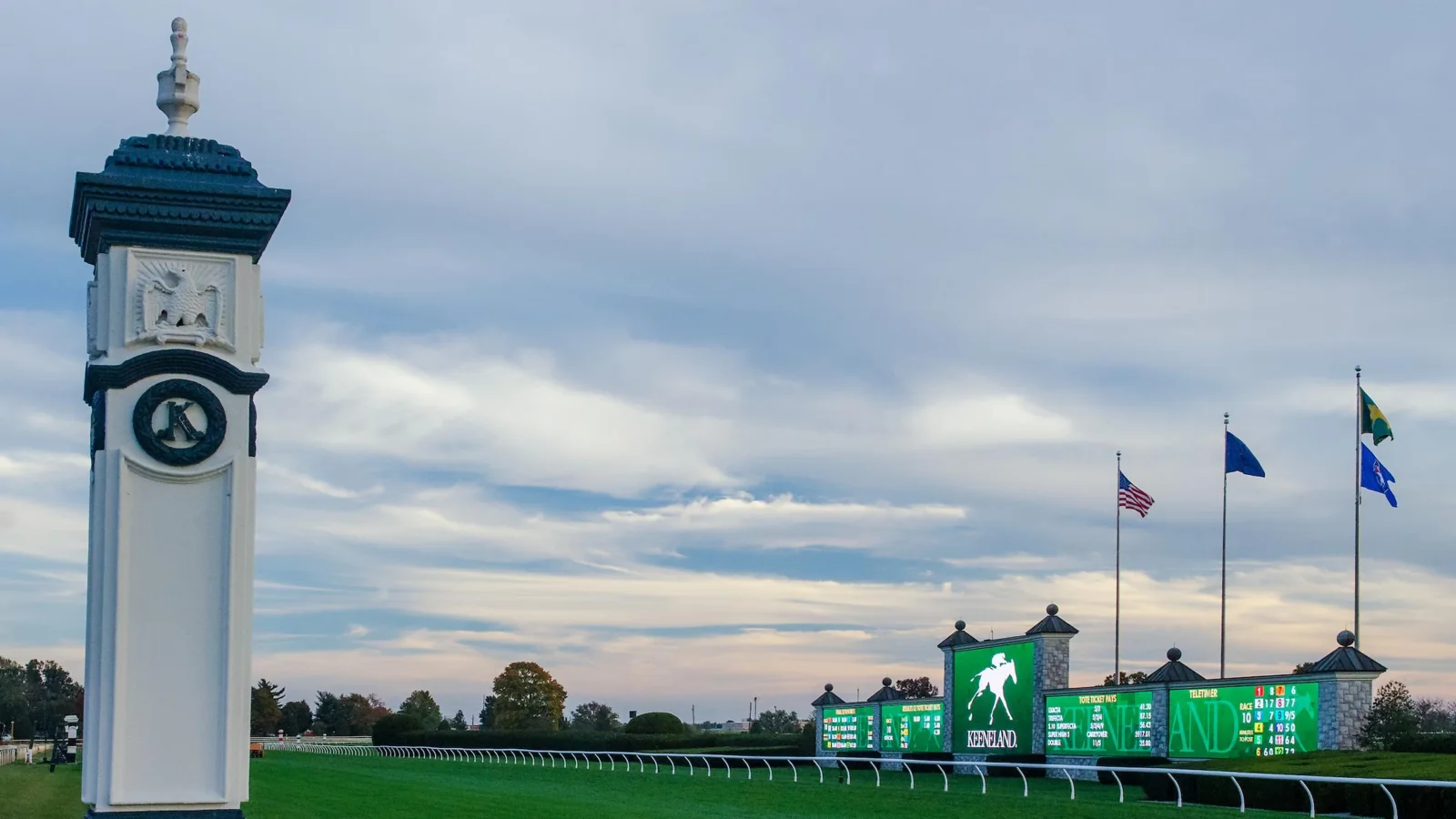
A photo finish does not automatically mean a tie. It means the image is being used to separate close finishers. A dead heat is the outcome when the horses cannot be separated for the placing in question. That distinction also applies below first place: two horses can be inseparable for a minor placing even when the winner is clear.
When the official picture is published, inspect the original available version rather than a photograph of someone's television. Resizing and compression can obscure small differences. If the picture available to you is unclear, say that it is unclear; that is more accurate than claiming a dead heat from evidence that lacks the necessary detail.
Wait for the result to become official
The provisional finishing order is the first account of who crossed where. The official result incorporates the decisions needed to settle that race-day order. Keep listening after the finish if an inquiry or objection is announced. A replay of the winner returning to the crowd does not mean the review has ended.
When you check the results page, match the track, date and race number before comparing the placing with your memory. Our result-chart guide explains how to read the fuller record. Your note that a horse crossed first and the chart recording it in another position may both be accurate if the horse was subsequently disqualified.
There is a further distinction between the immediate race-day result and later regulatory proceedings. Equibase has explained that it waits for official notification from state stewards before updating results for disqualifications. A later change in the historical record is therefore a separate matter from the inquiry you watched at the track. Do not assume it automatically reopens settled wagers.
For your next race, follow the sequence deliberately: read the conditions, check the final runners, observe the start, watch the horses' paths and wait for the official order. You will understand both the contest and the decisions around it more clearly, without needing to memorize an entire rulebook before enjoying the afternoon.
Join the conversation
Have a question or a race-day tip to share? Keep it friendly and on topic. Comments appear after review.
No comments yet. Start the conversation.
Sign in with Google to leave a comment.