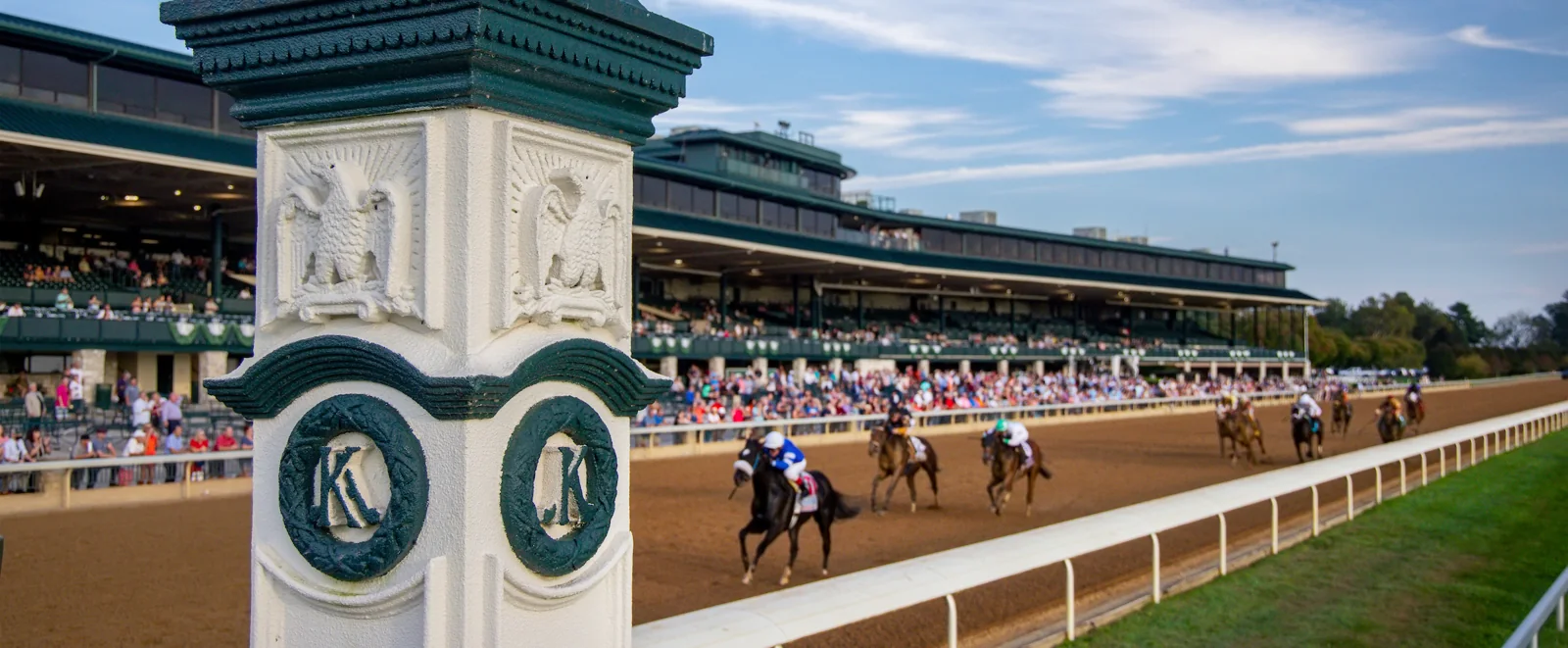
The Phoenix Stakes is the oldest stakes race in the United States, dating to 1831. It is still part of Keeneland's calendar, but it has not been run continuously since its founding. That qualification explains why the Kentucky Derby, Travers, Belmont and Canada's King's Plate can each carry a different historical distinction.
The Phoenix Stakes is the answer, with an important qualification
The Phoenix Stakes, now run at Keeneland in Lexington, Kentucky, dates to 1831. Keeneland identifies it as the oldest stakes race in the United States. The essential qualification is that its history includes interruptions: oldest by origin does not mean held every year without a break.
That is the most useful answer when someone asks for the oldest American horse race still on the calendar. It is a claim about an identifiable surviving Thoroughbred event, rather than the first occasion on which people raced horses anywhere in the country. Those are different historical questions, requiring different evidence.
The distinction is supported by Keeneland's own race history. Its account connects the Phoenix with the Kentucky Association track in Lexington and records its later revival at Keeneland. The race did not begin on the modern Keeneland grounds in 1831, and its survival does not imply that every edition had the same name or conditions.
Three questions prevent most confusion. When was the event first run? Was it held annually without interruption? Has it always taken place at the same course? A race can have an early founding date while changing venues or missing years. Another can begin later and build a longer uninterrupted sequence. Both claims can be accurate when the wording identifies what is being measured.
There is also a geographical boundary. In this article, America means the United States. A North American comparison includes Canada, where the King's Plate has its own important continuity claim. Changing the geographical scope halfway through a comparison can turn a correct statement into an incorrect answer.
For a fan, these qualifications make the history more interesting. They turn the Phoenix from a date to memorize into an example of how a sporting tradition survives. The enduring identity belongs to the event, carried through institutional and practical changes. Its present home gives spectators somewhere to experience that tradition, but the grounds and the race have separate birthdays.
Read a promotional phrase such as oldest race as the beginning of the explanation. Ask what kind of race, in which region and under which definition of continuity. Once those limits are clear, the Phoenix's 1831 origin is a strong, precise answer rather than a superlative competing vaguely with the Kentucky Derby.
How an 1831 race became part of Keeneland
The Phoenix's history is a sequence of renewals, not a single unchanging scene. Its modern home and familiar sponsored title belong to later chapters. Following the event through those changes explains why an old race can remain recognizable without having occupied the same place on the calendar for nearly two centuries.
The Kentucky Association years and the break in the record
The first running took place at Lexington's Kentucky Association track in 1831. The Phoenix name recalls the city's Phoenix Hotel. Keeneland's history also lists names including Brennan, Chiles, Association, Phoenix Hotel Stakes and Phoenix Handicap. Anyone tracing old newspaper reports therefore needs more than the exact modern phrase.
The same official account places the last Kentucky Association running in 1930 and the Keeneland revival in 1937. The six intervening calendar years alone are enough to show why the event cannot be described as continuously annual from its inception. Its 1831 origin survives that interruption; an uninterrupted-editions claim does not.
This is also why simple subtraction is a poor way to count runnings. A race's elapsed age and the number of times it has actually taken place are different quantities. An anniversary can mark years since founding while an edition number counts renewals. When those numbers differ, look for missed years before assuming one source is mistaken.
For deeper research, the Keeneland Library's Daily Racing Form archive offers historical racing coverage. Search with the period's name, venue and date together. A newspaper account can reveal the context of a particular running, while the official stakes history connects it to the event known today. Neither should be replaced by a modern title pasted backward onto every old reference.
Revival at Keeneland did not freeze the race in time
The Phoenix returned in spring 1937. From 1943 through 1945 it was part of the Keeneland-at-Churchill Downs meetings, another reminder that an event and its usual venue are separable. It remained a spring fixture before moving to the fall in 1989. Those milestones are recorded on Keeneland's Phoenix page.
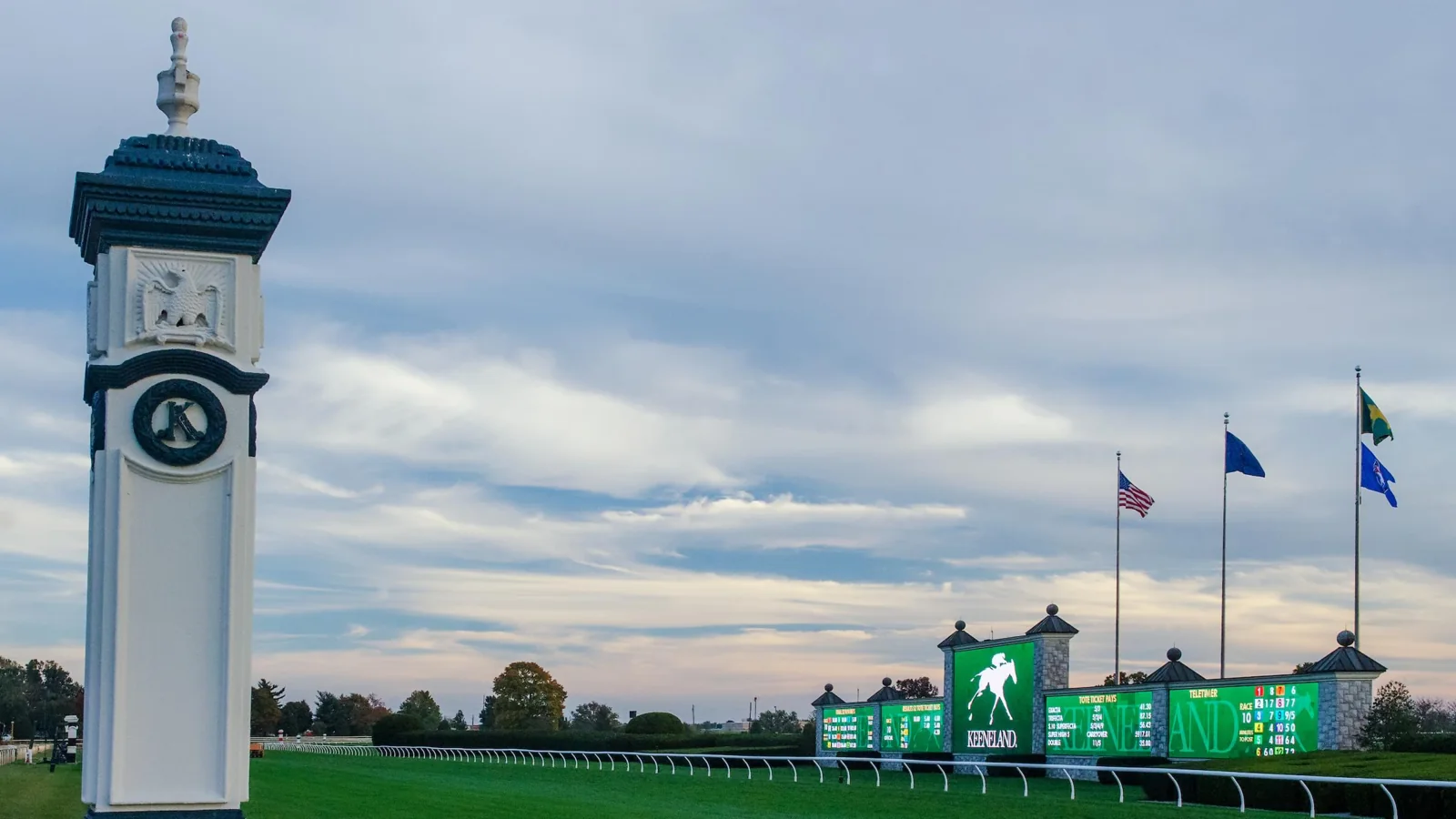
The racing surface has changed as well. Keeneland's track-record history separates the Polytrack era, from fall 2006 through spring 2014, from the dirt surface introduced in fall 2014 and the earlier dirt configuration. A familiar race name does not make all its winning times directly interchangeable.
These changes are part of the Phoenix's sporting identity. A spring race and an autumn race occupy different positions in a campaign; a synthetic surface and dirt can present different demands. The continuity lies in the recognized event and its history, while each generation of horses competes under the conditions actually in force.
Why the Derby, Travers and Belmont have different claims
The Phoenix, Kentucky Derby, Travers and Belmont are not competing for precisely the same historical distinction. Their founding years establish one order; continuity and race restrictions produce other answers. The table separates those claims instead of treating the word oldest as a complete category.
| Race | First running | Relevant distinction |
|---|---|---|
| Phoenix Stakes | 1831 | Oldest US stakes race by origin; history includes interruptions |
| King's Plate, Canada | 1860 | North America's oldest continuously run race, according to Woodbine |
| Travers Stakes | 1864 | Oldest US stakes specifically for three-year-olds |
| Belmont Stakes | 1867 | Oldest of the three US Triple Crown races |
| Kentucky Derby | 1875 | Uninterrupted annual tradition since its first running |
The Kentucky Derby's uninterrupted annual tradition
The Derby's official history dates its first running to May 17, 1875, when Aristides won with Oliver Lewis riding. Its distinction is the continuous annual tradition that followed. The Phoenix began 44 years earlier, but its interruptions mean that an earlier origin and an unbroken sequence belong to different comparisons.
Annual continuity also does not require an event to retain one exact date on the calendar forever. A running moved within a year is still a running; a year with no running is a break. That is why the relevant evidence is an edition-by-edition record, rather than an assumption based on the event's familiar modern date.
The Kentucky Oaks deserves recognition here too. Churchill Downs' combined winners archive traces both races to 1875. Avoid turning the Derby's famous continuity language into the broader claim that no other American race shares an annual history reaching that year. The Derby is the familiar answer to the continuity question, but precision still matters around the edges of that answer.
The Travers and Belmont are older than their modern comparisons suggest
NYRA identifies the Travers as the oldest US stakes race specifically for three-year-olds. Its first running was on August 2, 1864. The age restriction is essential: omit it and the statement wrongly places the Travers ahead of the Phoenix.
The Belmont began in 1867 at Jerome Park, making it the oldest Triple Crown event. Its official history also records that it was not run in 1911 or 1912. The Belmont's position as the final leg in the familiar modern Triple Crown sequence does not mean it was the last of the three races to be founded.
Finally, North America includes Canada. Woodbine dates the King's Plate to 1860 and identifies it as the continent's oldest continuously run race. Older references may call it the Queen's Plate; the event returned to the King's Plate name in 2023 following the royal succession. This is the same historical race, not a new competition founded when the name changed.
These comparisons explain several apparently contradictory answers without forcing one source to be entirely wrong. The missing detail is often a qualifier: stakes, three-year-olds, Triple Crown, uninterrupted or United States. Preserve that qualifier and the historical map becomes much clearer.
A race's age is not the age of its racetrack
Keeneland opened on October 15, 1936, according to its official anniversary account. Its first race was a six-furlong event for two-year-old fillies. That opening-day race and the Phoenix, revived there the following spring, were different contests. The Phoenix's 1831 founding cannot be used to date the opening of Keeneland.
Put the three milestones on one line: Phoenix begins in 1831; Keeneland opens in 1936; Phoenix arrives at Keeneland in 1937. The sequence shows an older event finding a newer home. It also explains why a photograph of Keeneland's current grounds can illustrate the Phoenix's modern setting without depicting the original site.
Saratoga supplies a second example. NYRA places its first organized Thoroughbred meeting in August 1863 on the site now used by the Oklahoma Training Track. The inaugural Travers followed in 1864 at the present racecourse. Both dates belong in Saratoga's history, but they describe different developments.
A third date can belong to a building rather than a course or race. Churchill Downs' famous Twin Spires were constructed in 1895, as the Derby's official account explains. The Derby had already been run for two decades. The landmark through which modern audiences recognize the race was not standing above its inaugural edition.
These examples give a useful method for reading historical photographs and travel descriptions. Identify whether a date refers to the event, the first meeting in the town, the present property or a surviving structure. A caption that collapses those dates may make a striking image, but it can also place a nineteenth-century race inside a later setting.
The separate question of when organized American racing began reaches back well before the Phoenix. Our history of horse racing in America examines the conventional 1665 Newmarket-course milestone on Long Island and the limits of the early record. That origin story should not be confused with a continuously identifiable race still appearing on today's stakes calendar.
If your interest is visiting a historic venue, choose the place for what actually survives there: the current course, its architecture, archives or traditions. If your interest is following an old race, trace its editions. Those approaches can meet at the same destination, but the evidence that makes each interesting is different.
Following the Phoenix as a race, not just a historical fact
The modern Phoenix is a sprint with a place in the championship conversation. Keeneland's 2026 conditions describe a Grade 2 event for horses aged three and older over six furlongs on the main track, with a $400,000 purse. Those details tell a viewer far more about the actual contest than its age alone.
The 2026 running has already taken place. Nakatomi won on October 2 with Irad Ortiz Jr. riding for trainer Wesley Ward, as recorded in Keeneland's post-race account and the Equibase result. An event page retaining its original advertisement should not be read as a future invitation after that date.
The winner's Breeders' Cup opportunity adds another layer of interest, but qualification and participation are different. In the immediate post-race discussion, Ward described a possible Sprint appearance as a decision still to discuss with the connections. A fan following the story should look for the eventual entries rather than converting a qualifying victory into a guaranteed start.
Read the current conditions before comparing generations
A useful historical example is Runhappy. He won the Phoenix in 2015 and then the Breeders' Cup Sprint at Keeneland that season. The championship's official report connects those performances. It shows how the Phoenix can form part of a successful campaign, without making its winner an automatic champion in every year.
Compare that campaign with another edition by starting with the assignment: distance, surface, track condition, age eligibility and opposition. Then examine the race itself. Was the winner able to settle behind the leaders? Did it have to sustain an early effort? What did the chart record about its route? These questions produce a richer comparison than sorting winners only by final time.
The distinction is especially important across Keeneland's surface eras. A fast Polytrack performance and a fast dirt performance belong to the same race's history, but they were not produced under identical conditions. The achievement is best described within its own contest before asking what it might say about another generation.
To follow the event from here, begin with the Keeneland track page, then use the major-races calendar to locate the surrounding championship races. On a race day, today's schedule helps place an individual contest within the card. The Phoenix's history supplies the reason to notice its name; the runners, conditions and unfolding competition supply the reason to watch.
Join the conversation
Have a question or a race-day tip to share? Keep it friendly and on topic. Comments appear after review.
No comments yet. Start the conversation.
Sign in with Google to leave a comment.