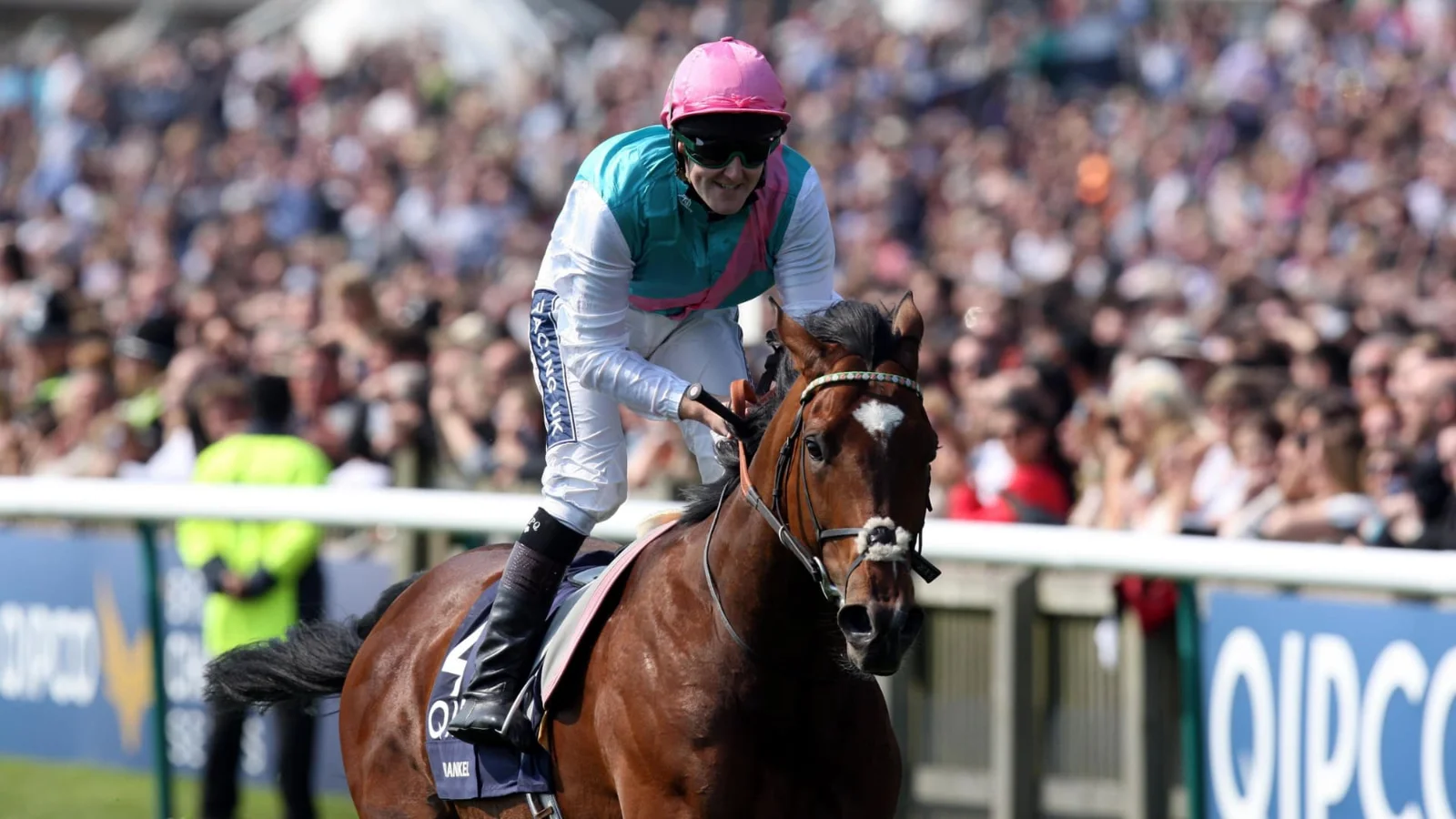
Frankel, Secretariat, Winx and other exceptional champions have strong claims to a place among the greatest racehorses of all time. Choosing between them requires a clear idea of greatness. This guide examines nine international flat-racing Thoroughbreds through specific races, unbeaten records and championship campaigns, showing what supports each case and how to build a shortlist you can explain.
Decide what you mean by the greatest
The best all-time shortlist starts with a question about performance. Are you looking for the highest peak, the longest sequence of success, repeated championship campaigns or an exceptional range of achievements? Those choices lead to different horses. Make the criterion visible and the debate becomes more interesting than a contest between familiar names.
This comparison focuses on flat-racing Thoroughbreds. It selects nine horses from different countries and periods to explore four measures: the strength of their best performances, the repetition of top-level success, the variety of tests they passed, and the demands of the racing programme they faced. It is an editorial selection rather than an official ranking, and it does not attempt to fit great trotters, pacers or jumpers into the same table.
Official ratings offer a valuable starting point for modern comparisons. The IFHA explains that its rankings assess performances during a defined period, considering opposition and achievement. Its ranking terms identify the distance and surface associated with a horse's peak rating. That is different from awarding points for every victory across an entire career.
The practical consequence is simple: keep the performance and the campaign beside each other. One extraordinary afternoon can establish an exceptional peak. A sequence of major wins over several seasons establishes something additional about sustained achievement. Neither should disappear because a single-column ranking is easier to share.
Opposition matters too. Ask which rivals the horse beat and what those rivals had achieved. Then ask what the event required: a sprint, a championship mile, a middle-distance race or a demanding classic campaign. A long winning sequence is impressive evidence, but the individual races explain the sequence. That combination of record and context guides the selections below.
Frankel and Secretariat: two arguments built on peak performance
Frankel and Secretariat belong near the beginning of any discussion centred on exceptional performances. They also show why the strongest argument uses the races themselves. A rating, a winning margin and a time each illuminate part of the achievement; placing those details within the campaign explains why the performance has lasted in racing memory.
Frankel's unbeaten career and the ratings question
Frankel won all 14 starts, including 10 Group 1 races. His British Champions Series Hall of Fame profile highlights the 11-length Queen Anne Stakes victory at Royal Ascot in 2012 and the seven-length Juddmonte International win at York later that summer. The first was a dominant mile performance; the second extended the test beyond the mile to an extended mile and a quarter.
That combination is central to his case. If the Queen Anne were the only race you studied, you would see an outstanding peak at a mile. Adding the Juddmonte International shows that the campaign contained a successful response to a different distance question. His final Champion Stakes victory then completed a career without a defeat. The sequence gives the spectacular single-race impression a much broader foundation.
The BHA's 2012 rankings release placed him on 140 and explained the recalibration of international ratings going back to 1977. Keep that system and starting date attached to the claim. It is powerful evidence within a defined assessment history, rather than an official measurement of every horse that ever raced.
For a useful viewing sequence, start with the 2011 2,000 Guineas, then the Queen Anne and Juddmonte International. Ask how the distances and opponents changed while the horse kept winning. That makes a stronger case for Frankel than simply repeating the word “unbeaten,” because it explains the quality and shape of the record behind it.
Secretariat's Belmont and its proper context
Secretariat's signature evidence is unusually concrete: the 1973 Belmont Stakes, won by 31 lengths in 2:24 for a mile and a half. NYRA's account places that performance within the completion of the Triple Crown. The race supplies both an extraordinary separation from the opposition and a specific timed achievement over a classic distance.
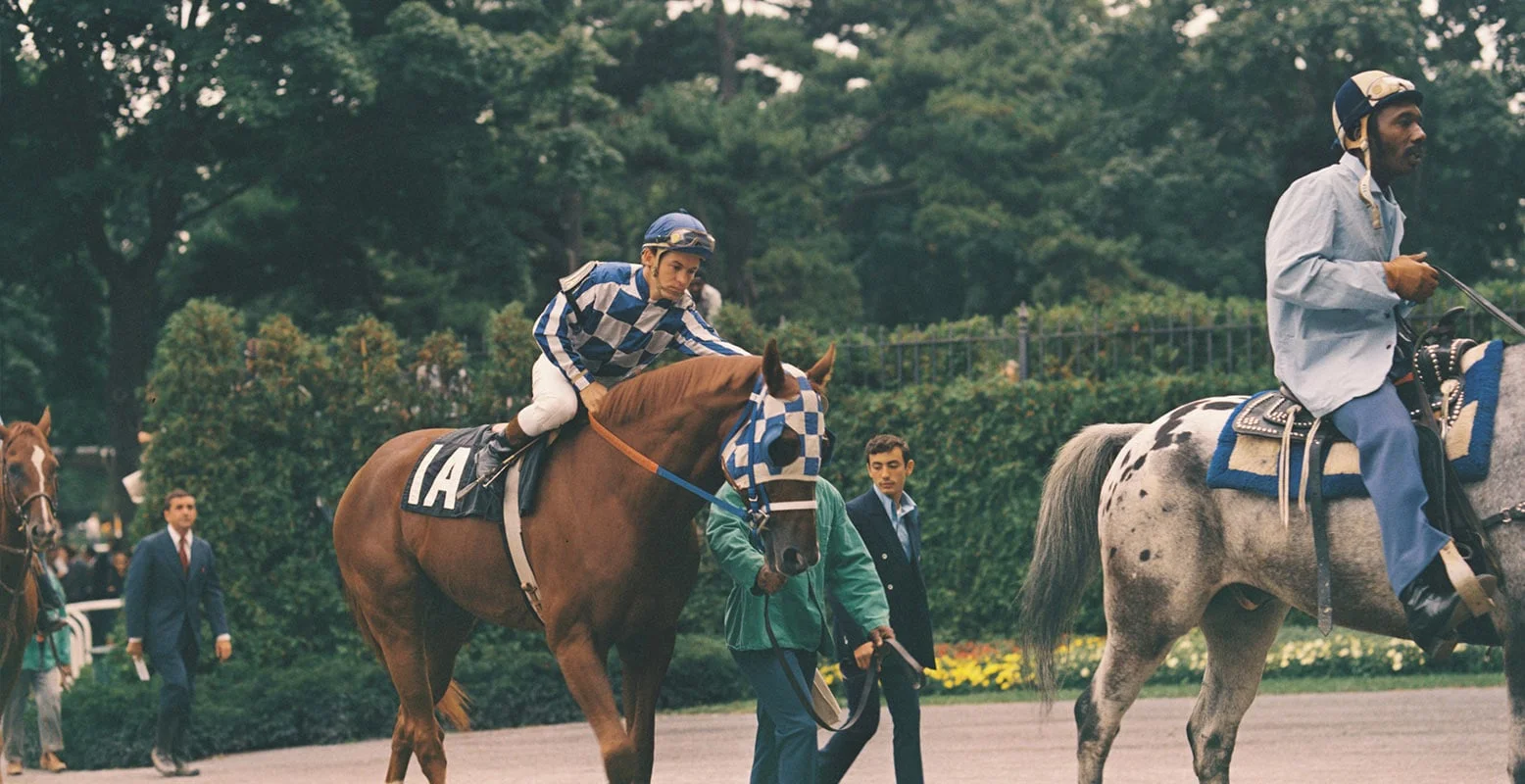
The campaign context matters because the Belmont followed the Kentucky Derby and Preakness. It was the concluding test in a spring series, not an isolated exhibition arranged around a single clock target. When evaluating Secretariat, retain that sequence alongside the famous margin. It explains why the afternoon carries significance beyond the number displayed in a record book.
A direct comparison with Frankel is most productive when it asks what each horse demonstrated. Frankel supplies an unbeaten succession of elite turf victories with a later step up in distance. Secretariat supplies a defining American classic campaign and an exceptional dirt performance at its conclusion. Deciding which argument you value more is an editorial judgement; inventing a race between them would add no evidence.
Winx, Black Caviar and Kincsem: greatness through repetition
Some careers make their strongest argument through the accumulation of victories. The question changes from “How high was the peak?” to “How often did the horse answer the next challenge?” Winx, Black Caviar and Kincsem provide three especially useful examples because their records reward close examination of what the winning sequence actually contains.
Winx across repeated championship seasons
Winx won her last 33 races. That wording matters: she was not unbeaten throughout her career. Her trainer's record of her major victories lists 25 Group 1 wins, including four successive Cox Plates from 2015 through 2018. Three Queen Elizabeth Stakes victories from 2017 through 2019 add another recurring championship target to the record.
Four editions of the same championship establish something a single dominant victory cannot. The horse must return for another preparation, reach the relevant point in the calendar and produce the required performance again. For a reader who gives sustained excellence substantial weight, this repeated delivery is the heart of Winx's case. It also supplies an obvious research path: compare the four Cox Plate fields and race shapes, rather than treating the streak as one continuous, undifferentiated achievement.
Her major wins were not confined to that race. The Queensland Oaks in 2015 and Doncaster Mile in 2016 appear alongside the repeated Cox Plates and Queen Elizabeth Stakes. These named races help explain the career's breadth within the Australian programme. They are more informative than simply attaching the adjective “versatile” to a long winning sequence.
A shortlist that places Winx very high should therefore say that repeated championship performance is a major criterion. Someone placing greater weight on the highest assessed individual run may produce a different order. Both readers can use the same documented results while making their priorities explicit.
Two very different unbeaten records
Black Caviar completed a 25-race career without defeat, including 15 Group 1 victories. Racing Australia's Hall of Fame announcement identifies the 2012 Diamond Jubilee Stakes at Royal Ascot among her defining wins. That overseas success belongs in the comparison because it adds a different venue and racing environment to an Australian sprinting career.
The VRC's race-by-race account offers an excellent alternative to a highlights montage. In the 2011 Newmarket Handicap, she carried 58 kilograms and won by three lengths. Eight of her career victories came at Flemington. Reading the conditions beside each result makes the record more revealing: a handicap, a weight-for-age sprint and an overseas assignment ask different questions even when they all end with the same winner.
Kincsem extends the discussion into nineteenth-century European racing. Kincsem Park's historical account records 54 starts without defeat, including victories at Baden-Baden, Deauville and Goodwood. Goodwood confirms her 1878 Goodwood Cup victory. These locations give substance to the record: the mare's reputation rests on a career that reached beyond one home racecourse.
Kincsem's 54 and Black Caviar's 25 should not become a simple division exercise in which one horse is declared twice as good. Their opportunities, distances and racing systems differed. The meaningful comparison is that both repeatedly fulfilled the assignments in front of them without a recorded defeat. Kincsem belongs in an internationally informed historical discussion; Black Caviar supplies exceptionally accessible modern race evidence for a specialist sprinting claim.
European and Japanese champions widen the comparison
An international discussion needs more than an American list with Frankel added. Different racing countries produce different routes to a championship. Sea-Bird, Ribot, Deep Impact and Equinox deserve attention because their defining achievements open up four substantial bodies of evidence, spanning European classics, repeat international victories and Japan's major turf races.
Sea-Bird and Ribot on the European stage
Sea-Bird won both the Derby at Epsom and the Prix de l'Arc de Triomphe in 1965. Timeform's retrospective records the six-length Arc victory and explains its own rating of 145. The number belongs to Timeform's system. It should not be inserted directly into the BHA/IFHA column used earlier for Frankel's official 140.
The Derby–Arc double is the more accessible starting point. It connects a classic victory in Britain with a major autumn success in France during the same season. For a reader judging the quality of a peak campaign, those named achievements offer a stronger foundation than a general claim that a horse was admired by an earlier generation. The Arc margin adds a measurable feature to the second performance.
Ribot combines an unbeaten career with repeat international success. The official San Rossore racecourse profile records 16 victories without defeat and includes the King George VI and Queen Elizabeth Stakes among his major achievements. France Galop's Arc history confirms his wins in 1955 and 1956.
Those results make Ribot especially useful when a shortlist values both repetition and travel. His record links the Italian racing programme with major assignments in France and Britain. Sea-Bird's argument here concentrates on a remarkable 1965 campaign; Ribot's combines a perfect record with returning to win the Arc again. A comparison can favour either, but it should explain which accomplishment receives more weight.
Deep Impact and Equinox in Japanese racing
Deep Impact completed Japan's Triple Crown unbeaten in 2005. The races were the Satsuki Sho, Tokyo Yushun, also called the Japanese Derby, and Kikuka Sho. The JRA's anniversary record also lists his 2006 Japan Cup and Arima Kinen wins. Together, these give a reader a route through his classic season and subsequent major victories.
His complete story includes defeats. The JRA's career account identifies the loss to Heart's Cry in the 2005 Arima Kinen and the disqualification in the 2006 Arc. “Unbeaten Triple Crown winner” describes his position when completing the series, not an undefeated lifetime record. Including those distinctions makes his achievements easier to assess fairly, especially for readers encountering Japanese racing through his name for the first time.
Equinox offers a different case: an exceptional modern championship season. The IFHA's final 2023 assessment awarded him 135, earned in the Japan Cup. His four wins that year were the Dubai Sheema Classic, Takarazuka Kinen, Tenno Sho (Autumn) and Japan Cup. That is a specific, documented combination of international travel and major domestic victories.
The JRA's Japan Cup report records a four-length victory over Liberty Island and a sixth consecutive Grade 1 win. For a viewing comparison with Deep Impact, begin with each horse's Japan Cup, then widen the study to their other championship races. The shared race title gives you a sensible starting point without pretending that different fields and different years were an identical test.
Deep Impact's classic sweep and Equinox's 2023 campaign illustrate why international knowledge improves a greatest-ever discussion. You can identify what each horse actually achieved before choosing how to value it. Their later influence as stallions belongs to a separate assessment of breeding importance; it does not add victories to their racing records.
Build a shortlist that explains its choices
The strongest shortlist can be read in two directions: from the horse to the evidence, and from your preferred criterion to the horses that demonstrate it. This table condenses the cases discussed above. Its order follows the article, rather than assigning finishing positions in an imaginary race.
| Horse | Evidence to start with | Strongest reason to study the career |
|---|---|---|
| Frankel | 2012 Queen Anne and Juddmonte International; 14 unbeaten starts | Outstanding peak supported by repeated elite wins |
| Secretariat | 1973 Triple Crown and 31-length Belmont | A defining classic campaign and exceptional dirt performance |
| Winx | Four Cox Plates; final 33 starts won | Returning championship excellence over successive seasons |
| Black Caviar | 25 unbeaten starts; Royal Ascot victory | Sprint specialism with an overseas success |
| Kincsem | 54 unbeaten starts; 1878 Goodwood Cup | Historical sustained success across European venues |
| Sea-Bird | 1965 Derby and Arc | A concentrated European peak campaign |
| Ribot | 16 unbeaten starts; 1955 and 1956 Arcs | Repeated international success within a perfect record |
| Deep Impact | 2005 Japanese Triple Crown; 2006 Japan Cup | Classic achievement followed by major later victories |
| Equinox | Four major 2023 wins; final IFHA rating 135 | A modern championship campaign with documented assessment |
If your priority is a single extraordinary performance, begin with Frankel's Queen Anne, Secretariat's Belmont and Equinox's Japan Cup. Write down the race, year, surface, distance and supporting result before forming an order. Then add a second race from the same horse. That second viewing helps you decide whether you are ranking one afternoon or the athlete's broader racing achievement.
If your priority is sustained success, start with Winx's repeated Cox Plates, then study the unbeaten records of Black Caviar, Kincsem and Ribot. Keep the individual assignments visible. A career can be compelling because a horse repeatedly excelled at a specialism, because it travelled successfully, or because it returned across seasons. You do not have to force those different strengths into an invented points formula.
For a balanced personal selection, give each horse one sentence naming its strongest achievement and one sentence explaining what would make you reconsider its position. That second sentence should identify evidence you still need: the quality of an unfamiliar field, the full campaign around a famous replay, or the meaning of a historical rating. It creates a useful research question instead of another exchange of unsupported superlatives.
Keep geography in view as you expand the list. Our guide to horse racing around the world explains the different sporting settings, while the major US races calendar provides a route into present-day championship meetings. Watching current races with the same questions about opposition, conditions and repeated performance will make the historical comparisons more rewarding.
Join the conversation
Have a question or a race-day tip to share? Keep it friendly and on topic. Comments appear after review.
No comments yet. Start the conversation.
Sign in with Google to leave a comment.