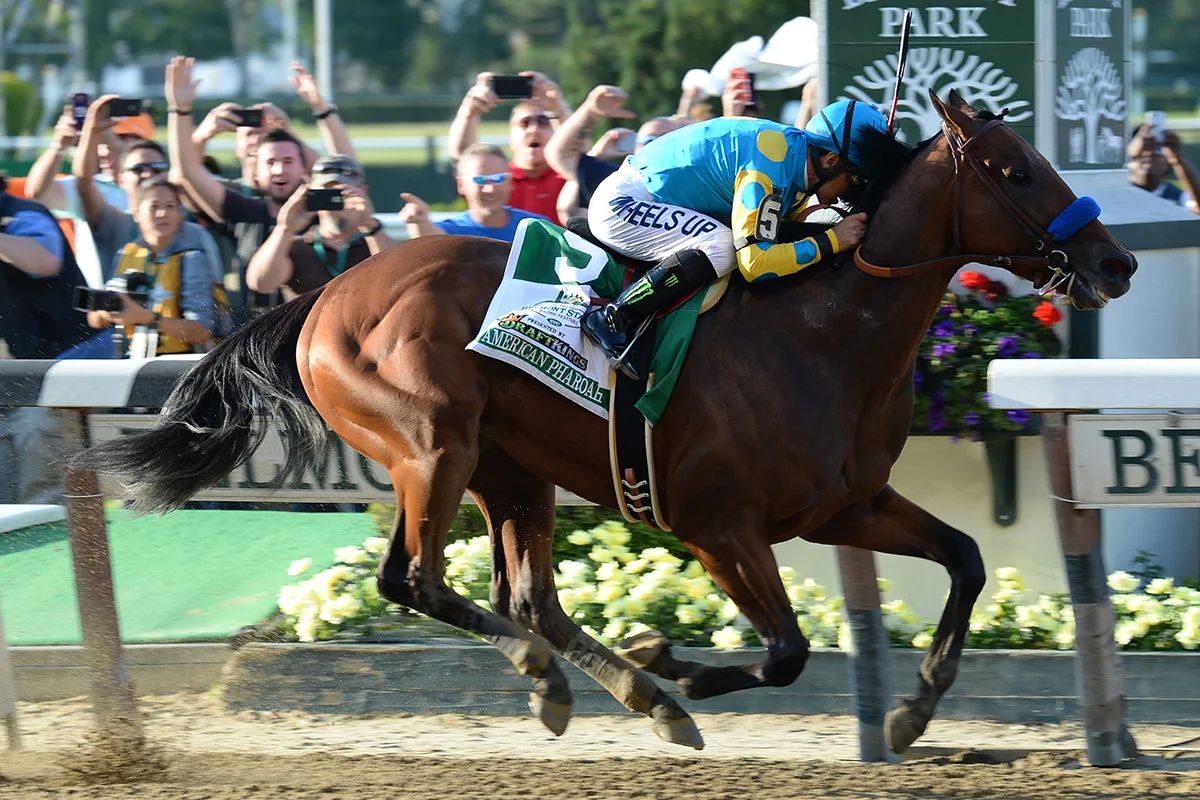
Famous retired racehorses still represented as living by their current keepers include American Pharoah, Justify, Silver Charm, Accelerate, Roy H and Marion Marauder. This selection was checked on October 15, 2026. American Pharoah's current station is in Japan; the other examples below have Kentucky connections. Here is where to follow them, why their careers matter, and how to turn an interest in a champion into a realistic visit.
American Pharoah and Justify: life at stud after the Triple Crown
American Pharoah and Justify remain prominent examples of famous racehorses living beyond their racing careers, with current stallion information published by their breeding operations. Their stories also explain why “retired” needs context. A horse can leave competition and continue a breeding career, while the farm associated with its retirement announcement may no longer be its current station.
American Pharoah after the Grand Slam
American Pharoah is listed at the Japan Bloodhorse Breeders' Association's Shizunai Stallion Station for 2026. Coolmore's own profile states the same location. This is an important change for anyone remembering photographs and visitor reports from his years at Ashford Stud in Kentucky.
Coolmore has also published an announcement of a second breeding season in Japan. An old Kentucky tour page is therefore a poor foundation for a trip intended specifically to see him. Follow the current station information and its visitor arrangements; do not assume that the place where a famous horse first retired remains the right destination.
His enduring appeal comes from the 2015 campaign. He won the Kentucky Derby, Preakness and Belmont Stakes, then added the Breeders' Cup Classic, the combination widely called the Grand Slam. NYRA's historical profile provides the racing context. Rewatching the Belmont and Classic offers two different ways to appreciate that season: the completion of the spring series and the later championship performance.
For fans following him now, a stallion profile opens a different trail: his offspring's names and racing records. That can extend an interest in the champion into new seasons, but each offspring deserves its own assessment. Admiring the sire is a reason to pay attention, not evidence that every runner by him will reproduce his achievements.
Justify after the Triple Crown
Justify appears on Coolmore America's current stallion pages, with information for the 2026 breeding season. His racing landmark was the 2018 Triple Crown, recorded in NYRA's account of his campaign. The relevant home to investigate is Coolmore's American operation at Ashford Stud in Versailles, Kentucky, with actual tour availability checked separately.
The distinction between a stallion roster and a visitor promise is especially useful here. A breeding operation publishes information for breeders as well as fans. It may describe a horse's pedigree, racing achievements and offspring without promising that he will be shown to every tour group. Plan around the experience the operator actually offers, and let the staff confirm what is possible on your date.
These two champions make a rewarding comparison without turning the visit into an argument about which was greater. One completed a campaign that included the Classic; the other completed the Triple Crown three years later. Their lives at stud belong to the next chapter of those stories, and current farm information is the best place to begin following it.
Silver Charm and the long view of a champion's life
Silver Charm is a particularly meaningful horse to follow into retirement because his story now spans several distinct chapters. He was foaled on February 22, 1994, making him 32 on October 15, 2026. His home is Old Friends in Georgetown, Kentucky. Alongside the farm's own profile, a September 22, 2026 feature describes him as a continuing resident there.
The racing chapter explains why so many people know his name. He won the 1997 Kentucky Derby and Preakness before finishing second to Touch Gold in the Belmont. The following year he won the Dubai World Cup. Those achievements give a visitor more to think about than an isolated Derby victory: he remained a leading performer after the excitement and disappointment of his three-year-old spring.
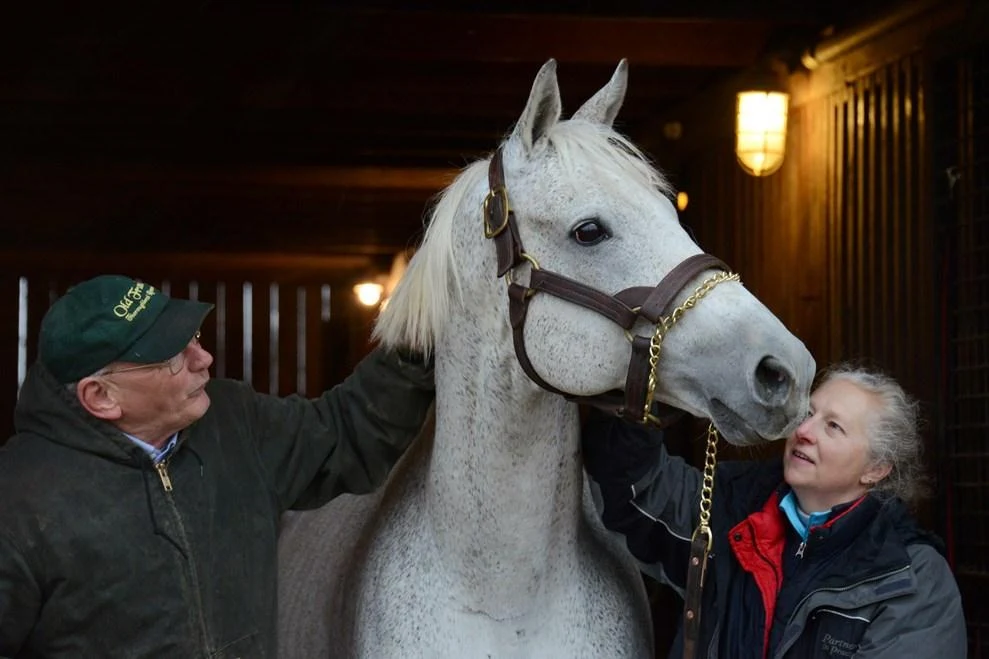
His breeding career took him from Kentucky to Japan, before his return to Old Friends in late 2014. Looking at that sequence helps explain a common misunderstanding about racehorse retirement. Leaving the track, leaving breeding duties and entering a retirement farm can be three separate events. The date a horse stopped racing does not tell you how long it has lived at its present home.
Silver Charm also shows why a return visit to the old races can enrich a farm visit. Watch the Derby and Preakness as contests in their own right rather than merely preludes to a Triple Crown attempt. Then watch the Belmont with the result already known. A horse's historical importance does not vanish because the final race of a series was a defeat, and a retirement story should not reduce a long career to the one trophy missing from it.
At the farm, the emphasis naturally changes from competition to the individual horse. Ask the guide about the resident's routine and how the farm manages visits. Do not arrive expecting the animal to reproduce the energy or appearance of a racing photograph taken decades earlier. The opportunity is to understand the life that followed those performances, while letting the people responsible for daily care set the pace of the encounter.
Be precise when looking up updates: Silver Charm and Little Silver Charm are different animals. Old Friends has used similar names in its stories, and its broader horse directory includes former residents as well as current ones. The dated reporting and the individual horse's identity matter more than a familiar name appearing in a general search result.
Champions you can learn about at Kentucky Horse Park
Kentucky Horse Park's Hall of Champions offers a different setting from a commercial stud. Its current resident list includes Accelerate, Roy H and Marion Marauder, and the park describes presentations in which visitors learn about the horses' racing careers. The horses shown vary daily, so the list is a guide to the collection of residents rather than a promise that every champion will appear in your presentation.
Accelerate and Roy H: different Breeders' Cup talents
Accelerate won the 2018 Breeders' Cup Classic and was that year's champion older dirt male. Roy H won the Breeders' Cup Sprint in 2017 and 2018. Their presence at the same destination creates an easy introduction to a point that often gets lost in lists of famous horses: championship racing rewards very different types of performance.
The Classic asks a different distance question from the Sprint. Before visiting, watch one race from each horse and notice how the shape of the contest differs. You do not need to decide that one is the more important athlete to appreciate both. A sprint specialist's repeat success and a Classic winner's championship season provide different reasons for a fan to remember a name.
That preparation also leads to better questions for a guide. Ask how the park introduces each horse's career to visitors, or what distinguishes the individual's routine today. Avoid turning a presentation into a demand for the horse to demonstrate its old racing qualities. The educational value comes from connecting a living resident with a specific sporting history.
Marion Marauder and the harness racing connection
Marion Marauder won the 2016 trotting Triple Crown. He is a Standardbred trotter, so that achievement belongs to harness racing. It is not the Kentucky Derby, Preakness and Belmont sequence completed by American Pharoah or Justify. The shared phrase “Triple Crown” is an invitation to learn about another branch of the sport, not a reason to merge the records.
For a visitor who mainly watches Thoroughbreds, this can be the most revealing part of the day. Start with the difference in the racing itself: a harness horse pulls a sulky with a driver, and the gait is central to the contest. Then listen to the account of the horse's own achievements. A great trotter should be understood on the terms of trotting, rather than measured against a familiar flat-racing milestone.
The park also separates its living residents from memorials to horses that have died. Make that distinction when reading the website or walking around the grounds. Seeing a famous name on a memorial, statue or historical page does not mean that the animal is available to meet. For a visit centred on living champions, begin with the current Hall of Champions information and then check the day's programme.
What a horse's retirement story can and cannot tell you
There is no single destination for every horse that stops racing. The examples above include commercial breeding, permanent retirement and an educational home for champions. Other former racehorses move into new equestrian activities. The Retired Racehorse Project focuses on helping Thoroughbreds transition into second careers by supporting the people and organisations involved in that process.
Old Friends describes a different model: lifetime retirement, with horses remaining in its care. These are different missions, not interchangeable visitor attractions or adoption programmes. If a particular horse inspires you to become involved, first learn what the organisation actually does. Supporting a retirement resident, attending an educational presentation and seeking a horse for a riding partnership are separate decisions.
A famous name can make the broader subject easier to approach, but a champion's circumstances do not describe every former racehorse's life. Nor does a photograph allow a stranger to assess an animal's medical condition. Listen to the keeper's current information and avoid turning an old racing image into an expectation about how an older horse should look or behave today.
Dates are equally important when reading “still alive” articles. A historical profile may remain online indefinitely because its racing information remains useful. A resident directory can include memorial entries. Even a recently republished feature can contain an older account of where a horse lived. Look for present-tense information from the current keeper and, where possible, a recent dated report that actually addresses the horse's life after racing.
This selection is based on public keeper information checked on October 15, 2026, with additional dated reporting where available. It is a useful starting point for following these six horses, not an exhaustive list of living champions around the world. A horse omitted here has not thereby been declared dead, and a horse included here has not been promised as part of a future tour.
The rewarding question is often more specific than “Where are all the legends now?” Choose one favourite, learn who currently cares for it, and follow that organisation's updates. You will get a clearer picture of the individual than a long list assembled from decades of unrelated retirement announcements can provide.
Plan a visit around the horse's present home
Start with the horse's current keeper, then choose a date and an experience. The following overview brings together the six examples discussed here. It describes their publicly listed homes at the October 15, 2026 check; the practical next step is different for a breeding station, a retirement farm and a public equestrian attraction.
| Horse | Current published home or operation | Next step for a fan |
|---|---|---|
| American Pharoah | JBBA Shizunai Stallion Station, Japan | Check the station's current information; an old Ashford ticket page is insufficient. |
| Justify | Coolmore America, Ashford Stud, Kentucky | Review current farm-tour availability and showing arrangements. |
| Silver Charm | Old Friends, Georgetown, Kentucky | Choose an appropriate reserved tour. |
| Accelerate | Kentucky Horse Park, Lexington | Check the Hall of Champions programme. |
| Roy H | Kentucky Horse Park, Lexington | Ask which residents are appearing that day. |
| Marion Marauder | Kentucky Horse Park, Lexington | Review the current presentation schedule. |
A farm listing is not a confirmed appointment
Use the Old Friends visitor page, Coolmore's farm-tour page or the Kentucky Horse Park admission page for the actual booking decision. Read the date and the tour description together. An anniversary event from last year can remain searchable after its tickets and special arrangements have ceased to be relevant.
If one particular horse is the main reason for travelling, explain that to the operator before booking. Ask what the tour includes and what remains subject to the day's circumstances. That is more useful than asking a third-party reviewer whether they saw the horse on a previous visit. Their experience can be interesting without predicting yours.
Choose the experience as well as the famous name
Think about who is travelling. Old Friends describes outdoor tours on a working farm, with uneven ground and limited golf-cart availability. Its general tour and private-tour arrangements differ for younger children. Read those details before choosing a product, especially if your group includes someone who cannot comfortably walk or stand for the full experience.
Allow time to arrive, check in and hear the introduction. Rushing from one booking to another can remove the part of the visit that explains why the horses matter. Keep your plan flexible enough to enjoy the residents that are shown, and follow staff instructions about distance, touching and feeding. A memorable encounter need not involve physical contact.
Keep following a favourite after the visit
Save the keeper's news page rather than relying on a single photograph in your social feed. Date your own pictures and distinguish what you personally saw from what a guide explained. That makes a shared memory more useful to other fans and avoids presenting a past visit as proof of a horse's current whereabouts.
For the racing background, revisit our famous American racehorses guide. If you are combining a retirement visit with live racing, check the weekend schedule separately. The farm appointment and the race meeting are two different parts of the trip, each worth giving enough time to enjoy.
Join the conversation
Have a question or a race-day tip to share? Keep it friendly and on topic. Comments appear after review.
No comments yet. Start the conversation.
Sign in with Google to leave a comment.