What makes an American Quarter Horse race different
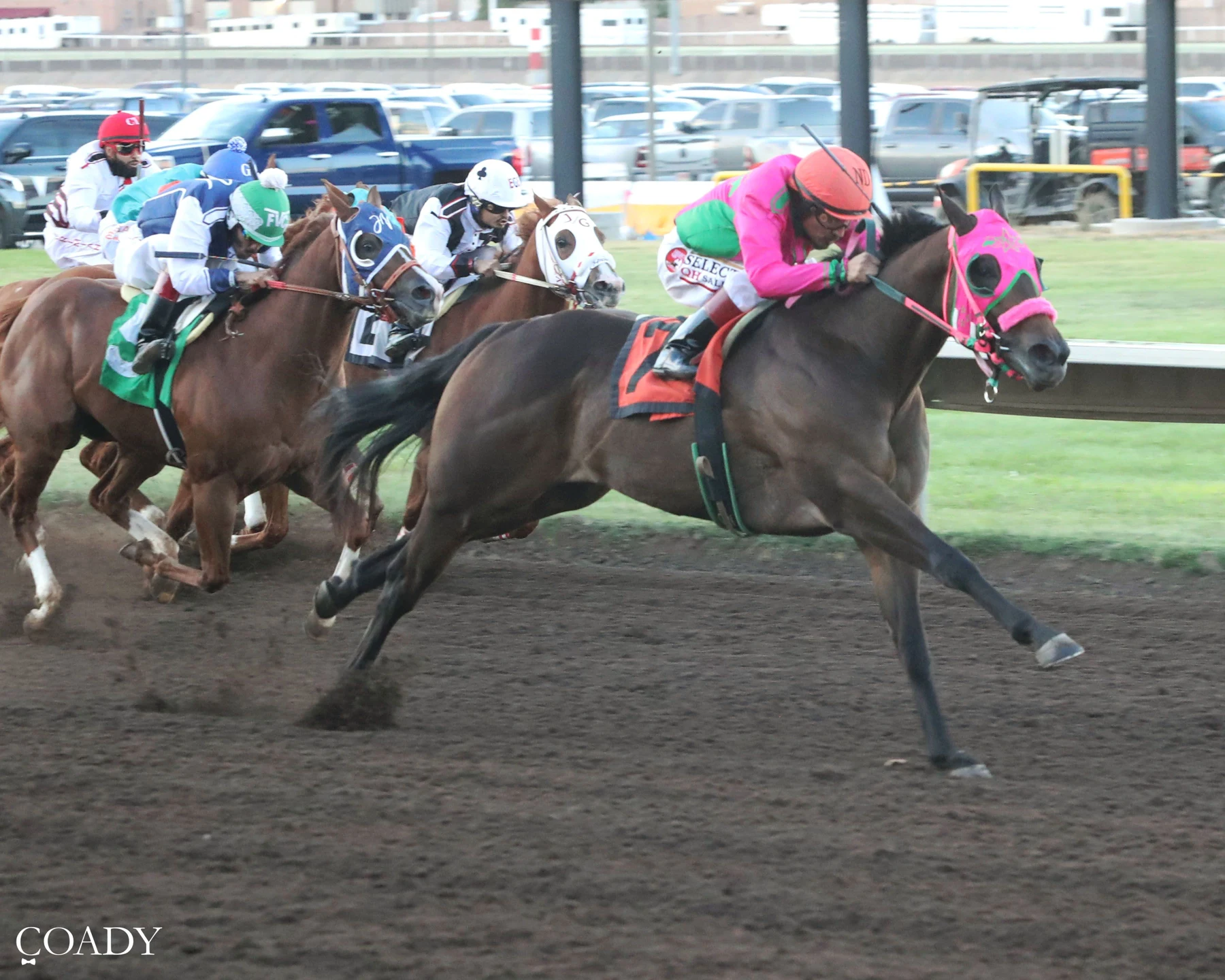
American Quarter Horse racing is a ridden racing discipline built around short, intense contests, usually described in yards. Jockeys guide the horses from a starting gate to a common finish, with the precise distance and eligibility defined by the race conditions. The breed's quarter-mile name is a useful introduction, but it is not a rule that every race covers exactly a quarter of a mile. To understand the sport, start with the particular race rather than a general claim about the world's fastest horse.
The American Quarter Horse Association is the breed registry and maintains racing records and programs. That role is distinct from the local commission and stewards who apply racing rules at a meeting. For example, Ohio's short-distance rules identify the commission's authority and the place of applicable association rules. A national explanation should therefore avoid pretending every jurisdiction has an identical regulation for every incident.
Breed and sporting discipline are different ideas. The American Quarter Horse also appears in riding, ranch and show activities; registration alone does not tell you that an individual has a racing career. Conversely, a meeting advertised for Quarter Horses, Paints and Appaloosas can contain different conditions for different races. Read the breed restriction in the race heading instead of assuming that every horse appearing at the venue belongs to the same registry or competes against the same opponents.
For a fan familiar with Thoroughbred racing, the change in emphasis is immediately visible. In a short sprint there is little time to recover from a poor departure, so the break and the horse's ability to maintain an effective running line deserve close attention. That does not make the rest of the contest irrelevant. Acceleration, the interaction with neighboring runners and the finish still determine the race's story. Longer events introduce a different spatial and stamina challenge.
Try watching one race with a narrow purpose: follow a single number from the opening of the gate through the finish. Then watch the replay while looking at its immediate neighbors. You may see why a result is more informative than a slogan about speed. A horse can finish well after early difficulty, and a clean journey can help another make full use of its ability. The useful question is what happened in that contest, not whether a breed label alone predicts what happens next.
Read the distance before you judge the race
Quarter Horse race distances are commonly printed in yards. Read that number before looking at a past time or deciding how a horse's previous form applies. A performance at 300 yards and one at 440 yards test related abilities over different amounts of ground. The longer number is not just another way of describing the same sprint, and comparing the two clockings without their distances produces an answer with little sporting meaning.
A quarter-mile name does not mean every race is 440 yards
A quarter of a mile is 440 yards, equivalent to 402.336 meters. One furlong is 220 yards. Those conversions help a Thoroughbred fan orient the scale, but they do not turn all short races into one uniform event. The Remington Park record tables document several Quarter Horse sprint distances, including 220, 300, 350, 400 and 440 yards, alongside longer contests. Treat that as evidence of variety, rather than a claim that every distance is offered on every card.
Distance can change what you notice in a replay. At 350 yards, a strong departure and prompt acceleration may create an advantage a rival has very little ground to erase. Extending that contest to 440 adds 90 yards, giving more room for sustained effort to matter. That is an explanation of the demands, not a rule that a particular running style always wins one distance. An individual horse's record and the conditions of the race still matter.
Longer races can involve a turn. You may hear an 870-yard contest described as going “around the hook,” terminology used in Remington Park's own racing coverage. That format introduces positioning and route considerations that a short straightaway does not present in the same way. Avoid explaining the whole sport with a categorical statement that Quarter Horses never turn or that only the first strides can affect the outcome.
A sensible comparison begins with the same distance, then asks about surface, conditions and the horse's actual journey. A spectacular clocking over a shorter trip does not automatically answer whether a runner stays effective farther. Likewise, a horse proven around a bend is not simply a slower version of a straight-course sprinter. Read the assignment first; the number beside a performance becomes more useful when you know what the horse was being asked to do.
Watch the break, the running line and the official finish
The start deserves your attention before the doors open. Identify the number you intend to follow and note the horses beside it. In the first few strides, watch whether the runner departs with the field, hesitates, stumbles or has its route affected by another horse. Those are observations about the journey. They are not, on their own, proof of poor fitness, a training failure or a jockey's intention.
Why the opening strides matter
Lost momentum is costly when the finish is close. A clean departure allows a horse to apply its acceleration immediately, while recovering position uses some of the limited distance remaining. However, “the break matters” is different from “the first horse moving must win.” Sprint races can still contain changing positions and late challenges. The exact interaction between departure, speed and sustained effort is what makes a replay useful.
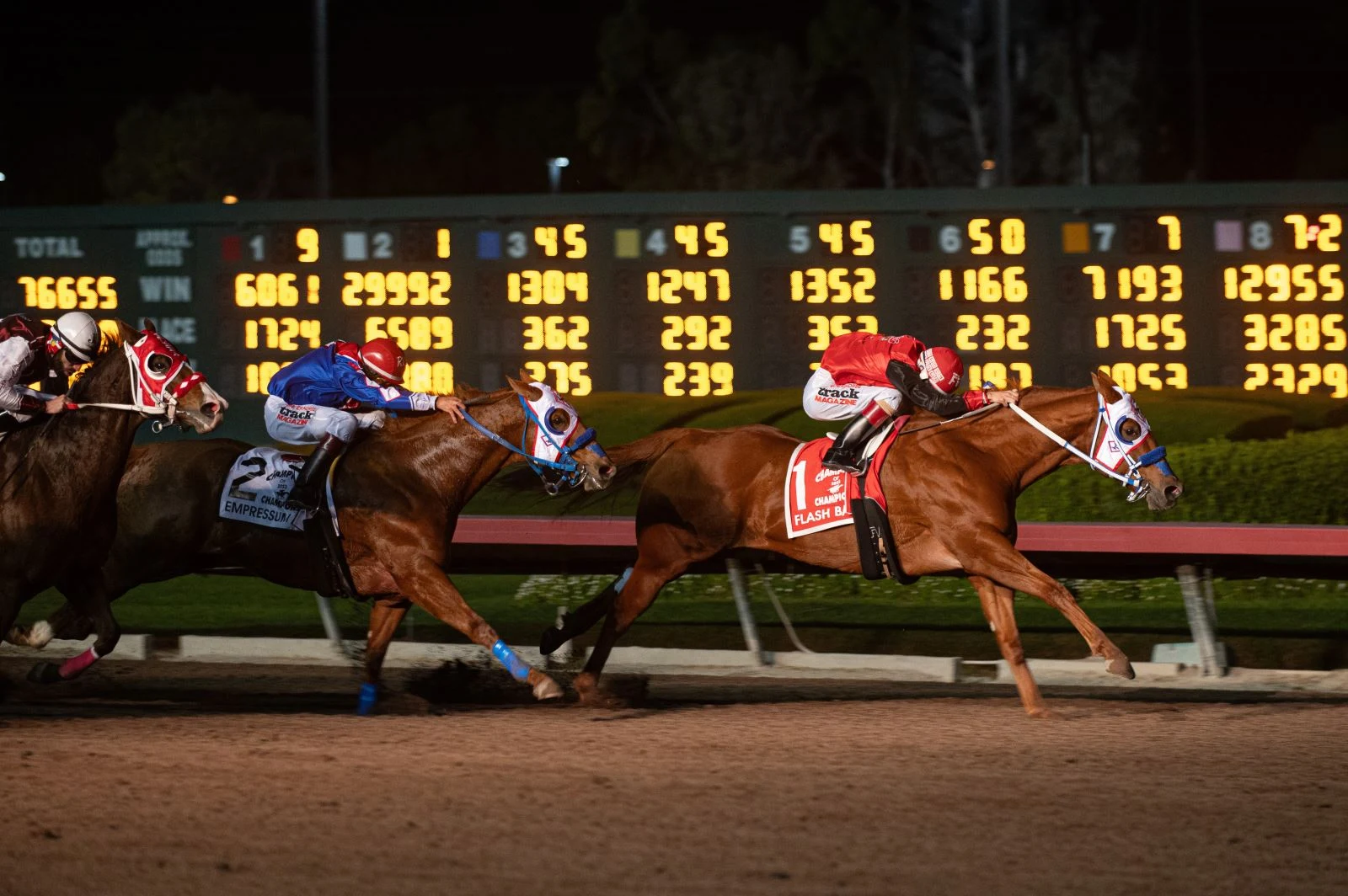
Flash Bak's 2023 Champion of Champions is a helpful historical example. Los Alamitos' own account describes a runner that advanced rapidly into contention and answered Empressum's challenge, rather than a contest whose entire story was settled by a single opening snapshot. You do not need to turn that into a universal recovery formula. It simply shows why a serious explanation should leave room for the race to develop after the initial release.
Interference decisions belong to the stewards
A straight race still involves running lines and neighboring horses. As one specific jurisdictional example, Ohio's rule on maintaining position addresses a horse drifting or being ridden out of its lane in a way that interferes with another runner. It provides for steward action. That is more precise than saying every sideways movement automatically means disqualification, and it should not be recast as the exact rule used in every other state.
When something happens, distinguish the movement from its possible effect. Did a horse change course? Was another runner checked or impeded? What do the available camera angles show? A side view can help establish the order at the finish while giving a less complete view of the space between runners earlier. Avoid treating one angle or an excited commentary call as an official adjudication.
Wait for the official result before treating the first displayed order as final. A photograph can resolve which nose reached the line first; a separate review can address interference or another issue. Our horse racing results page helps follow the wider racing day, while the host track's official chart records the particular contest. In your own notes, keep the finish order, any review and your trip observation separate. That gives you a clearer sporting record than compressing everything into the claim that one horse “should have won.”
Understand trials, futurities and derbies
A futurity in this racing context generally concerns two-year-old horses, while a derby generally concerns three-year-olds. The precise race conditions remain decisive: age, sex, state-bred status, nomination and other restrictions can define which horses are eligible. “Futurity” on its own is not a complete description of a race, and a major-race name should not make you overlook the eligibility line printed directly beneath it.
Trials are qualifying races for a later final. Depending on the event, the published conditions can use times or placings to determine who advances. In a timed series, your first question after a trial should be the qualifying performance rather than simply which horse won that individual heat. A runner can beat the horses beside it and still fail to reach the required place on the combined qualifying list. Conversely, a beaten runner in a faster heat may have a stronger qualifying position.
Read the final's qualification rules before making comparisons across trials. Establish how many horses advance and whether the program treats different trial sessions separately. Do not import the familiar structure of one event into every other futurity. Nomination eligibility and qualification are also separate matters: being properly eligible to attempt a trial does not mean the horse has already secured a final berth.
Timing is consequential enough to require formal verification when something goes wrong. On August 27, 2026, Los Alamitos reported a review of a timing malfunction in an August 23 PCQHRA Breeders Futurity trial over 350 yards. The track described frame-by-frame video analysis, an independent AQHA check and approval by the CHRB stewards. The reviewed performances affected the qualification picture. This is a dated example of why the confirmed list matters, rather than an invitation to calculate unofficial replacements from a stream.
Weather and track conditions can also be relevant when examining performances across a program. Record what the official chart says and avoid turning every difference in time into a confident statement about ability. The task is to understand the documented qualification method and the conditions in which each horse produced its result. A dramatic trial victory can be a useful piece of evidence without becoming a guarantee of the same performance in the final.
When following a futurity series, keep three records together: the trial result, the official qualifiers and the final's declared field. They answer successive questions. This makes the build-up more interesting because you can follow which horses earned their places and what they must do differently on final day. It also prevents a common reading error: mistaking a trial winner, a fastest qualifier and the eventual champion for interchangeable labels.
Follow the major events without confusing their eligibility
A racing season is easier to follow when you distinguish juvenile finals, three-year-old derbies and championship contests involving established campaigners. They can share a distance while asking different questions about age, experience and qualification. Following only the largest advertised purse hides that structure. Read the conditions and route into each event before trying to compare its winner directly with the winner of another division.
The All American Futurity is a juvenile final
The All American Futurity is a landmark 440-yard race for two-year-olds. Its reputation is closely connected with Ruidoso Downs, but that historic identity does not guarantee the physical host venue remains unchanged. In 2026, the race was held at The Downs at Albuquerque on September 7. The official Ruidoso tourism location notice specifically directed visitors to Albuquerque for that season.
The All American Derby is a separate event for three-year-olds. Ruidoso's August 2026 qualifying report describes that age group competing over 440 yards. A horse advancing from its juvenile campaign into a derby has changed divisions, even when the race name sounds almost identical. Keep “Futurity” and “Derby” in your notes rather than shortening both to “the All American.”
The Champion of Champions is a different championship test
Los Alamitos' Champion of Champions provides another major 440-yard focus. It brings a different campaign and qualification context from a juvenile futurity final. Official track coverage describes presumptive berths earned through designated races, illustrating why an established horse's season can be organized around reaching this event. Check the current qualifying conditions rather than assuming a prestigious win automatically confers a permanent invitation.
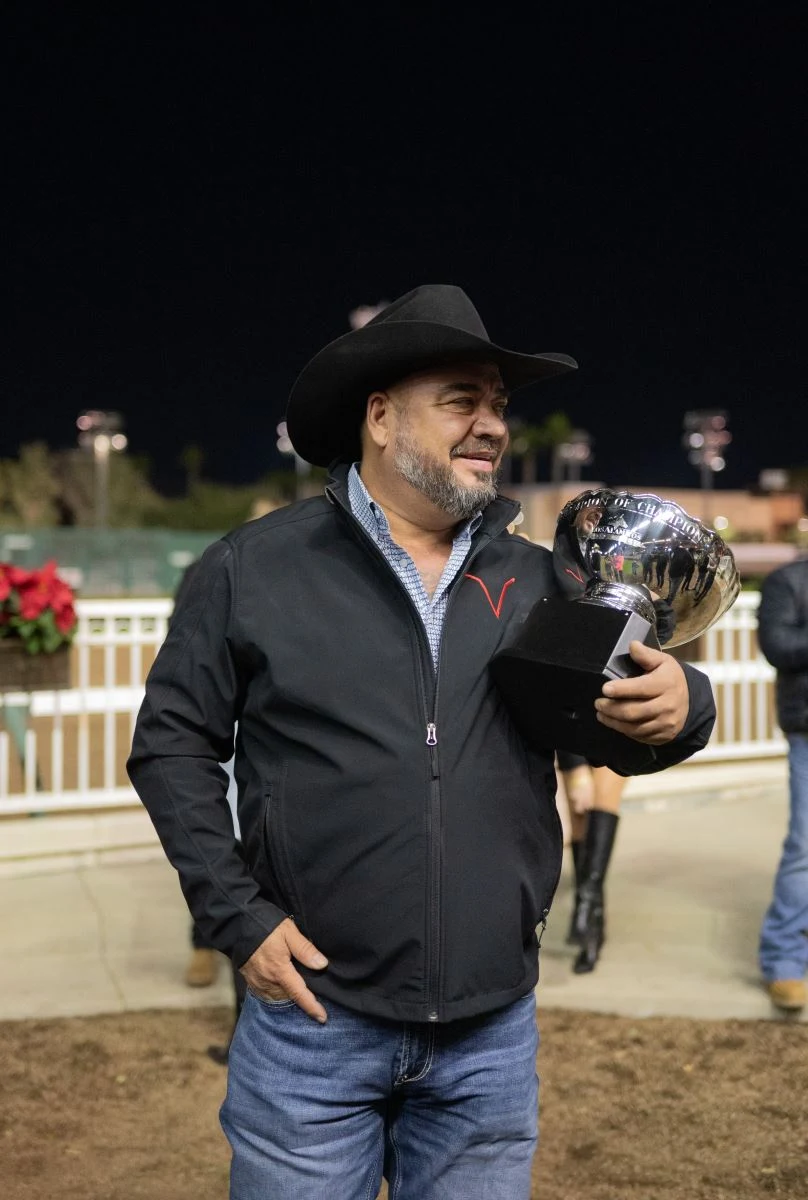
A championship race and an annual award are also different things. Winning an important final is powerful evidence of achievement, but do not silently convert the event's title into every possible year-end honor. The race result, the qualifying campaign and the award record each deserve their correct name. This makes profiles of accomplished horses more accurate than collecting impressive-sounding titles without explaining what they represent.
For a future visit or viewing plan, verify the edition, venue and official date again when you are ready to book. Historical articles and old stakes pages can remain easy to find after a location or schedule changes. Choose one age division or circuit to follow through trials and finals; it gives a new fan a coherent story without requiring an instant knowledge of every major Quarter Horse event in the country.
Use speed indexes and race records in context
Quarter Horse records often place a speed index beside a horse's performances. Treat the number as a defined rating, not a self-explanatory measurement. Before comparing two figures, establish which system produced them, which race they describe and whether you are looking at the latest run or the highest figure from a whole career. A career-best number answers a different question from a repeatable level of recent form.
An index is not a miles-per-hour reading
The AQHA speed index rates a racing performance against a benchmark associated with the track and distance under its published rules. An index of 100 does not mean the horse ran at 100 miles per hour, nor does it describe a percentage chance of winning its next race. It also should not be numerically equated with a figure from another provider simply because both are printed as two- or three-digit numbers.
The rating has a role in recorded achievements. AQHA's official Register of Merit explanation says a racing ROM requires at least one official speed index of 80 or higher. It distinguishes that racing achievement from show-point requirements. That is a useful example of why the label must be read correctly: the racing ROM is not simply a statement that the horse accumulated a particular number of race victories.
For record times, preserve the distance, venue and date. A track record says something specific about a performance at that course and trip; it is not automatically a universal ranking of every racehorse. If you calculate distance divided by elapsed time, you obtain an average over the measured trip. That calculation does not reveal the maximum instantaneous speed reached in a particular stride, so it should not be presented as a verified peak-speed reading.
Our separate fastest horse breeds guide addresses the broader comparison between sprinting and other racing demands. When following Quarter Horse racing itself, the more useful habit is to combine the rating with the conditions and replay. Ask whether the runner has shown effectiveness at today's distance, whether the documented journey helps explain its last result, and whether the apparent strength is supported by more than one favorable performance.
You can build a compact record without inventing a private rating system: note the race identity, distance, conditions, official outcome and one observed feature of the journey. Keep any published index under its correct name. Then use today's racing schedule to orient the next meeting and confirm the relevant track's official card. The aim is to understand a real contest more clearly, with the breed, distance, start, qualification route and record each contributing its proper part of the story.
Join the conversation
Have a question or a race-day tip to share? Keep it friendly and on topic. Comments appear after review.
No comments yet. Start the conversation.
Sign in with Google to leave a comment.