Know which Mohegan racing venue you are visiting
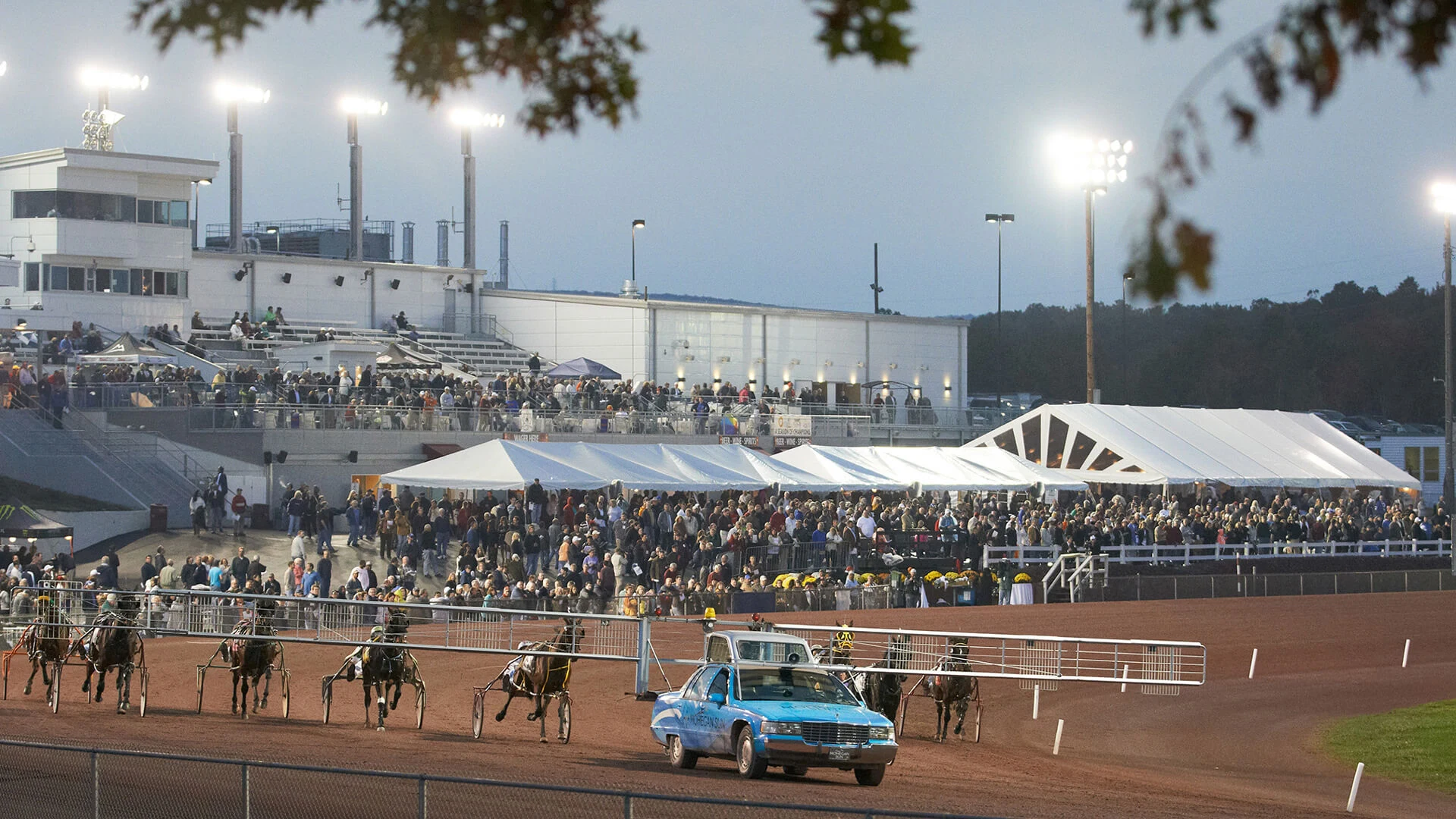
Pocono Downs at Mohegan Pennsylvania is a harness racetrack in Wilkes-Barre, Pennsylvania. A visit means watching Standardbred horses race with drivers seated in lightweight two-wheeled racebikes. The property combines live racing with casino and hospitality facilities, but those activities have different timetables and access arrangements. Start with the racetrack's identity, then choose your race date; a search for “Mohegan Sun horse racing” can otherwise lead you to information about a different property or a room showing races from somewhere else.
The Pennsylvania Horse Racing Association's track guide identifies the address as 1280 Pennsylvania 315, Wilkes-Barre, PA 18702. Pocono Raceway, the motor-racing venue associated with NASCAR, is a separate destination. For navigation and hotel planning, use the complete Mohegan Pennsylvania address rather than the word “Pocono” alone. That small check is especially useful when different members of a group are booking travel independently.
Standardbreds on a five-eighths-mile oval
Pocono's oval measures five-eighths of a mile, according to the track's official visitor FAQ. That measurement describes one circuit of the racing surface. It does not mean that every race is five-eighths of a mile long. Most North American harness races are contested over a mile, so following the field requires understanding where the race begins and how the runners return to the finish. Confirm the distance in the program instead of treating the track's circumference as the race conditions.
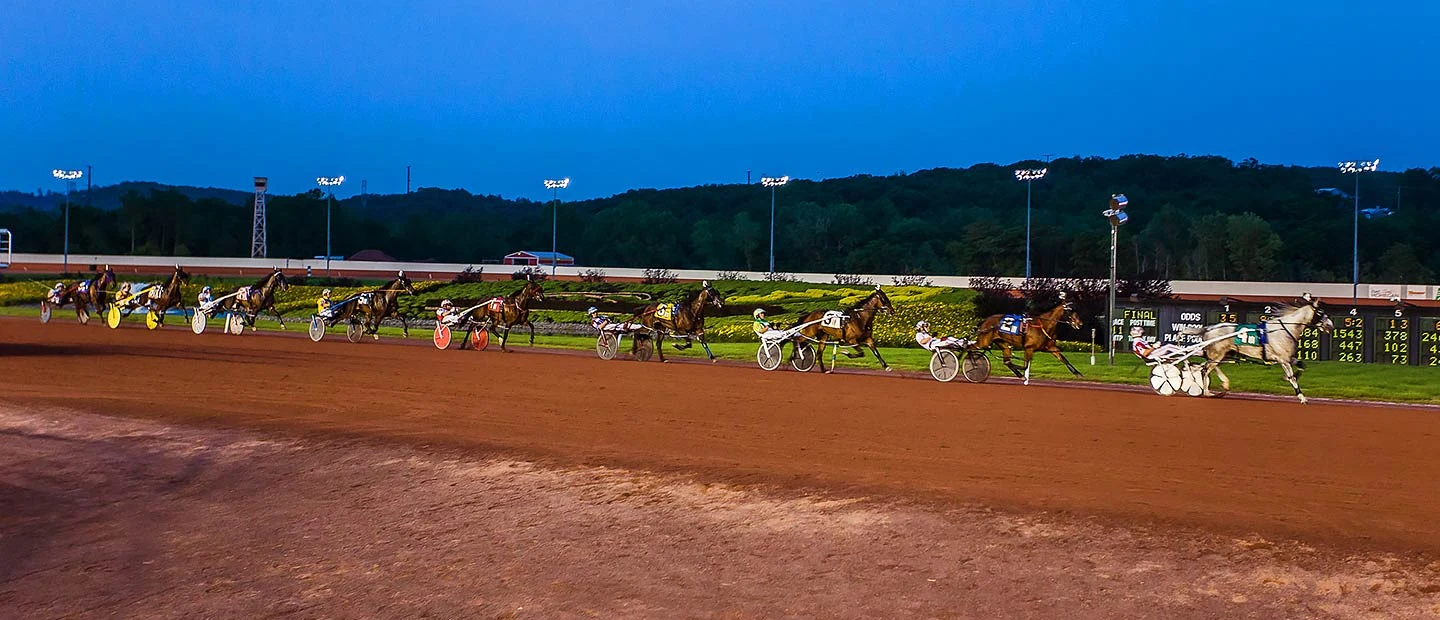
A good first-race exercise is to identify the finish line, watch the starting vehicle gather the horses, and follow one clearly visible number throughout the contest. This makes the circuit easier to understand than trying to recognize every set of driver colors immediately. The horses are contesting a prescribed gait, either pace or trot; a horse that starts galloping has not simply found an extra gear. That distinction changes how you interpret a sudden loss of ground.
The venue dates to July 1965, but the most rewarding part of a first visit is the racing happening in front of you. You can enjoy the warm-up, starting procedure and contest without making a wager. Choose one question to investigate in each race: how the field forms behind the gate, which horse obtains a comfortable position, or whether a late challenger has a clear route. Building those observations over several races gives the day a sporting thread beyond the finish-order announcement.
Find the live racing date and first post
Use the official Pocono Downs schedules page to select a live date. It contains an annual live-racing calendar and separate simulcast information. Open the calendar for the year of your trip and read its legend before selecting a date. A general description of the racing season is useful for orientation, but it is not confirmation that racing takes place on every day within that period.
Live racing and simulcast are different schedules
Live racing means the horses compete on the Pocono oval. Simulcasting means the venue receives races run at other tracks. A room can be open for simulcast viewing and wagering when the local track has no live card. Consequently, an online listing of a full day's racing at “Mohegan” may describe screens and betting services rather than a field of horses you can watch from the apron.
Make the distinction explicit when planning with friends: “We are going to the local live card” is clearer than “the racing is open.” If a particular horse or stakes race is the reason for traveling, verify the event name and date as well as the venue. For a wider view of racing elsewhere, our today's horse racing schedule helps orient your day; confirm Pocono's own program directly with the track before setting out.
Read first post separately from later race estimates
First post is the scheduled start of the opening race. It is not an opening-door time, nor is it necessarily the time of the feature. A major event may have a different first post from an ordinary meeting. The official page provides examples of afternoon and evening schedules, but the calendar and the individual event notice should determine which applies to your visit.
Treat later race times as planning estimates. A photo finish, an inquiry, weather or another interruption can alter the rhythm of a card. If you are meeting someone for a particular race, share its number and check the live countdown rather than relying entirely on a clock estimate captured the previous evening. After you arrive, compare the printed program with any announced changes so that a withdrawn runner or revised sequence does not confuse the group.
Allow room in your plan to learn the layout before the first contest. As practical advice, arriving early enough to find the apron, obtain a program and identify the finish is more useful than arriving with seconds left on the countdown. If you have a dinner reservation or a fixed departure, choose a manageable section of the card. Watching several races attentively usually teaches more than trying to combine every race with a rushed meal and a last-minute walk across the property.
Get to the track and choose a viewing position
Navigate to Mohegan Pennsylvania on Highway 315 in Wilkes-Barre and follow the property's current signs for racing. The official getting-here page lists complimentary patron self-parking and information about travel to the property. For your particular visit, distinguish the overall resort arrival point from the racing area where your group wants to meet. A restaurant name or a recognizable racing entrance makes a better meeting instruction than simply saying “the casino.”
Before choosing a position, find the finish marker and look across the oval. A place close to the rail makes the passing horses and racebikes vivid; a position with a wider outlook can make it easier to understand the field's shape around the turns. Neither view supplies every detail. Watch one race from your chosen spot before deciding whether to move, and avoid judging the entire course from the angle at which you first walked onto the apron.
Keep aisles, rails and other spectators' views in mind when gathering for a photograph or following a close finish. There is a difference between stepping back to see the field and placing yourself where you obstruct a walkway. A small group will usually find it easier to agree on a home position and return there between races than to keep relocating together as each race approaches.
If someone has mobility, hearing or sight requirements, contact the venue ahead of time about the most suitable route and viewing arrangements. Ask concrete questions: how far is the racing entrance from the intended drop-off, which route avoids stairs, and where can your party sit together? Those answers are more useful than assuming a resort-wide accessibility statement explains the exact path to a particular apron position. Likewise, confirm any needed seating arrangement rather than treating a general photograph as a seat reservation.
Weather should influence what you wear and how long you plan to stand outdoors. A first visit can be a short sporting outing rather than an obligation to stay for the full card. Give yourself a clear exit plan and an agreed meeting location, particularly if part of the group wants to eat while others continue watching. That preparation leaves more attention for the horses and avoids turning every break between races into a navigation exercise.
Understand the race before the field reaches the gate
Begin with the race heading in the program, not just the names and odds. It tells you the gait and the conditions that brought these horses together. Watching the post parade then gives those printed details a visible identity: number, horse, driver and racebike. You do not need to understand every abbreviation before the first race, but identifying the correct field is fundamental. Warm-up activity around the track can involve horses preparing for a later contest.
Tell a pacer from a trotter
Pacers move their legs in lateral pairs, with the legs on the same side working together. Trotters move in diagonal pairs. The race heading identifies the gait; do not try to classify the entire field solely from a fleeting glimpse of equipment. As the USTA's equipment guide explains, pacing hobbles and trotting hobbles have different arrangements, and equipment is used to help maintain the intended action.
A break means a horse has lost its racing gait. It can cost position and disrupt the race, so a horse galloping at the back should not automatically be described as being outpaced. Watch when the change happens and what follows it. An honest observation is “the horse broke approaching the turn”; an unsupported diagnosis of why it happened goes further than a spectator can establish from one viewing.
Follow the trip as well as the finishing time
A finishing time records the outcome of a particular journey. It does not tell you by itself how much work a horse did to obtain position. The USTA glossary is useful when the announcer refers to the pocket, first-over movement or a horse being parked. These terms describe where a runner travels relative to the leader, the rail and the other horses.
For example, imagine one horse following the leader along the inside while another advances outside without a horse immediately ahead to follow. The inside horse may save ground but still need a clear route to challenge. The outside horse may spend energy advancing while covering a less economical path. This is a teaching example, not a claim that a particular position wins every Pocono race. The field, pace and available room determine whether an apparently comfortable position actually becomes useful.
Pick one runner and watch its location at the start, on the backstretch and entering the final turn. Then compare your memory with the replay and chart. Did it gain ground through a clear lane, wait for room, or lose momentum? You will learn more from that sequence than from labeling every beaten favorite disappointing. Keep the difference between an observation and an explanation: a trip can be visible, while fitness, soundness or a driver's intention may remain unknown.
Plan food, family access and what to bring
Pack for the racing area you intend to use. The official harness-racing FAQ sets out restrictions on outside food and coolers, permits portable chairs, and distinguishes small cameras from professional equipment requiring credentials. Read the current policy if photography is a major reason for your visit. A camera setup accepted at another track should not be assumed acceptable here.
Keep your equipment modest enough to carry comfortably when you move between watching and eating. Think about whether a chair is genuinely useful for your planned stay, where it can be placed without obstructing others, and how you will manage a program in windy conditions. A lightweight layer and comfortable footwear can be more valuable than a bag full of items you never use. These are practical suggestions rather than additions to the venue's permitted-items list.
Check the racing areas separately from the casino
Confirm age and access arrangements directly before bringing children. At the time of our October 21, 2026 check, the general racing FAQ described supervised children's access, while the 2026 horsemen's rules contained a stricter under-18 provision mentioning the racing apron. Those documents do not provide a clear enough basis to promise access for every family visit. Ask the venue about your specific date, entry route and intended viewing area; do not extend a racing-area answer to the casino floor or restricted horsemen's areas.
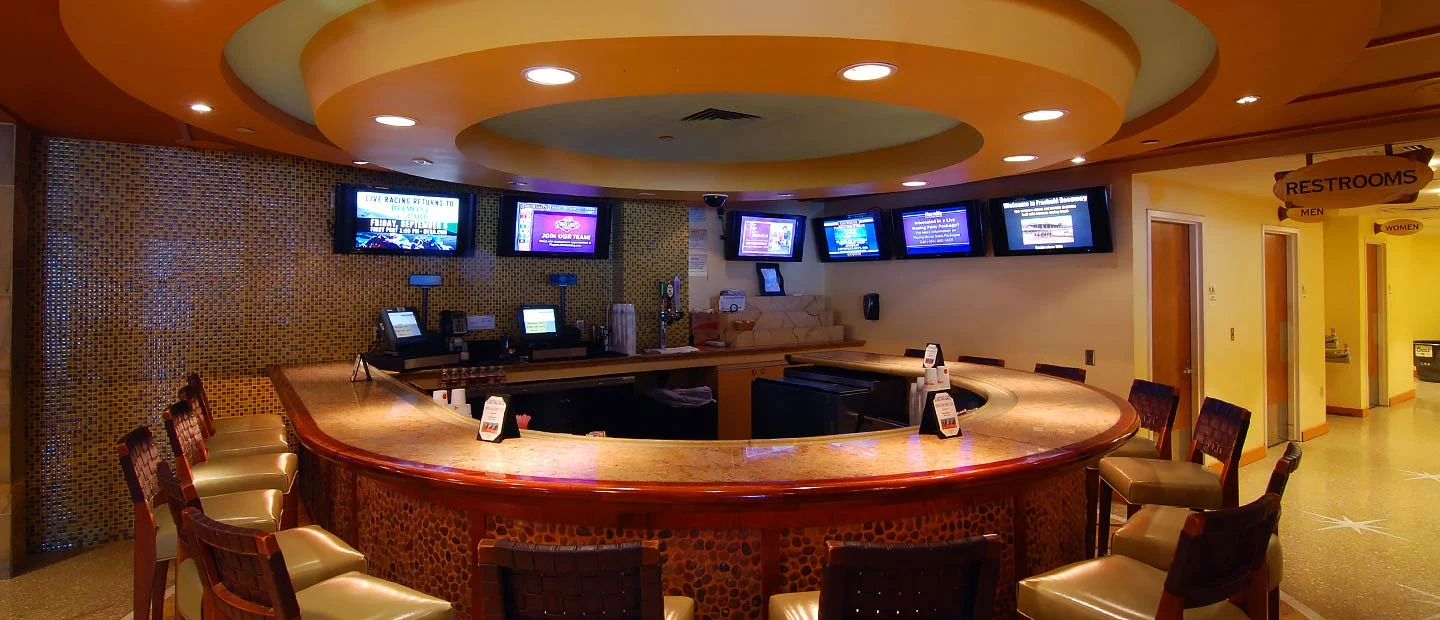
For refreshments, consult the property's current dining listings and the Starting Gate Bar page. A photograph of a bar beside racing screens establishes the setting, not the opening hours on your chosen date. If a meal is central to the outing, settle its timing before committing the whole group to a particular race. On a short visit, eating before the card can be simpler than leaving the best part of a race to wait for an order.
It also helps to decide which activities are optional. Some companions may want to study the program while others prefer a few races followed by a meal. Agree on a meeting time and a spending plan that works without anyone needing to wager. Racing offers plenty to discuss through gait, tactics and close finishes; betting is not a condition of enjoying the afternoon. A clearly planned outing leaves everyone free to concentrate on the part of the day that interested them in the first place.
Use programs, replays and official results after your visit
Keep the date, track and race number together whenever you make a note. A horse's name alone is not enough to identify the exact contest you watched, particularly when reviewing several race days later. The program provides the starting framework, while scratches and announced changes explain how the actual field differs. Record those changes alongside your observation rather than rewriting the story from memory after you already know the winner.
For a Pocono replay, use the route from the official horsemen's resources page to the Pennsylvania Harness Horsemen's Association. It groups race replays, qualifiers and streaming resources. Check the date and whether the recording is a race or a qualifier before comparing performances. A qualifier has a different purpose from an ordinary wagering contest, and a short highlight may omit the early move that shaped the outcome.
Watch the race twice if something interested you. On the first viewing, follow your chosen horse from the start. On the second, watch the leader and the movement of the outside line. This separates what your horse did from the opportunities available around it. For instance, a runner may appear to accelerate impressively in isolation while the wider view shows it finally obtained room after waiting. Describe that observation precisely rather than assigning the horse an unsupported new rating.
Use the USTA entries and results service for the harness record. Its search tools allow you to work from the track and date or investigate a horse's races. An entry is an intended starter; an unofficial display is provisional; the certified result is the settled sporting record. If an inquiry, disqualification or correction affects the order, the view at the instant the horses crossed the line does not tell the entire final story.
Our horse racing results page is another useful starting point for following the wider US racing day. For the particular Pocono contest, retain the direct official harness source and check that any result or payout refers to the correct race and wager base. A number copied without its context can be misleading even when the number itself is accurate.
For a return visit, save one racing question and one practical adjustment. Perhaps you want to watch a trotting race more closely, compare two viewing positions, or allow a little more time before first post. Review the new live calendar before booking again rather than assuming the same weekday and time will carry into another month or season. That combination of official confirmation and your own observations turns a first outing into a more informed second one.
Join the conversation
Have a question or a race-day tip to share? Keep it friendly and on topic. Comments appear after review.
No comments yet. Start the conversation.
Sign in with Google to leave a comment.