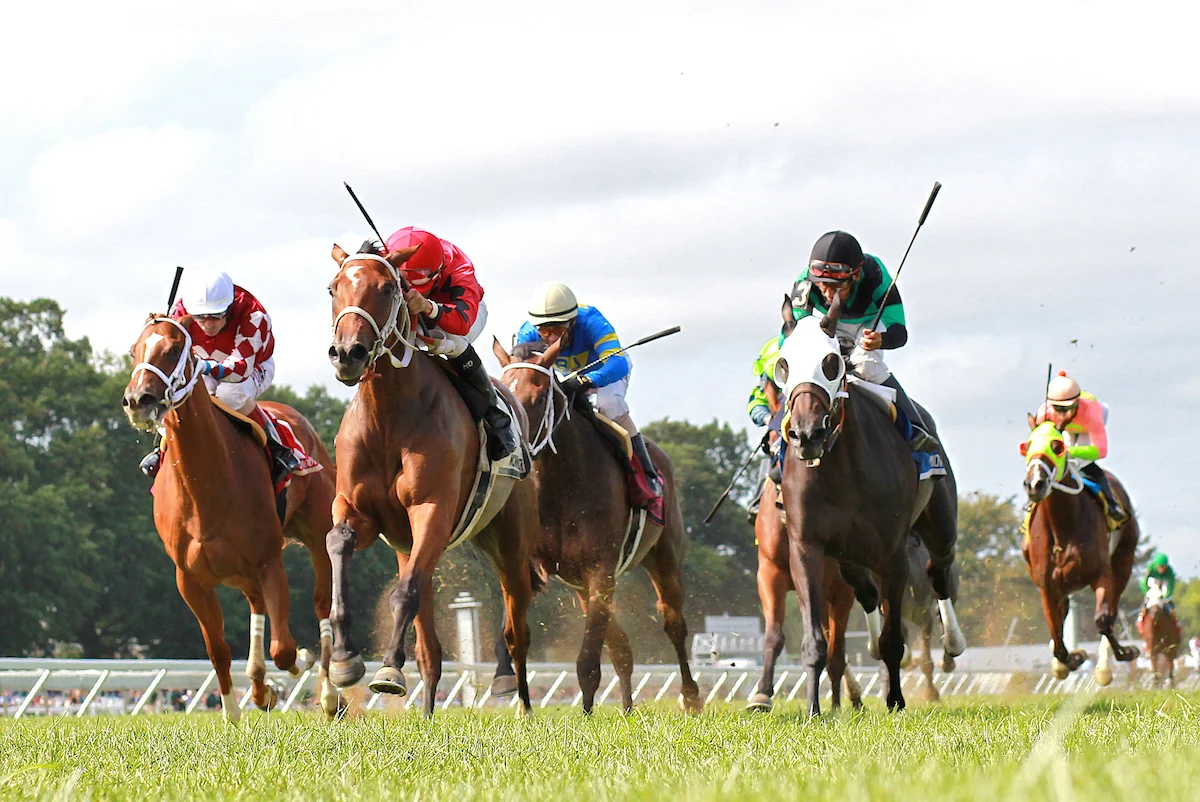
Horse racing in New Jersey begins with a choice of venue and discipline. Monmouth Park in Oceanport and the Meadowlands in East Rutherford offer different visits, while the autumn Monmouth at Meadowlands turf meeting makes the name on a race card especially important. This guide explains how to choose a live date, reach the right course and follow the races you came to see.
Choose the course and the kind of racing first
New Jersey offers more than one version of a day at the races. The first decision is whether you want to see Thoroughbreds with jockeys or Standardbreds with drivers. The second is where that particular card takes place. Answer both before choosing transport, a restaurant or somewhere to stay.
Monmouth Park and the Meadowlands are the two regular racecourse destinations at the center of this guide. That is not a claim that every New Jersey racing occasion fits into their calendars. Use the announced venue for the event you want, especially when the meeting’s name contains a track brand that differs from its physical location.
Monmouth Park and Meadowlands are different destinations
Monmouth Park is in Oceanport, near the Jersey Shore. The Meadowlands is in East Rutherford. A casual reference to “New Jersey racing” will not tell your driver which of these places you mean. Put the full course name and town in your plan.
That distinction changes the shape of the outing. A Shore visit and an evening in the Meadowlands area have different journey requirements; neither should be planned from the other’s address. If your party meets separately, send the physical destination rather than just a race name or a screenshot of a betting program.
Older directories may also list Freehold Raceway as a live racing option. The New Jersey Racing Commission’s April 2025 order records that Freehold had ceased racing operations and no longer held a permit. Do not build a current live-racing trip around its historical listing.
Thoroughbred racing and harness racing offer different spectacles
In Thoroughbred racing, a jockey rides the horse. In harness racing, a driver sits behind a Standardbred. The Meadowlands’ Racing 101 guide distinguishes the two harness gaits: pacers move their same-side legs together, while trotters move diagonal pairs. Watch the rhythm of the legs as well as the order of the field.
For a newcomer, that offers a useful way into the action. Follow one horse through a turn and look at where its driver positions it; then watch how the field changes before the straight. At a Thoroughbred card, notice the jockey’s position and the horse’s response as the race develops. You do not need to understand every abbreviation to recognize a contest for position.
Neither type needs to be treated as a substitute for the other. Choose the spectacle you want, then check the discipline on the actual date. A venue capable of staging more than one kind of racing does not promise both on the same visit, and a familiar name on a calendar is not enough to settle the question.
Find a live racing date rather than a simulcast session
Look for the live racing calendar, then the specific day’s announcement and entries. A racecourse can be open for dining, sports viewing or simulcasting when no horses race there. Both operators separate live-racing resources from simulcast resources, and that distinction matters more than whether a venue is simply marked open.
Monmouth’s announced 2026 Oceanport season ran from May 9 through September 13 on selected racing days, as its opening announcement explains. A season’s start and finish do not mean racing every day in between. Check the selected date rather than arriving on a weekday because it falls within the broad summer period.
At the Meadowlands, the 2026 racing calendar distinguishes harness sessions from Monmouth turf sessions and lists several post-time categories. Do not turn a familiar evening start into an all-year rule. Use the timing attached to your own card, and treat the first post as the scheduled start of racing rather than your arrival target.
Monmouth at the Meadowlands means a change of venue
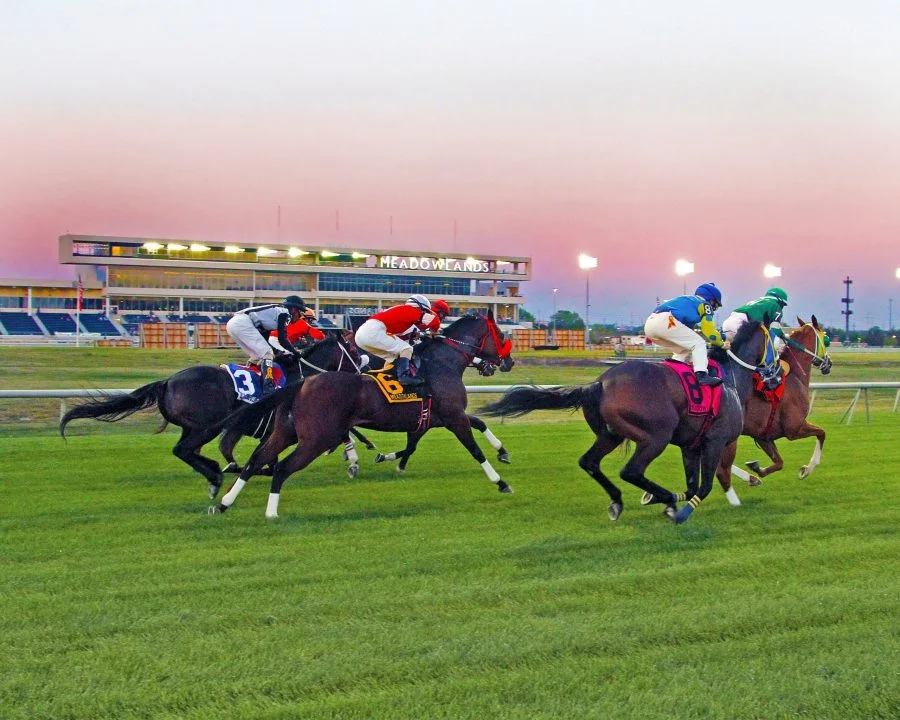
The autumn name can catch visitors out: Monmouth at the Meadowlands takes place in East Rutherford, rather than at Monmouth Park in Oceanport. Monmouth’s September 2026 announcement described an all-turf meeting scheduled from September 18 through October 16. It is Thoroughbred racing at a venue many fans associate with harness racing.
As checked on October 11, 2026, the Meadowlands’ October 16 event page schedules that turf session for 7 p.m. local Eastern time. That is a dated planning example, not a permanent promise for every Friday or for the next season. Keep the year visible when using an old saved link.
Check for changes again before leaving. On September 25, 2026, Monmouth announced that the following night’s turf card was cancelled because of the weather threat. A printed annual calendar would not have told a visitor about that later change.
A viewing party is another separate category. Watching a major championship on screens at a New Jersey course does not put that championship’s horses on the course outside. Read whether the event promises live local racing, simulcasting, or both. For a group whose main ambition is to see horses in person, settle that point before buying hospitality.
Once you have a confirmed date, preserve four details together: physical course, discipline, first post and any later notice. The weekend schedule can help compare racing occasions, while each course’s own dated information settles the New Jersey card you intend to attend.
Plan the journey around the final race
A good racing journey works in both directions. Before selecting an arrival, decide whether you want the whole card or a shorter visit, then check the return journey that choice allows. Leave time to reach the exit and your transport after the race you intend to watch. The scheduled final post is not the moment you will already be standing at a bus stop.
Getting to Monmouth Park
The course gives its address as 175 Oceanport Avenue, Oceanport, NJ 07757. Put that destination into your driving plan and check the entrance instructions for your ticket or picnic visit. Avoid substituting a nearby station or a broad town-center destination for the actual racecourse arrival.
For rail travel, NJ TRANSIT’s Monmouth Park guide says the North Jersey Coast Line stops at Monmouth Park Station on live racing days. Its 2026 guidance is tied to the May-to-September Oceanport season. That is a seasonal service condition, not proof that the same station serves an autumn turf card in East Rutherford.
Use the trip planner for the date and return time you actually need, including any connection. If you are arranging a group outing, agree on a return departure as well as a meeting point at the course. A planned early exit can be sensible; discovering that everyone expects a different train after the final race is less so.
Getting to the Meadowlands
The Meadowlands’ address is 1 Racetrack Drive, East Rutherford, NJ 07073. Its official directions identify bus 160 from New York’s Port Authority and local service on 703. Check the particular journey and stop rather than assuming every bus with the route number enters the same part of the complex.
Do not automatically plan around a stadium train. NJ TRANSIT’s Meadowlands information describes special rail service for specified large events and separately describes local bus access near the racetrack. A race-night plan needs its own available service, not the timetable for a football game on another day.
Major stadium events can also alter bus access within the complex. Read the current advisory and confirm the return boarding location before the evening starts. For anyone using a taxi or rideshare, agree on an identifiable pickup point; “outside the Meadowlands” is too imprecise in a complex containing several destinations.
Admission, seating and access deserve a separate check
Monmouth’s 2026 admission FAQ lists $7 general admission and free general parking, with different pricing on Haskell Day. The Meadowlands’ visitor FAQ lists free general admission. Neither statement means that reserved dining, a particular seat or a special event package is automatically included.
Choose your viewing area with your party in mind. Someone who wants to move between the paddock and rail has different priorities from someone who needs a reserved place to sit throughout the card. Read what your booking includes, where to enter and whether a dining reservation is separate from admission.
Accessibility needs a complete route. NJ TRANSIT identifies Monmouth Park Station as not ADA accessible and points to accessible Long Branch Station as an alternative, with onward transport needed. Monmouth’s own access information describes facilities at the course. Confirm the station, last part of the journey and desired viewing area together; an accessible racecourse does not make every possible journey to it accessible.
Make your first hour at the track count
Arrive with enough time to orient yourself before the first post. Find your chosen viewing area, the facilities your party needs and a meeting point everyone recognizes. Then look at the program for the actual card. The aim is to feel part of the racing before the horses are already leaving the start.
At Monmouth, the seating guide describes picnic space, general grandstand seating and reserved options. Decide whether your priority is an outdoor gathering, a sheltered view or a specific booking. A picnic reservation and a seat near the finish serve different purposes; choose the arrangement that lets your party enjoy the races it came to see.
At a harness card, begin with the right program rather than borrowing a Thoroughbred card from the same venue’s autumn meeting. The Meadowlands’ program page directs fans to its harness-program resource. Confirm the date and discipline before reading runner names, starting positions and drivers. A correct program makes the pre-race announcement much easier to follow.
Pick one horse to watch in the first race. Remember its name and number, and identify its jockey or driver. Follow where it starts, where it travels through the race and when it makes a move. That gives you a manageable thread through a field that can otherwise seem to change order too quickly.
For harness racing, add the gait to that observation. Watch the movement of the legs and the driver’s place behind the horse, then look at how the runner negotiates the turn. For a Thoroughbred race, follow the horse’s position relative to the rail and the field as it approaches the straight. A viewing question such as “Can it hold that position?” is more useful for a first race than trying to decode every statistic simultaneously.
Between races, return to the program and see whether your impression matches the result. You might have watched the leader closely and missed a challenger approaching elsewhere. That is part of learning to read a race. A later replay can resolve the moment your attention moved away; it need not turn the visit into an argument about who must have won.
Plan food and family breaks around the races you most want to see. Monmouth’s family activities are tied to specified dates and parts of the season, so check the event announcement for your visit. Do not promise a child a particular activity solely because it appeared in an old summer photograph. Likewise, a meal booking should leave enough time to reach the viewing area before your chosen race.
Keep the afternoon or evening flexible. If the party enjoys following a few races in detail, there is no need to rush to every advertised activity. If someone prefers a shorter visit, identify an agreed final race and exit together. The successful first outing is the one in which the course, the card and the people you came with all fit the plan.
Follow the race after the horses leave the finish
A good racecourse visit continues with the race you actually watched. Save the date, venue, race number and the horse that caught your attention. Those details turn a later search into a useful review rather than a hunt through unrelated results carrying familiar course names.
Use the matching entries, results and replay
Monmouth’s official results page identifies its autumn results as Monmouth at Meadowlands. That distinction matters when you remember an evening at East Rutherford rather than an afternoon at Oceanport. Choose the correct date and race before matching names to your program. A result under the Monmouth brand does not automatically describe a race run at the Oceanport course.
The Meadowlands has its own results resource for its racing. Read the session description as well as the date: qualifying races can appear there too. A morning qualifier is a different occasion from the public card you intended to attend. Matching the horse’s name alone is a weaker check than matching the whole race.
For video, begin with the appropriate operator’s archive: Monmouth’s race replays or the Meadowlands video page. Select the matching card where it is available; an archive link is not a promise that every race is immediately ready to play. If the desired autumn race is missing from a summer calendar, check the meeting’s own racing information rather than choosing a different date merely to obtain a video.
Watch the replay once for the field and once for your chosen horse. On the second viewing, look at the start, the approach to the turn and the moment the horse begins its challenge. Ask a precise question: did it gain ground while others were accelerating, or did it improve its position after a rival slowed? That is more revealing than replaying only the final few strides.
Keep a viewing visit separate from a betting account
You can plan a racecourse outing around the sport, the atmosphere and the company you bring. Choosing an admission option, reading a program and following a horse through a race are worthwhile tasks in themselves. There is no need to make opening a wagering account the organizing principle of a first visit.
If you choose to bet, make that a separate decision with a fixed amount you are prepared to lose. Read the chosen operator’s current eligibility and account rules before depositing money. A sports-betting product, a horse-racing account and a viewing page should not be treated as interchangeable simply because their links appear on the same racecourse website.
For the next outing, keep the practical notes that improved this one: the entrance you used, the view you preferred and how you got home. Then check the weekend schedule and the course’s current announcement together. New Jersey racing becomes easier to follow when each trip begins with the right venue and ends with the right race.
Join the conversation
Have a question or a race-day tip to share? Keep it friendly and on topic. Comments appear after review.
No comments yet. Start the conversation.
Sign in with Google to leave a comment.