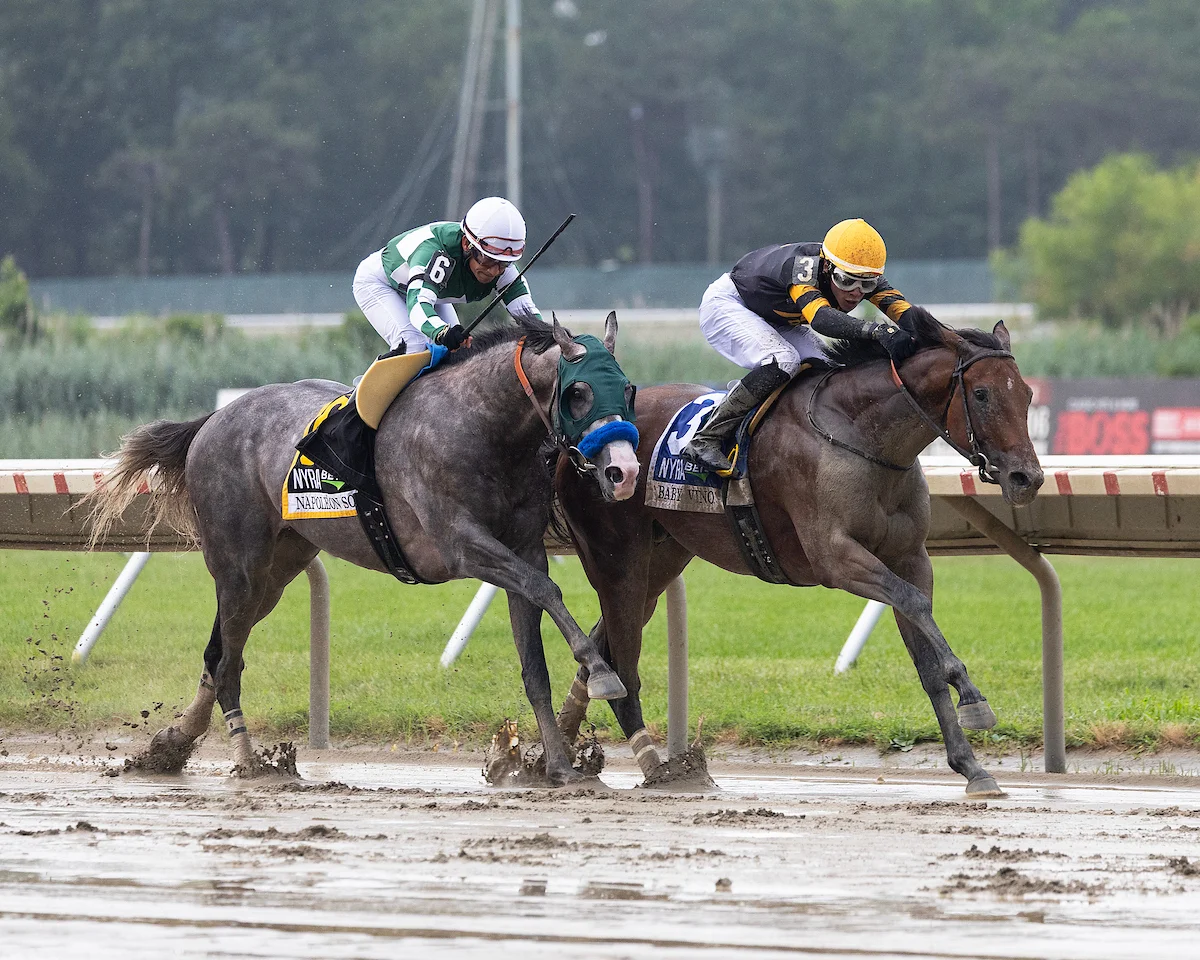
Horse racing betting terms tell you which runner you selected, what result your wager requires and how the ticket is priced and settled. This US guide follows those decisions in order, with hypothetical examples that make the difference between a small betting unit, a whole ticket and a profitable return clear.
Identify the horse and race before choosing a wager
Horse racing betting terms become easier to understand when you attach them to a specific race. A track hosts a meeting, a meeting contains racing days, and each day has numbered races. Race 4 at one course is a different contest from Race 4 at another, even when both appear on the screens beside the same betting window.
Start with the course, date and race number on the current card. Then identify the runner. This is especially important at a simulcast venue, where the race you are betting on may take place hundreds of miles from the building you are standing in. The venue’s address does not identify your wager.
Cal Racing’s teller guide puts the information in a useful order: track, race number, amount, bet type and horse number. A hypothetical request such as “Santa Anita, Race 4, two dollars to win on number seven” describes one selection precisely. It does not mean stall seven, the seventh horse you noticed, or your seventh choice in the program.
Program number, post position and coupled entry
The program number identifies the selection on the wagering menu. Post position describes the horse’s starting stall. They often resemble each other, but DRF’s past-performance guide explains why scratches and betting entries can make them differ. Read the label above a column before treating its numbers as instructions for the ticket.
A coupled entry groups runners as a single betting interest. You may see labels such as 1 and 1A alongside two different horse names. Check the current card and operator’s presentation to see how that interest is offered. Do not assume every pair of horses with a shared owner must be coupled, or that a starting-stall number tells you which entry to select.
“Entries” also commonly describes the list of horses entered in a race. Context distinguishes that list from an “entry” treated as one wagering interest. Similarly, a scratch means a horse has been withdrawn before the start; it changes the available field. The consequences for an existing ticket need a separate rule check.
Before considering odds or combinations, say the selection back to yourself using the horse’s name as well as its program number. That small check catches an avoidable error: understanding the wager correctly while placing it on a different runner.
Win, place, show and across the board
These terms describe the finishing positions that make a selection successful. They do not describe how confident you feel about the horse. Choosing a show bet instead of a win bet changes the qualifying result, while the amount staked and the eventual return still matter.
What each straight bet actually requires
In US wagering, win requires first place; place includes first or second; show includes first, second or third. Keeneland’s betting guide illustrates those positions. A place bet does not require your horse to finish exactly second, and a show bet does not require it to finish exactly third.
Imagine number seven finishes second in the official result. A win selection on seven loses, a place selection succeeds and a show selection succeeds. Now move the same horse to fourth: all three lose. The broader finishing requirement is useful to understand, but it does not protect the stake against every possible outcome.
Do not read a horse’s displayed win odds as the promised price of a place or show bet. Those are different wagers. Likewise, avoid assuming every place return must be smaller than every win return across different races. Compare the actual wager and its published payoff rather than ranking the words as if they carried fixed prices.
Across the board is three separate bets
Across the board, often shortened to ATB, combines equal win, place and show stakes on the same horse. The NYRA wagering FAQ makes the three-part structure explicit. Saying “three dollars across the board” means three dollars on each part: nine dollars in total.
If that horse wins, all three parts qualify. If it finishes second, only place and show qualify; if third, only show does. The unsuccessful parts still count as money spent. This explains why “my horse placed” and “my whole ticket made a profit” are different statements.
Consider a wholly hypothetical nine-dollar ATB ticket. Your horse finishes second, and the three-dollar place part returns six dollars while the three-dollar show part returns four. You collect ten dollars, but you spent nine, so the ticket’s net profit is one dollar. The lost three-dollar win part has not vanished from the calculation.
Conversely, a third-place finish can give you a successful show component while leaving the combined ticket below its original cost. Read “return” as the money paid back and “profit” as what remains after the full stake is deducted. That distinction will matter again when a small advertised combination amount becomes a larger ticket.
Read the language of prices and betting pools
A runner’s price and a race’s prize money answer different questions. Odds concern the potential return on a wager; the purse concerns the money offered to the competing horses’ connections. Keeping those ideas apart prevents a prestigious, richly funded race from looking like a promise of a large return on your particular selection.
Morning line, tote odds, favorite and odds-on
The morning line is a pre-betting forecast of how the public is expected to wager. It is not a reservation of a price, and it need not be the line maker’s personal ranking of the best horses. NYRA Bets’ explanation separates that forecast from prices formed once wagering opens.
Tote odds are the changing prices displayed for pool betting. For a pari-mutuel win wager, the number visible when you submit the ticket does not lock in the eventual payoff. A horse forecast at 6/1 can attract enough support to become a shorter price. Read a price alongside its label and its stage of wagering.
The favorite is the shortest-priced betting interest in the relevant market; “chalk” is common shorthand. A morning-line favorite and the final betting favorite can be different runners. Neither label is a result. An odds-on price is below even money: at a hypothetical 1/2, a successful two-dollar win stake earns one dollar in profit and returns three dollars including the stake.
For comparison, hypothetical 4/1 odds mean four dollars of profit per dollar staked. A successful two-dollar stake would therefore return ten dollars: eight profit plus the original two. This is an arithmetic illustration, not a quotation for today’s field. The operator’s payoff explanation is clear that returned stakes belong in the total.
Pool, handle, purse and takeout
A pool gathers the stakes for a particular wager. The win pool and exacta pool are different pools even when they concern the same race. Handle describes the amount wagered over a specified race, card or period; always ask which period a headline means. The Cal Racing glossary distinguishes handle from purse money.
Takeout is the portion deducted from a pari-mutuel pool before its distributable money is allocated to successful wagers. It is not a fee you subtract a second time from an already published official payoff. Rates depend on the course and wager, so consult that menu rather than carrying one percentage into every race.
A large handle describes activity, not your likelihood of selecting the winner. A large purse describes the competition’s prize, not your ticket’s return. To understand a wager, follow its own pool and payoff basis; to understand a race’s sporting importance, examine the field and conditions as well as the purse.

Exacta, trifecta and superfecta describe an order
These single-race wagers require an ordered finish: the first two for an exacta, first three for a trifecta and first four for a superfecta. Picking the right horses in the wrong sequence is insufficient on a straight ordered ticket. The wager’s name tells you how many finishing positions must be correct.
A quinella, where offered, selects the first two in either order. It has its own pool; it should not be mistaken for a promise of the same return as an exacta box. Similar coverage of finishing outcomes can be purchased through different wagers with different prices.
A box adds combinations as well as coverage
Boxing purchases the permitted orders involving your selected betting interests. TwinSpires’ exacta guide explains that, with more than two selections, any two of them must fill the first two places. A four-horse exacta box does not require all four to finish in the first four.
With four distinct betting interests, there are four choices for first and three remaining choices for second: twelve ordered pairs. At a hypothetical one-dollar unit, that is a twelve-dollar ticket. Adding a fifth interest increases the count to twenty pairs, costing twenty dollars at that same unit. The added horse creates eight extra combinations, not one.
For a four-interest trifecta box, the corresponding count is four times three times two: twenty-four orders. At a hypothetical fifty-cent unit, the total cost is twelve dollars. These examples assume the wager and unit are available; the small unit shown beside a menu is the stake per combination, not necessarily the amount of the whole ticket.
A key or part wheel puts a horse in a defined role
A key centers the construction on a particular runner. Suppose you use number four to win an exacta, with two, six and nine for second. That buys three orders: 4–2, 4–6 and 4–9. At one dollar each, the cost is three dollars. If four finishes second, that one-way construction loses even when one of your other selections wins.
A key box can add the reverse pairs, putting four in either of the first two positions alongside one of those other runners. The six pairs cost six dollars at a one-dollar unit. It still does not cover 2–6 or 9–2, because four is absent. That is why the smaller cost cannot be separated from the outcomes excluded.
A part wheel specifies selection lists for particular positions rather than buying every possible order. If lists overlap, remove impossible repetitions: one horse cannot occupy both first and second. Before submitting, read the displayed combinations and total cost. “Box,” “key” and “wheel” describe construction; none of them independently makes the underlying opinion more likely to be right.
Daily doubles and Pick bets connect different races
A leg is one race in a multi-race sequence. A daily double links the winners of two consecutive races; a Pick 3 normally links three, with Pick 4, Pick 5 and Pick 6 extending the count. These wagers differ fundamentally from selecting several finishing positions in one race.
TwinSpires’ daily-double explanation describes rolling doubles as separate pools for successive pairs. A double starting in Race 5 therefore concerns its advertised pair, not any two races you choose from the afternoon. Confirm the sequence before interpreting the selection boxes.
A single means using just one betting interest in a particular leg. A spread means using more than one choice there. Neither word predicts the result; it tells you how the ticket covers that race. A single lowers the number of combinations but also leaves that leg dependent on one selection.
Imagine a hypothetical one-dollar Pick 3 covering Races 5, 6 and 7. You use two choices in Race 5, one in Race 6 and four in Race 7. That makes two times one times four, or eight combinations, costing eight dollars. If number seven is one of your four choices in the final leg, it identifies a runner in Race 7, not a finishing position in Race 5.
If your single loses the middle race, adding more choices in the final leg does not repair the ordinary full-sequence ticket. That is the sporting and financial commitment hidden inside “single.” Check every leg rather than concentrating only on the feature race at the end.
A parlay is a different idea: proceeds from one successful wager are carried into a later wager. A Pick ticket is purchased for its specified sequence before that sequence begins. They can both involve several races without being the same product or offering the same settlement rules.
Carryover means money retained in a pool for a later offering under that pool’s rules. It does not mean the operator rolls your unsuccessful ticket into another day. The TwinSpires carryover guide also distinguishes a mandatory payout, when the pool is distributed instead of carrying onward. Read the announced conditions before interpreting the headline amount.
For a viewer, a sequence creates a useful reason to follow several races together. For a bettor, it also fixes an earlier deadline and a wider set of dependencies. Write down the starting race, ending race, selections per leg and total cost. That four-part description is clearer than saying you “have the Pick” without knowing exactly what was purchased.
Official results decide settlement
The finish you see is followed by the official result used to settle wagers. Keep a paper ticket until the race is declared official, and read the final result before calculating a return. A televised slow-motion finish can help you understand what happened without replacing the decision shown by the course.
Inquiry, objection and disqualification
An inquiry is an investigation of a possible infringement; an objection is a complaint raised by a participant. The NYRA Bets glossary explains the distinction. Either can lead to review, but the appearance of a review message does not itself tell you that a horse will be disqualified.
A disqualification can change the official order. That matters especially for an exacta or trifecta, where the required sequence is part of the selection. Wait for the decision rather than assuming the first horse past the finish must remain first for settlement.
NYRA’s stewards’ explanation distinguishes the immediate order-of-finish decision from a later film review concerning a rider’s conduct. Those are related processes with different purposes. A later disciplinary discussion should not be confused with the initial announcement that settles the race’s wagering result.
Once official payoffs appear, match the track, date, race, wager and winning combination. Then read the published stake basis. A payoff quoted for a two-dollar unit is not automatically the return on your one-dollar component, and a successful component is not necessarily a profitable whole ticket. Use the results tool to locate the race, then consult its official chart for the detailed outcome.
A scratch does not have one universal ticket consequence
A scratch is a withdrawal before the start. What happens to an existing wager depends on the bet and its governing rules. “My horse scratched” is therefore the start of the question, not a complete explanation of why a balance changed.
As a specific example, the NYRA FAQ describes refunds for late scratches on win, place and show wagers, while its Pick 4, Pick 5 and Pick 6 treatment substitutes the post-time favorite. Those examples apply to the stated NYRA rules; they should not be copied into every host track’s menu.
Check the host track’s rules and the operator’s ticket record together. Identify the scratched runner, the affected leg and whether the outcome is a refund, substitution or another rule-defined treatment. If the record remains unclear, ask the operator about that specific ticket instead of relying on a general social-media definition.
A useful betting vocabulary lets you describe a decision precisely: which race, which runner, what required finish, how many combinations and what official outcome. It does not oblige you to wager in every race. Set a spending limit separately from the terminology, and keep following the sport when the right decision for your budget is to watch.
Join the conversation
Have a question or a race-day tip to share? Keep it friendly and on topic. Comments appear after review.
No comments yet. Start the conversation.
Sign in with Google to leave a comment.